
REVIEW · INTO THE TUNISIAN SAHARA
Desert tours and adventurous camel trekking through the Sahara
Silence in the Sahara is hard to beat. This 8-day trek trades screens for fine sand, big sky nights, and slow desert time on camel and foot, moving through the Erg Oriental area and finishing with Douz and the caves of Matmata. You also get that classic desert rhythm: driving in from Tunisia, desert camps set up by a Bedouin team, then sunrise and sunset shifting the whole mood.
I like this experience for two reasons. First, you get camel trekking plus dune hiking, so you are not stuck in just one style of travel. Second, the evenings around the campfire feel built for real connection, with traditional, home-cooked meals and Bedouin storytelling energy. I also appreciate that vegetarian food was mentioned as possible, which matters when you are eating far from normal restaurants.
One possible drawback is the price. At $1,110.18 per person, some people felt the price vs value did not match what they got, even though they said the crew worked hard. If you are picky about service level, or you have desert-trek expectations shaped by cheaper options elsewhere, you should check carefully.
In This Review
- Key Things You’ll Notice on This Trek
- Entering the Desert From Djerba: Where the Trip Begins
- Those First Desert Hours in the Erg Oriental: The Feeling That Hooks People
- Days 2 to 6: Life on the Route Through El Hedan, La Ghuezza, and More
- Bedouin Camp Evenings: Campfire Time Is the Core Memory
- Douz, the Gate of the Desert: Souks, Dates, and Desert People-Watching
- Matmata Cave Dwellings: Troglodyte Houses as a Reality Check
- The Ferry Back Toward Djerba: A Quick Mediterranean Reset
- Transportation and Daily Pace: What Moderate Physical Fitness Means Here
- Price and Value: Why Some People Loved It, and Others Questioned It
- The Guide Factor: Mounir and the Bedouin Crew Matter
- Who Should Book This Sahara Camel Trek, and Who Might Want to Think Twice
- Should You Book This Tour?
- FAQ
- How long is the Sahara camel trekking tour?
- Where does the tour start and end?
- Is this tour private?
- Do I need good weather for the tour to run?
- What physical fitness level do I need?
- Is pickup included, and will I get a ticket?
- What is the cancellation refund timeline?
Key Things You’ll Notice on This Trek
- Camel time and on-foot dune hikes that let you experience the Erg Oriental at different speeds
- Bedouin camp evenings with campfire time and traditional home cooking
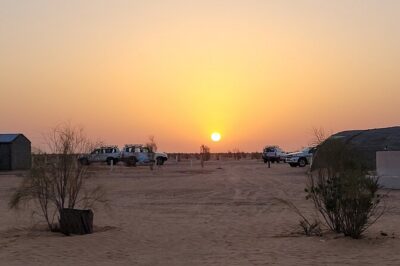
- Sunset and sunrise moments that keep showing up, day after day
- Douz souks and the Gate of the Desert vibe near the end of the tour
- Matmata cave dwellings (troglodyte houses) for contrast with desert life
- Private group travel, plus pickup and a mobile ticket for smoother logistics
One night out on the sand is rarely enough. More Sahara trips here
- Private getaway in the desert like no other★ 5.0 · 16 reviews
- Desert tours and adventurous camel trekking through the Sahara★ 4.0 · 10 reviews
- Private 3-Day Excursion to the Tunisian Desert★ 5.0 · 10 reviews
- From Djerba: Explore the desert in a day★ 5.0 · 8 reviews
Entering the Desert From Djerba: Where the Trip Begins
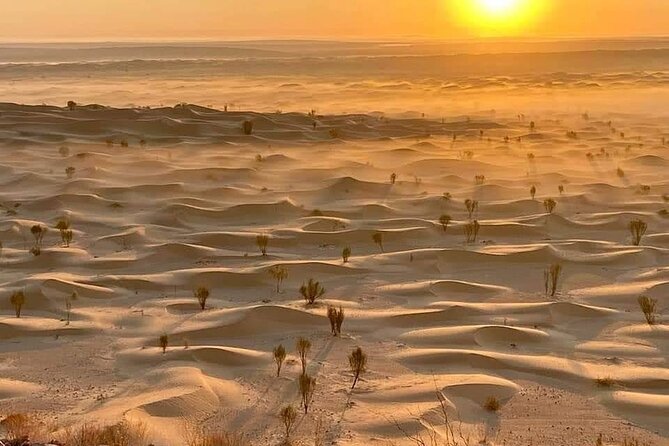
You start in Djerba, Tunisia, and the tone is set right away: the goal is to get you away from noise and back to basics. After an initial daytime stop and a shared meal, you drive into the desert so the Bedouin team and dromedaries are already there when you arrive.
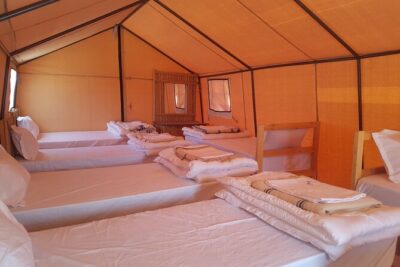
The first night is the real handoff from normal travel to desert life. Tents get set up, and there is even an option for sleeping outdoors under the stars if that is your kind of comfort level. It is a small detail, but it tells you the trip is designed to feel like you are inside the landscape, not just visiting it.
You will also want to mentally file this under “weather matters.” This experience requires good weather, and if conditions are poor, you are offered a different date or a full refund.
Those First Desert Hours in the Erg Oriental: The Feeling That Hooks People
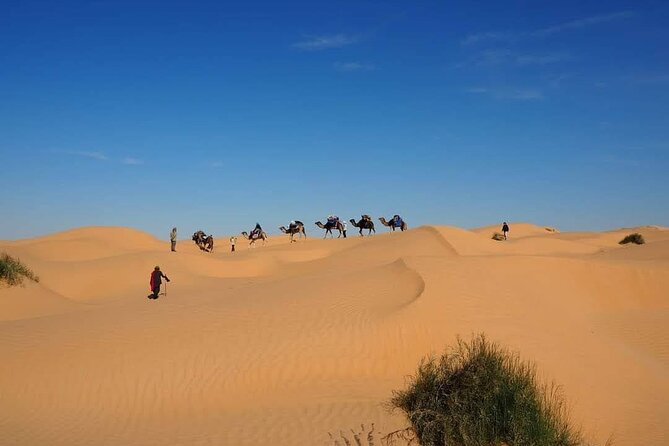
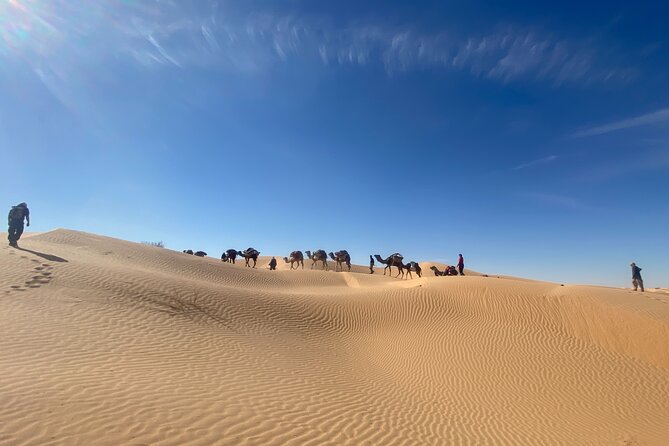
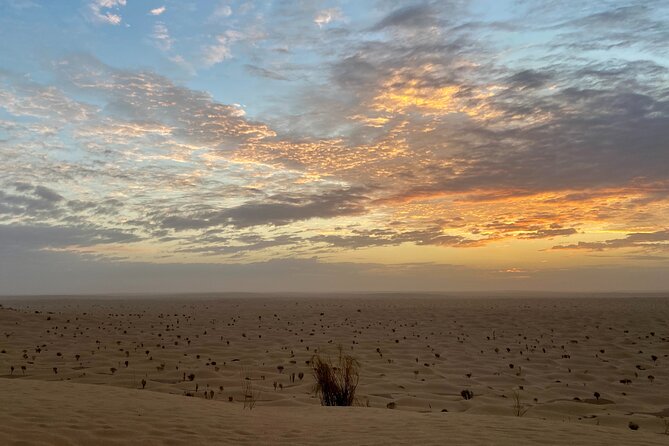
Once you are in the dunes, the trip leans into the best part of the Sahara: silence. Even when you are moving, you are moving differently. You are not bouncing through a city, you are crossing layers of sand and light, with long stretches where the world narrows to breath, wind, and footprints.
The dunes here are part of the broader Erg Oriental area, described as a sea of dunes stretching across parts of North Africa. You do not need to memorize geography to enjoy it, but it helps explain why everyone talks about the sense of distance. When reviewers used words like dream, silence, and impossible-to-describe, they were pointing at the same thing you will feel once the drive is over.
Practical note: this is a desert trek, so the pace and daily rhythm matter more than rushing from stop to stop. If you like travel plans where you can actually breathe between moments, this style fits.
Days 2 to 6: Life on the Route Through El Hedan, La Ghuezza, and More
The middle of the itinerary moves through several named desert stops: El Hedan, La Ghuezza, Hashiat Erramal, Thuall Erbaier, and Bir Abdhull. The schedule does not spell out major museum-style sights at each location. Instead, the value is the repetition of desert fundamentals, experienced from slightly different angles as you keep changing camps and walking routes.
Here is what you can reasonably expect based on how the experience is framed. You will spend your days in a rhythm of travel by desert vehicle, time on camels, and hikes through dunes. You will also be in the care of a Bedouin team that is used to feeding people in the desert and keeping the day organized without making it feel like an assembly line.
This is where the “digital detox” idea stops being a marketing line and starts being a real lifestyle. You are far from normal distractions, and the days are structured around simple needs: shade, movement, food, and rest.
Also, your fitness matters. The tour asks for moderate physical fitness, which usually means you should be comfortable with walking on uneven ground and spending time outside, not that you need to be an athlete.
Saddle up. Other camel and horseback rides across Tunisia
Bedouin Camp Evenings: Campfire Time Is the Core Memory
If you want one reason this trek shows up on people’s favorite-trip lists, it is the campfire evenings. The experience is described as authentic and unforgettable, with traditional home-cooked dishes and Bedouin time gathered around the fire.
In the reviews, that same theme comes through. People mention starry skies, silence, wind carving waves in fine sand, and music around the fire. The vibe sounds relaxed, but there is also a clear sense that the crew works hard to make everyone feel looked after.
There is another quiet win here: food support. One review specifically called out that vegetarian options were considered. I would still treat that as a “check with your operator” moment, but it is a good sign that the trip is not rigidly meat-only.
If you are the kind of traveler who loves stories, slow dinners, and sharing space with locals, those evenings will do most of the emotional heavy lifting for you.
Douz, the Gate of the Desert: Souks, Dates, and Desert People-Watching
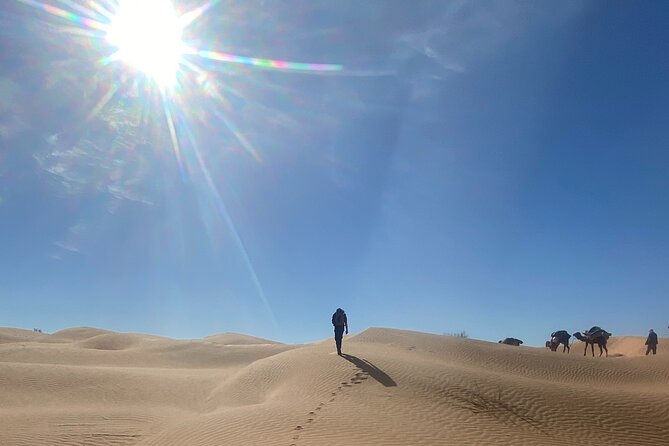
On the final full day, you head to Douz, described as the Gate of the Desert and a major crossing area for Sahara routes. Douz is also famous for high-quality dates, and the stop is built for more than a quick photo. You get time in the city center and the traditional souks.
This is the part of the trip that adds texture after days of dunes. You go from sand and silence to people, stalls, smells, and everyday life. If you want a souvenir, you are in the right place. One of the early notes for the trek also mentions that you can buy a turban, which fits the overall “live the desert aesthetic” approach.
Douz makes a good counterpoint before the final leg back to Djerba. It gives you a chance to understand that desert life is not a fantasy, it is a culture built around trade routes, oases, and daily routines.
Matmata Cave Dwellings: Troglodyte Houses as a Reality Check
After Douz, you drive about 1.5 hours to see the troglodyte houses of the Berbers in Matmata. These cave dwellings are the kind of place you cannot fully understand from a brochure. The visit is about stepping into a way of living where the home shape is tied to the environment.
You can visit one of the cave homes to see how only a few people have retained the original way of living, and you can ask questions. The experience specifically says that taking photos and asking questions is welcome with the owners.
This stop matters because it breaks the desert bubble. You are still in Tunisia, still in desert-country culture, but the focus shifts from dunes and camps to housing, shade, and adaptation. It is a strong ending, especially after days of sleeping under stars and eating desert food.
The Ferry Back Toward Djerba: A Quick Mediterranean Reset
On the way back, the plan includes a 20-minute ferry crossing across the Mediterranean, leaving the mainland and continuing through Djerba. Djerba is known for olive groves and the seaside, with a more beachy, turquoise-blue feel compared to the inland desert days.
This tiny logistics detail helps the emotional arc. You do not go straight from dunes to airport chaos. You get a short water crossing, then an island arrival that feels like a reset switch.
It also means you should think about your final-day energy. The tour ends back at the meeting point, and then you transfer to the airport depending on flight time. If your flight is early, plan to treat the end of the trek like travel day, not a slow sightseeing stroll.
Transportation and Daily Pace: What Moderate Physical Fitness Means Here
This is not a couch-to-camp experience. You do time on foot in dunes and you do time on camels. The schedule also uses 4×4 off-road vehicles from the Bedouin camp area, including a pick-up around 9:00 a.m. on the seventh day for the move to Douz.
So, what should you be comfortable with? At minimum, you should be fine with uneven sand walking, getting on and off camels, and spending long stretches sitting while moving through desert terrain. The tour says moderate physical fitness, so you are not expected to run ultramarathons. But you should take the walking parts seriously.
If you hate discomfort, this trip might feel like more work than you expected. If you can handle basic rough travel for the payoff of quiet and big skies, you will likely feel the opposite.
Price and Value: Why Some People Loved It, and Others Questioned It
At $1,110.18 per person for about 8 days, the big question is not just what you paid, it is what you got for the money.
On the pro side, you are paying for a full desert package: Bedouin-run logistics, dromedaries, desert vehicle time, multiple desert days, evening campfire programming, and a structured route that includes Douz souks and Matmata troglodyte houses. It is also a private tour, meaning it is only your group participating, which can reduce the feeling of being processed through crowds.
On the other side, you have real criticism about price-performance. Multiple reviews used phrases like disproportionate or expensive compared to other desert tours. Even positive comments often say the crew was trying hard, but some people felt the service did not justify the premium.
So I would frame value like this: if your goal is a once-in-a-lifetime desert escape with Bedouin camp nights and you prefer the smoother experience of a private group and a guide like Mounir and his crew, the cost may feel fair. If your goal is simply cheaper dunes time, you may want to compare operators closely before deciding.
The Guide Factor: Mounir and the Bedouin Crew Matter
One of the strongest signals from the reviews is the role of the guide. People mention Mounir by name and describe him as friendly, helpful, and multilingual. They also say organization was excellent and communication beforehand was strong.
That matters because desert travel is not only about scenery. It is about timing, group management, meal planning, and keeping you calm when conditions shift. When the guide is solid, the trip feels effortless in the best way.
Also, if you care about how your questions get answered, the way the tour invites interaction fits. In Matmata, questions are welcome with the home owners. In the camp setting, conversation around the fire is part of the rhythm.
Who Should Book This Sahara Camel Trek, and Who Might Want to Think Twice
This tour is a good match if you want more than a photo stop. You are choosing a multi-day camel trekking experience, with dune hikes, campfire evenings, and a real off-grid feel. I also think it suits couples and small groups who want a calmer, more personal rhythm instead of large mixed crowds.
It may be less comfortable for anyone who dislikes basic outdoor sleeping, uneven walking, or long stretches of movement with limited modern comforts. One review raised a concern about whether the trip is necessarily suitable for women traveling alone. That does not mean it is a bad choice for everyone, but it is a flag worth taking seriously.
If you fall into that category, ask the operator direct questions before booking, especially about how the crew organizes support and daily structure for solo travelers.
Should You Book This Tour?
I think you should book this camel trek if your priority is desert immersion with Bedouin camp evenings, camel and foot time, and a route that ends with Douz and Matmata. The people-know-what-they-are-doing signal is strong from repeated mentions of Mounir and the crew’s organization and care.
I would hesitate if you are very budget focused, or if you expect a high-end service level that justifies the premium price. The reviews are clear that some people felt the cost was out of line with what they received.
If you decide to go, your best move is to align expectations early. Confirm meal options for dietary needs like vegetarian food, and ask what the daily movement feels like in practice. If you want real quiet, big skies, and a desert routine you can actually feel in your bones, this is the kind of tour that can deliver.
FAQ
How long is the Sahara camel trekking tour?
The tour lasts 8 days approximately. It runs from Djerba and ends back at the meeting point, with an airport transfer on the last day depending on your flight time.
Where does the tour start and end?
It starts in Djerba, Tunisia. The experience ends back at the meeting point, and then you transfer to the airport depending on the flight schedule.
Is this tour private?
Yes. It is described as a private tour/activity, so only your group will participate.
Do I need good weather for the tour to run?
Yes. The experience requires good weather. If it is canceled due to poor weather, you will be offered a different date or a full refund.
What physical fitness level do I need?
The tour asks for moderate physical fitness. That means you should be comfortable with the physical side of camel trekking and dune walking.
Is pickup included, and will I get a ticket?
Pickup is offered. You also receive a mobile ticket, and you get confirmation at the time of booking.
What is the cancellation refund timeline?
You can cancel up to 6 days in advance for a full refund. You get a 50% refund if you cancel 2 to 6 days before the experience, and there is no refund if you cancel less than 2 days before it starts.
Everything Else We Have Reviewed in Tunisia
Saddle Time in the Dunes
Further Into the Sand
- Door of the tunisian desert Ksar Ghilane and Matmata: Full one Day
- Private getaway in the desert like no other
- Private 3-Day Excursion to the Tunisian Desert
- From Djerba: Explore the desert in a day
- 2 days tour to Douz & Ksar Ghilan oasis. and an overnight in the sahara under bedouin tent .. Dinner in the camp, Private Jeep – with english speaking guide.
Newest off the review desk in Tunisia
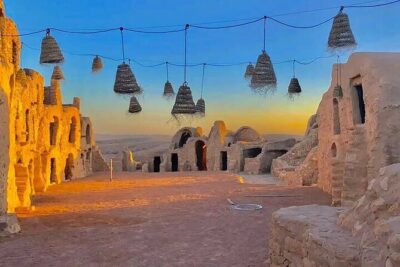
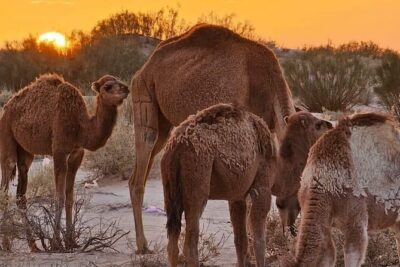
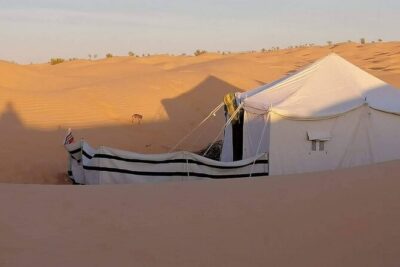
Into the Tunisian Sahara, side by side.
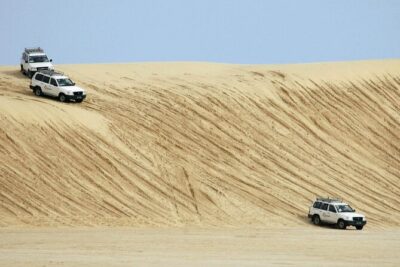 ★ 4.52-Day Tunisian Sahara Tour with Food & Stay from HammametFrom $15480 reviews
 ★ 4.5Sahara 2 Days Tour VIP In Tunisia | Guided FUN | PICKUP ALL CityFrom $10463 reviews
 ★ 4.52-Day Tunisian Sahara Tour with Food & Stay from SousseFrom $15155 reviews
 ★ 4.0Door of the tunisian desert Ksar Ghilane and Matmata: Full one DayFrom $8642 reviews
 ★ 5.0A Private Night at Desert Douz TozeurFrom $28429 reviews
 ★ 5.02-Day Tunisia Sahara Desert Camel Trek from DouzFrom $24027 reviews
 ★ 5.0Private getaway in the desert like no otherFrom $20916 reviews
 ★ 4.5Circuit the south of Tunisia in 2 days Sahara ExplorerFrom $18714 reviews
Also listed under