
REVIEW · ANCIENT CARTHAGE & SIDI BOU SAID
Historical Tour of Ancient Carthage
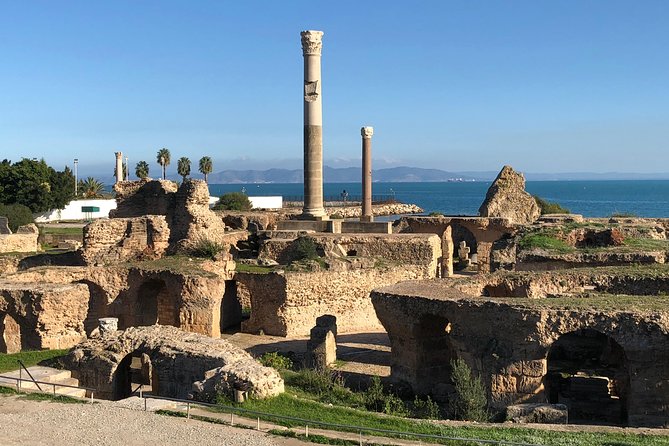
Carthage tells stories in layers. In about 3.5 hours, you move through Punic, Roman, and early Christian remains, guided in a way that makes the place feel logical instead of random. I especially loved how guide Tarek turned stone and symbols into a clear timeline and answered every question without rushing.
The second big win for me is value. Admission tickets are included for each of the major stops, and you get private transportation so you spend more time walking the ruins and less time figuring out local logistics.
One thing to consider: this is a packed history sprint. Expect a lot to absorb in a short window, plus the tour requires good weather, so plan for sun and some uneven ground at archaeological sites.
In This Review
- Key things to know before you go
- Carthage in Three Eras, Explained Simply (Tarek does the heavy lifting)
- Price and logistics: how $104 turns into real value
- Pickup and timing: the schedule is tight, but it works
- Stop 1: Site Archeologique de Carthage and the Arena of Carthage
- Stop 2: Punic Ports & Museum, walking ancient waterfront ruins
- Stop 3: Tophet de Carthage and what the site teaches about religion
- Stop 4: La Basilique De Saint Cyprien ruins with Mediterranean views
- The private group advantage: you can actually ask questions
- What to do with lunch time (and why the guide can help)
- How to prepare: weather, walking, and your expectations
- Who should book this Carthage history tour
- Should you book the Historical Tour of Ancient Carthage?
- FAQ
- How long is the Historical Tour of Ancient Carthage?
- What is the starting location of the tour?
- Is pickup offered?
- Is this tour private?
- What sites are included in the tour?
- Are admission tickets included?
- What is the price?
- Is lunch included?
- What if the weather is bad?
- What is the cancellation policy?
Key things to know before you go
- Site Archeologique de Carthage starts you off at the well-preserved Roman Arena of Carthage, with time to look around and make sense of it
- Punic Ports & Museum lets you walk ruined waterfront areas, not just see them from a distance
- Tophet de Carthage focuses on an ancient religious compound and the Carthaginian religion and practices tied to it
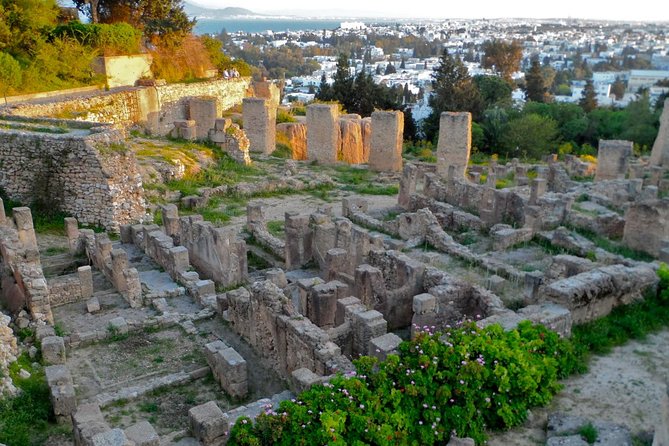
- La Basilique De Saint Cyprien ruins offer old-church history plus big Mediterranean views
- Private experience for your group means you can ask questions and set your pace with the guide
Done with the Punic ports? More Carthage and Sidi Bou Said runs to compare
- Private tour: Medina,Carthage ,Sidi Bou Said, Bardo Museum+lunch★ 5.0 · 230 reviews
- Carthage, Bardo Museum, Sidi Bou Said and Medina Private Day Tour★ 4.5 · 153 reviews
- Guided Bike Tour of Carthage Archeological Site in Tunisia★ 5.0 · 88 reviews
- Group Guided Bike Tour of Carthage Archeological Site in Tunisia★ 5.0 · 57 reviews
Carthage in Three Eras, Explained Simply (Tarek does the heavy lifting)
If you’ve ever toured an archaeological site and felt like you were reading a sign while a guide sprinted off, this is the opposite mood. I liked the way the tour threads together Carthage’s major layers without drowning you in dates.
You start at the Roman highlight inside the Site Archeologique de Carthage, then shift to the older Punic world at the Punic Ports and Museum. After that, you stand in Tophet de Carthage, which is tied to ancient religious practices, and finish at La Basilique De Saint Cyprien, where early Christian history hangs over the Mediterranean views.
Tarek’s style showed up in the practical way he answered questions. People often get stuck on the same issue: How do these pieces connect, especially when empires rise and disappear? The guide’s job is to give you a mental map. That’s what makes the ruins feel like a story you can follow.
Price and logistics: how $104 turns into real value
At $104 per person, the tour is not trying to be cheap, but it also isn’t wasting your money. The key is that a big chunk of the cost is taken care of up front.
What you get for that price:
- Private transportation
- All fees and taxes
- Admission included for each main stop (the tour explicitly includes tickets)
When you compare that to booking sites and transport one by one, the bundled approach usually makes sense. You’re paying for time saved and for someone to explain what you’re looking at.
Also, the tour offers group discounts, which can help if you’re traveling with friends or family. And because it’s often booked around 70 days in advance, it’s smart to lock in your dates early if you can. Carthage is a popular historic stop for a reason.
Pickup and timing: the schedule is tight, but it works
This experience runs about 3 hours 30 minutes. That’s a sweet spot. Long enough to cover four major areas, short enough that you don’t feel cooked before you get to the views at Saint Cyprien.
Pickup is offered, and the tour is structured around moving efficiently between sites. You’ll also be near public transportation, which is helpful for your own planning if you need a backup plan.
My practical takeaway: this is not the tour for hanging around for an extra hour at every wall. You’ll get a focused amount of time at each stop, which is good because it keeps the story moving forward. If you really want to study every corner slowly, you might pair this with some free time after.
History-heavy days out in Tunisia, more of them here

Stop 1: Site Archeologique de Carthage and the Arena of Carthage
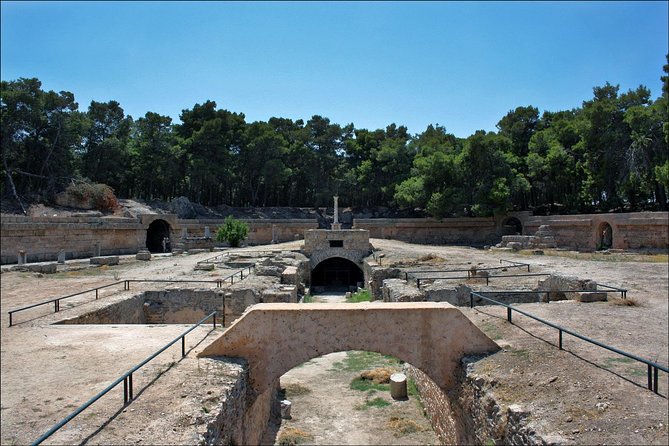
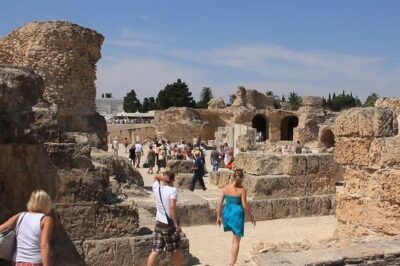
Your first stop is the Site Archeologique de Carthage, and the star is the Arena of Carthage. This Roman arena is described as well preserved, and that matters. When a structure survives in a readable form, you can actually picture how it worked.
In this part of the tour, you’re not just walking through. You’re hearing the stories behind the arena and then exploring the premises. That combination helps your brain do something useful: instead of treating it as a pile of old stone, you start to understand it as a functional public space from the Roman era.
What to watch for:
- Bring your curiosity. Arena history can be broad, but the guide keeps it tied to what you can see.
- Take a few minutes to look around before you rush into the next viewpoint. The arena is one of those places where your first glance is informative, but your second glance is where meaning clicks.
Potential drawback: this first stop sets the tone with a lot of information early. If you’re sensitive to information overload, take it step by step, pause for photos, and let the guide’s explanation land before you move on.
Stop 2: Punic Ports & Museum, walking ancient waterfront ruins
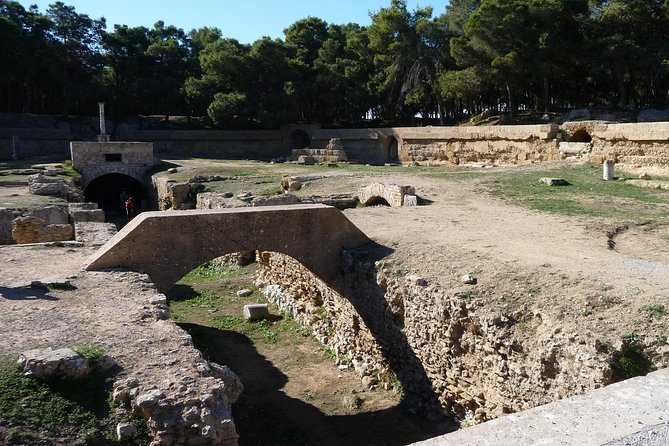
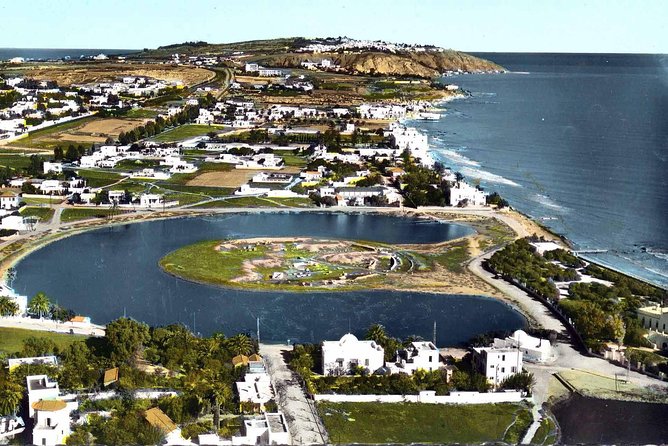
Next you shift into the older Punic layer, at the Punic Ports & Museum. Carthage was a port power, so the story here is about trade, movement, and how a city’s geography can shape its rise.
You get to walk through the ruins of the ancient port area, and the guide explains the history of Carthage in that context. This is one of the most valuable transitions in the tour because it changes your perspective. You stop thinking only in terms of monuments and start thinking in terms of infrastructure and daily life around the sea.
A practical way to enjoy this stop:
- Stand where you can imagine ships and arrivals, then let the guide’s explanation anchor that image.
- Look for clues in the layout. Ports are about function, so even partial remains can tell you a lot.
Time feels short here at about 30 minutes, but because it’s guided and focused, it works. You’re leaving with enough understanding to recognize what you are seeing when you return to the area on your own.
Stop 3: Tophet de Carthage and what the site teaches about religion
The tour then goes to Tophet de Carthage, and the focus is the Alter of Tophet, described as an ancient religious compound. You’ll learn about the history of the Carthaginian religion and its practices.
This stop can be emotionally heavy, mostly because religious sites often carry complicated meanings and modern assumptions can get in the way. The guide’s job here is important: giving you context and helping you interpret what you’re seeing based on the site itself.
How to approach it:
- Keep your questions ready. If you want clarity about what’s known and what’s interpreted, this is exactly the place to ask.
- Take the time to observe quietly for a moment. Even with a guide, some sites require a slower mindset.
Time at Tophet is about 30 minutes, which is enough to get the key background. If you personally want a deeper history reading session, plan to spend additional time in Carthage after the tour ends.
Stop 4: La Basilique De Saint Cyprien ruins with Mediterranean views
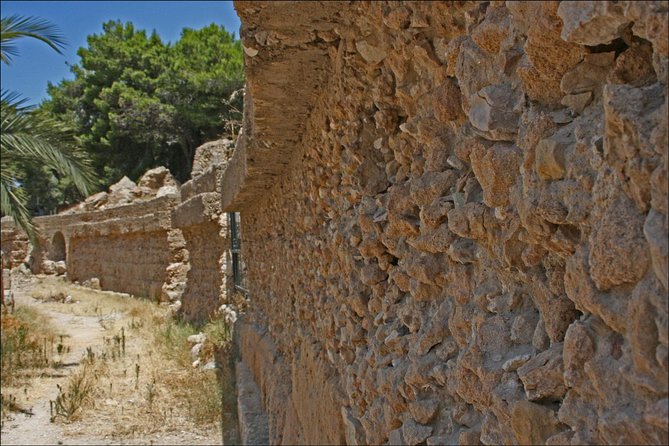
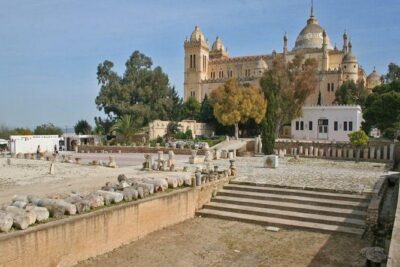
You finish at La Basilique De Saint Cyprien. This is both ruins and scenery. The ruins overlook the Mediterranean, and the views are described as breath taking.
Just as important, this site is said to be one of the oldest churches in North Africa. That means you’re not only ending with a pretty horizon. You’re landing in a marker of early Christian presence in the region.
My favorite part of finishing here is the contrast. You go from port history and a religious compound to early Christian church ruins, all while the ocean keeps reminding you that Carthage has always been shaped by connection and distance.
Practical tip: bring a phone camera plan, but also take a minute to look with your own eyes first. Ruins look different once you adjust to the light and the coastline.
The private group advantage: you can actually ask questions
This is described as a private experience restricted to your group. That sounds like marketing language, but it changes your day.
In a private group, the guide can adjust explanations if your questions point to gaps in your understanding. In the conversations I had during the tour experience, Tarek was particularly good at answering questions in a way that made the sites feel connected, not isolated.
The same goes for pacing. A group-only tour means you can pause for photos or clarification without feeling like you’re slowing down a huge crowd.
The driver, Mohammed, was also singled out as wonderful. If you’re used to spending part of your trip waiting for public transport or negotiating directions with limited time, private transportation feels like a gift. It keeps the day from turning into logistics.
What to do with lunch time (and why the guide can help)
Lunch is not included, but you can expect recommendations. Since the tour is about four focused stops, most people end up wanting food immediately after.
One helpful detail: in at least one experience, Tarek went out of the way to make sure someone got the shwarma they wanted for lunch. That’s not a promise written in the tour description, but it tells you something about the guide’s approach. If you communicate what you like to eat, you might get useful direction rather than generic advice.
My practical suggestion: decide in advance what kind of meal you want after the tour. If you love quick, casual street food, tell your guide that. If you prefer sit-down, also tell them. It keeps the transition smoother.
How to prepare: weather, walking, and your expectations
This tour requires good weather. That one line matters because archaeological sites can be less enjoyable during rain, wind, or extreme heat.
Plan for:
- Sun protection, since you’ll be outside at multiple stops
- Comfortable shoes, because you’re walking ruins and archaeological grounds
- A small mental buffer for absorbing a lot of information quickly
Also, most travelers can participate. That’s encouraging if you’re not a hardcore marathon walker. Still, this is not a chair-and-coffee tour. If you need very flat surfaces and minimal walking, think carefully and consider how you handle uneven ground.
If the weather doesn’t cooperate, you should expect a different date or a full refund. For me, that reduces stress. You can book without feeling like you’ll be stuck in an awful forecast.
Who should book this Carthage history tour
This is a great fit if you want:
- A guided overview that actually connects Punic, Roman, and early Christian layers
- Included admission for major sites, so you don’t spend your time ticket shopping
- A half-day format that won’t drain your entire day in Tunis
It’s especially appealing if you like history but also value practical context. The tour is not only about seeing famous ruins. It’s about understanding why they matter and how a port city became a multilayered crossroads.
If you already have a strong background and want totally independent wandering, you might prefer a self-guided pass with longer time at a single site. But if you want your first or second visit to Carthage to make sense fast, this guided format is a smart move.
Should you book the Historical Tour of Ancient Carthage?
Yes, if you want an efficient, guided way to get your bearings at Carthage and see the major religious and civic landmarks in one morning or afternoon block.
Book it if you value:
- Admission tickets included
- Private group experience
- A guide who answers questions and explains what you’re looking at, not just where to stand for photos
Skip it or think twice if:
- You hate walking on uneven archaeological ground
- You want very long stays at fewer locations
- You’re visiting in questionable weather and prefer total flexibility beyond what the tour offers
If your goal is to leave Carthage with a clear timeline in your head, not just a stack of pictures, this is the kind of tour that does that.
FAQ
How long is the Historical Tour of Ancient Carthage?
The tour lasts about 3 hours 30 minutes.
What is the starting location of the tour?
The tour is based in Tunis, Tunisia.
Is pickup offered?
Pickup is offered, and private transportation is included.
Is this tour private?
Yes. It is a private tour/activity, and only your group participates.
What sites are included in the tour?
You visit Site Archeologique de Carthage (including the Arena of Carthage), Punic Ports & Museum, Tophet de Carthage, and La Basilique de Saint Cyprien.
Are admission tickets included?
Yes. Admission tickets are included for each stop.
What is the price?
The price is $104.00 per person.
Is lunch included?
No. Lunch is optional, and recommendations are available.
What if the weather is bad?
The experience requires good weather. If it is canceled due to poor weather, you will be offered a different date or a full refund.
What is the cancellation policy?
You can cancel for a full refund up to 24 hours in advance. If you cancel less than 24 hours before the start time, the amount paid is not refunded.
A Wider Sweep of Tunisia
- Private Tour to Kairouan, El Jem & Monastir from Tunis_hammamet
- Private tour: Medina,Carthage ,Sidi Bou Said, Bardo Museum+lunch
- Carthage, Bardo Museum, Sidi Bou Said and Medina Private Day Tour
- Private Excursion to Testour, Dougga and Bulla Regia from Tunis.
- Guided Bike Tour of Carthage Archeological Site in Tunisia
Everything Else We Have Reviewed in Tunisia
- Private Tour to Kairouan, El Jem & Monastir from Tunis_hammamet
- Private tour: Medina,Carthage ,Sidi Bou Said, Bardo Museum+lunch
- Carthage, Bardo Museum, Sidi Bou Said and Medina Private Day Tour
- Private Excursion to Testour, Dougga and Bulla Regia from Tunis.
- Guided Bike Tour of Carthage Archeological Site in Tunisia
Carthage and Sidi Bou Said, Compared
- Private tour: Medina,Carthage ,Sidi Bou Said, Bardo Museum+lunch
- Carthage, Bardo Museum, Sidi Bou Said and Medina Private Day Tour
- Guided Bike Tour of Carthage Archeological Site in Tunisia
- Group Guided Bike Tour of Carthage Archeological Site in Tunisia
- Archaelogical Site Of Carthage + Picturesque Village Of Sidi Bou Said
Newest off the review desk in Tunisia



Ancient Carthage & Sidi Bou Said, side by side.
 ★ 5.0VIP Tour: Tunis Medina/Bardo, Sidi Bou Said, Carthage |PICKUP ALLFrom $30512 reviews
 ★ 5.0Private tour: Medina,Carthage ,Sidi Bou Said, Bardo Museum+lunchFrom $46230 reviews
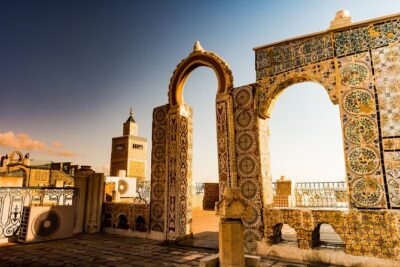 ★ 4.5Carthage, Bardo Museum, Sidi Bou Said and Medina Private Day TourFrom $30153 reviews
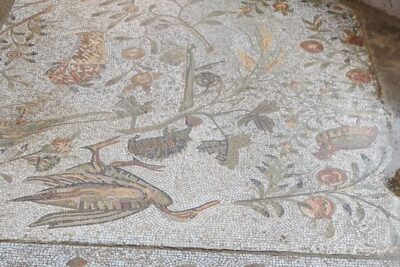 ★ 5.0Guided Bike Tour of Carthage Archeological Site in TunisiaFrom $9188 reviews
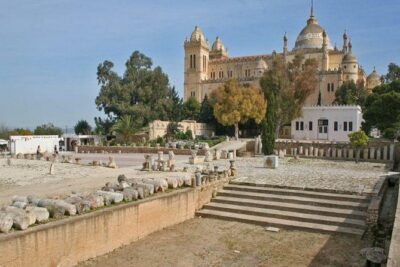 ★ 5.01 day excursion Tunis Sidi Bousaid Carthage departure from SousseFrom $11687 reviews
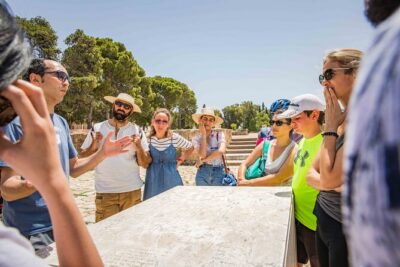 ★ 5.0Group Guided Bike Tour of Carthage Archeological Site in TunisiaFrom $5657 reviews
 ★ 5.0Archaelogical Site Of Carthage + Picturesque Village Of Sidi Bou SaidFrom $11656 reviews
 ★ 4.5Tunis, Sidi Bousaid and Carthage day trip from HammametFrom $11644 reviews
Also listed under