
REVIEW · DOUGGA, BULLA REGIA & THE ROMAN INTERIOR
Private Excursion to Testour, Dougga and Bulla Regia from Tunis.
Roman ruins, plus a Moorish detour.
If you like history with real texture, this private day ties together Testour’s Andalusian mosque town and the big Roman punch of Dougga and Bulla Regia, all from Tunis in about 8 hours. You’re also not stuck on a rigid schedule, since it’s built as a private outing for your group.
I like the way Dougga gives you scale, not just a few walls, and how Bulla Regia mixes temples and Christian sites in one archaeological stop. The main thing to plan for is physical comfort, because Dougga includes steep, uneven steps that can be tiring if you are not used to walking on rough ground.
In This Review
- Key highlights to know before you go
- A Smooth 8-Hour Private Route From Tunis
- Testour Mosque and Minaret: Andalusian Details You Can Spot
- Dougga’s UNESCO Roman City: Where the Streets Still Read Like Rome
- Bulla Regia’s Religious Sites and Underground Homes
- Price and Value: Guide, Driver, and Entry Included
- The Local Guide Factor: Names You Might Meet
- What to Wear and How to Pace the Stairs
- Should You Book This Tunis Antiquity Day?
- FAQ
- What time does the private excursion start?
- How long is the tour?
- Is this a private tour or a shared group?
- Does the tour include pickup in Tunis?
- Are entrance tickets included?
- Do I get a mobile ticket?
- What is the cancellation policy?
- Are service animals allowed, and is it suitable for most people?
Key highlights to know before you go
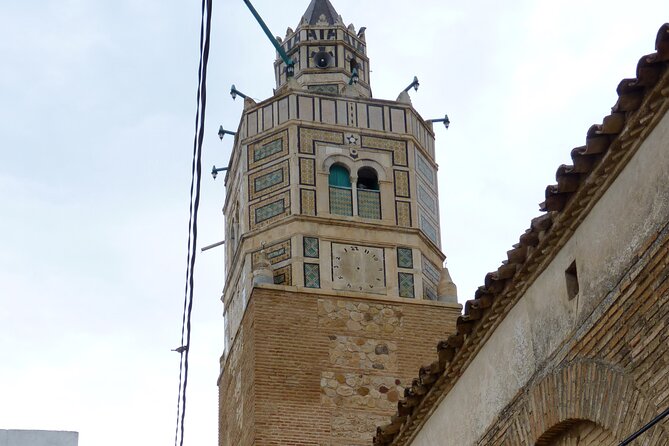
- Testour’s minaret clock runs counterclockwise, plus glazed inscriptions you can actually read up close
- UNESCO-listed Dougga (1997) is built like a complete Roman town, with forums, baths, shows, and houses
- Bulla Regia’s religious focus spans pagan, Roman civic spaces, and Christian basilicas and a church site
- Admission tickets are included for Dougga and Bulla Regia, so you are not hunting for fees mid-day
- Private format means you move at your group’s pace, and you can get better time for photos
- Most travelers can participate, but comfortable shoes matter because of uneven ground at the ruins
Roman ruins in the hills: more Dougga and Bulla Regia outings
- Private Excursion to Testour, Dougga and Bulla Regia from Tunis.★ 5.0 · 100 reviews
- Full Day Dougga & Bulla Regia Via Testour Private tour with Lunch★ 5.0 · 29 reviews
- Private Guided Tour of Dougga and Testour Mosque★ 4.5 · 15 reviews
- Roman Archeology Guided Tour Thuburbo Majus & Uthina★ 4.5 · 7 reviews
A Smooth 8-Hour Private Route From Tunis
This is a true private excursion, meaning only your group goes, not a mixed bus-load. That matters on long ruin days. You can ask questions without feeling rushed, you can pause for photos without “group herding,” and you can adapt the timing if someone needs a slower rhythm.
The day starts at 8:00 am and runs about 8 hours. That timing is smart if you want cooler morning light and more comfortable walking at the sites. Pickup is offered, and you use a mobile ticket, which helps if you do not love paperwork while traveling.
One practical note: this route involves countryside driving between Tunis and the archaeological areas north and northwest of the city. That is part of the experience, but it also means you should plan for a long sitting stretch. If you get motion sensitive, pack what you need, and bring water since you will be out all morning and much of the afternoon.
Testour Mosque and Minaret: Andalusian Details You Can Spot
Testour is your first stop, and it is a great way to ease into the day. Founded by the Moorish people in the early 17th century, it feels different from the Roman ruins later on. You get a panoramic look at the town, including the famous mosque and a minaret that is hard to miss.
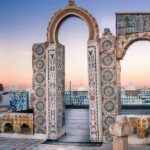
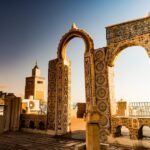
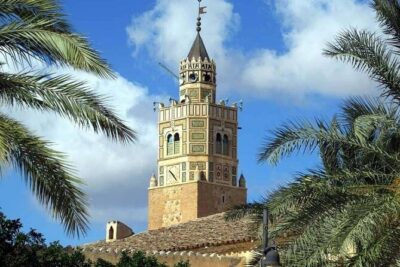
The minaret is 23 meters tall and octagonal. What you really want to notice are the details: Andalusian-style inscriptions and small double windows decorated with glazed inscriptions, plus a mechanical clock at the top. The clock’s hands turn counterclockwise, which is the kind of fact you will remember later when you start comparing regions and styles across Tunisia.
I like this stop because it gives your brain a different reference point. Before you jump into Roman civic spaces and Christian basilicas, you get a living “bridge” between cultures, Moorish and Andalusian influences in North Africa.
Time can be tight depending on your interests. If you want a long, slow look at the mosque and want time to read every inscription closely, you may wish you had more minutes. The tour does allocate time for key sights, but think of Testour as an important introduction rather than a full town immersion.
Dougga’s UNESCO Roman City: Where the Streets Still Read Like Rome
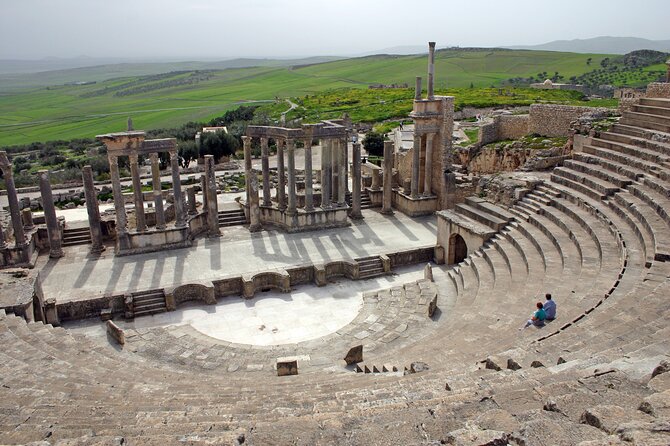
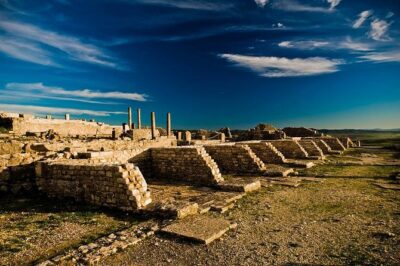
Then comes the heavy hitter. Dougga, also known historically as Thugga, is UNESCO-listed (since 1997) and often described as the best preserved small Roman city in North Africa. For me, that kind of label only matters if you can feel it on the ground. Here, you can.
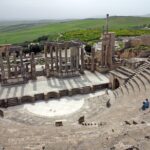
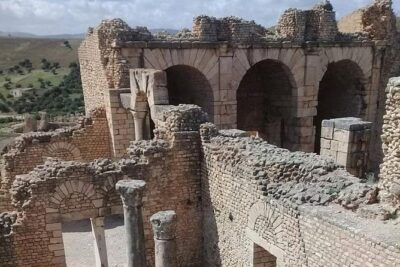
You get about 3 hours at Dougga, and that time is well spent because this is not one monument you rush past. It is a whole urban plan that survived enough to let you understand how the city functioned. You can walk through a monumental center with major landmarks like the capitol, forum, market, and the place of the wind rose. You can also see civic and ceremonial architecture such as a triumphal arch, plus the Libyco-Punic Mausoleum, which adds a local layer to the Roman story.
The “wow” factor at Dougga is the variety. You are not only looking at politics and religion. You also pass through spaces for public entertainment and daily life. The theater and circus show how the city staged events. The public baths reveal how Romans socialized and maintained routines. And the houses help you picture what ordinary living could have looked like within a major north African Roman center.
There is another reason Dougga often feels special: it can be quieter than the biggest-name Roman stops. That helps with photos, especially if you want family pictures without a crowd photobombing every angle. Even when there are visitors, the site is large enough that you can find breathing space between major points.
Wear the right shoes. Dougga involves steep, uneven steps. That can turn a beautiful ruin walk into a slog if you show up in soft sneakers or sandals. If you are fine with rugged surfaces, this is a day trip that feels worth the effort.
Just your group in the car? Other private Tunisia bookings
Bulla Regia’s Religious Sites and Underground Homes
After Dougga, you move on to Bulla Regia, a site a few kilometers north of the city of Jendouba in the northwest of Tunisia. This is one of the stops that makes you appreciate why people study Tunisia’s antiquity in detail. Bulla Regia is tied to more than one era and more than one faith tradition.
What hits first is the religious and civic mix. You will see the capitol, the temple of Apollo, and then the Christian side with two Christian basilicas and a church site connected with Alexander. That combination is not common in every ruin park, so it’s one of those places where your guide’s explanations can really change how you look at stone.
The timeline also matters. The site’s story goes back to a Numidian foundation at the end of the 6th century BC at the latest. It became a royal residence, then shifted under Roman rule. It was autonomous early in the Roman period, became a municipality under the Flavians, and later a Roman colony under Emperor Hadrian (117 to 138). By the end of the 5th century, Augustine is part of the narrative, with locals judged as bad Christians. Even if you do not want every date, that arc helps you see the site as a lived place that kept changing.
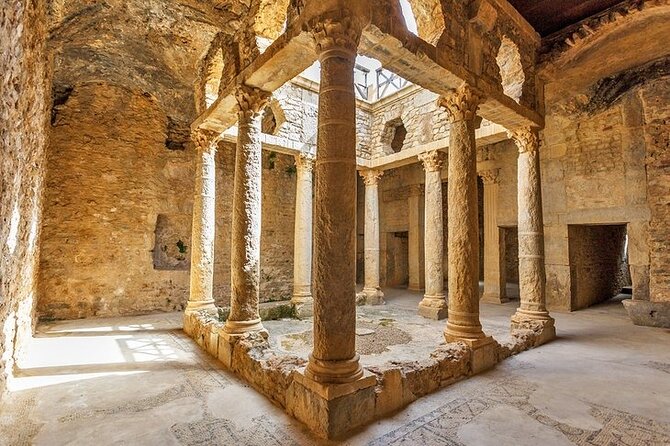
One of Bulla Regia’s famous features is its underground housing. You may hear about the underground homes while you are there, and you might spot more of it than you expect, depending on what is visible and accessible that day. If you are hoping for an obvious, fully exposed underground neighborhood, adjust your expectations. What you can see may be partial, since only some areas are uncovered.
You get about 2 hours here, and admission is included. That makes it easier to pace the stop without feeling like you are watching the clock. It’s also a good complement to Dougga. Dougga reads like a Roman city plan. Bulla Regia reads like a cultural crossroads.
Price and Value: Guide, Driver, and Entry Included
The price is $127.95 per person, and it is commonly booked around 30 days in advance. At first glance, that number can feel like “a lot” until you break down what you actually receive.
You are paying for a private outing that includes:
- Pickup offered from Tunis
- A driver for the countryside route
- A guide for interpretation across three distinct sites
- Admission tickets included for Dougga and Bulla Regia
- A mobile ticket to reduce hassle
So the value is not just the monuments, it is the logistics plus the context. If you tried to DIY this, you would still need transport, time on the road, and entry management. And you would need to understand what you are looking at once you get inside the ruins. The guides associated with this tour are repeatedly praised for giving clear explanations and answering questions on the spot.
That said, you should be honest about expectations. This is a day trip that combines a lot of ground. If you need a slow, ultra-deep museum style experience, you might feel the time limits at Testour or the second half of the day. The tradeoff is that you cover three sites in one go.
If you care a lot about comfort and safety, it is worth noting that there has been concern raised about driving style. The operator responded that vehicles are electronically limited to a maximum speed, which is reassuring. Still, if you are anxious about car rides, bring a seatbelt comfort kit mindset, meaning water, a light layer, and a calm focus. You are out with a guide, not stuck in silent transfer.
The Local Guide Factor: Names You Might Meet
The guide can make or break ruin days. Here, the names that come up in strong testimonials include Rabia, Yahya, and Chaouki (also seen spelled Chouaki), plus Yosra and Iskander (and Islander in one account). You might not get the exact same person as someone else, but you can look at these names as signals of what the operator tends to value: strong command of Tunisian and Roman context, and the ability to answer questions in a way that stays grounded.
One thing I appreciate about guides in this region is their focus on the “how it worked” story. At Dougga, that means explaining how the monumental center, forums, baths, and entertainment areas fit together. At Bulla Regia, it means connecting the religious buildings with the bigger political shifts across centuries.
Another practical advantage mentioned in people’s feedback is timing. Some guides are praised for scheduling so you can spend time without heavy crowds, which turns photos from chaotic to calm. Even if the exact crowd levels change day to day, the general approach is what you want: firm pacing plus flexibility.
If you are sensitive to unclear explanations, ask yourself whether you enjoy reading inscriptions, comparing architecture, and listening for patterns. If yes, the guide is a huge part of why this is worth your time.
What to Wear and How to Pace the Stairs
This trip is listed as suitable for most travelers, and that is broadly true because the overall route is manageable. But Dougga changes the equation a bit. You will likely deal with steep, uneven steps. That is not a reason to skip, it is a reason to dress and plan well.
Bring:
- Comfortable walking shoes with grip
- Sun protection (a hat or cap helps)
- A small day bag so you can keep your hands free
Then pace like a pro. The temptation is to rush because the ruins look endless. Instead, stop often. Focus on one area at a time, like the monumental center first, then shows and baths. When you slow down, those “small” details start to make sense: the layout choices, the way public life concentrates around central spaces, and the difference between religious and civic architecture.
If you have mobility limits, consider whether you can handle rough steps for several short stretches. Also remember that Testour is walkable, and you will want to take time at the mosque area since that minaret clock and glazed inscriptions are the kind of visual payoff you cannot fully capture from far away.
Finally, the trip requires good weather. If conditions are poor, the experience can be canceled, with an alternative date or a full refund offered. Weather matters more than people think at open-air ruins.
Should You Book This Tunis Antiquity Day?
If you want Roman Tunisia plus a Moorish-Andalusian cultural stop, this is a strong choice. It fits well if you have limited time in Tunis and still want more than one site. I also think it works well for couples, history lovers, and anyone who likes guided context rather than wandering alone with a vague map.
Book it if:
- You want Dougga with enough time to actually understand the city layout
- You like when Bulla Regia connects religious buildings with deeper Roman and pre-Roman timelines
- You prefer a private format so you can go at your group’s pace
- You are okay with uneven steps and solid walking shoes
Consider a different plan if:
- You need a slow, low-walking day, because Dougga can be step-heavy
- You crave extra time in Testour only, since that first stop can feel brief if your focus is only the mosque and minaret details
One smart move: book ahead. Since it is commonly reserved about a month out, planning early helps you lock in your preferred day and reduce stress.
FAQ
What time does the private excursion start?
The start time is 8:00 am.
How long is the tour?
It lasts about 8 hours.
Is this a private tour or a shared group?
This is a private tour, so only your group participates.
Does the tour include pickup in Tunis?
Yes, pickup is offered.
Are entrance tickets included?
Admission tickets are included for Dougga and Bulla Regia.
Do I get a mobile ticket?
Yes, the tour uses a mobile ticket.
What is the cancellation policy?
Free cancellation is available, and you can cancel up to 24 hours in advance for a full refund.
Are service animals allowed, and is it suitable for most people?
Service animals are allowed, and it states that most travelers can participate.
A Wider Sweep of Tunisia
- Private Tour to Kairouan, El Jem & Monastir from Tunis_hammamet
- Private tour: Medina,Carthage ,Sidi Bou Said, Bardo Museum+lunch
- Carthage, Bardo Museum, Sidi Bou Said and Medina Private Day Tour
- Guided Bike Tour of Carthage Archeological Site in Tunisia
- Guided tour in the UNESCO world heritage Medina of Tunis
Everything Else We Have Reviewed in Tunisia
- Private Tour to Kairouan, El Jem & Monastir from Tunis_hammamet
- Private tour: Medina,Carthage ,Sidi Bou Said, Bardo Museum+lunch
- Carthage, Bardo Museum, Sidi Bou Said and Medina Private Day Tour
- Guided Bike Tour of Carthage Archeological Site in Tunisia
- Guided tour in the UNESCO world heritage Medina of Tunis
Roman Tunisia, Inland
Newest off the review desk in Tunisia
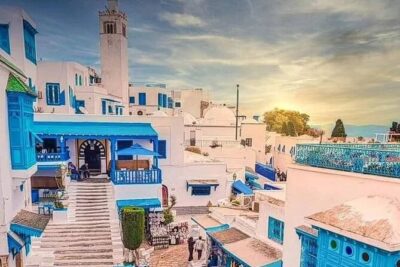
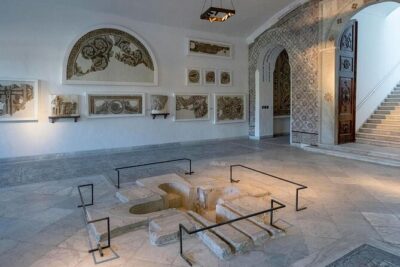
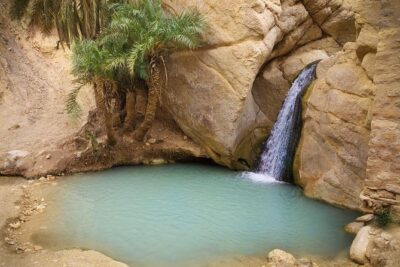


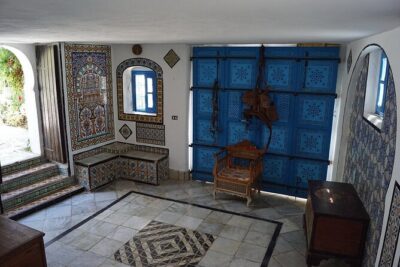
Dougga, Bulla Regia & the Roman Interior, side by side.
 ★ 5.0Full Day Dougga & Bulla Regia Via Testour Private tour with LunchFrom $11529 reviews
 ★ 5.0Private Day Trip to Testour, Dougga and Bulla Regia from HammametFrom $13321 reviews
 ★ 4.5Private Guided Tour of Dougga and Testour MosqueFrom $12715 reviews
 ★ 4.5Dougga and Bulla Regia Guided Tour From TunisFrom $14111 reviews
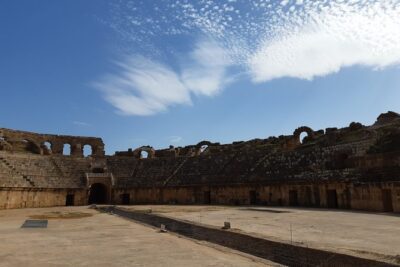 ★ 4.5Roman Archeology Guided Tour Thuburbo Majus & UthinaFrom $1407 reviews
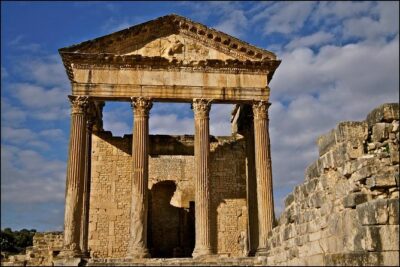 ★ 5.0Private Day Tour DouggaFrom $2366 reviews
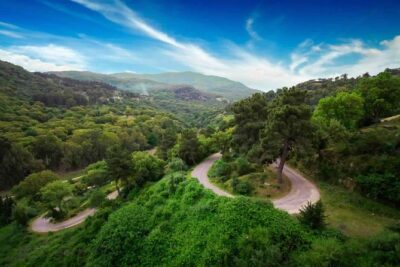 ★ 4.5Bulla Regia and Beni Mtir Cascade Daytrip from TunisFrom $1416 reviews
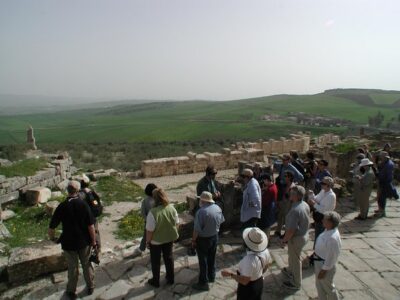 ★ 5.0Dougga Guided Day Tour from TunisFrom $1395 reviews
Also listed under