
REVIEW · DOUGGA, BULLA REGIA & THE ROMAN INTERIOR
Roman Archeology Guided Tour Thuburbo Majus & Uthina
Roman ruins, with context. I love how this day stitches together Uthina and Thuburbo Majus so you get more than pretty stones, you get the story behind them. The guide often called Fathi, a retired professor, makes the Roman sites easier to read, even if you are not a walking encyclopedia.
One thing to plan around is that lunch is not included, so bring your own snack or decide where you will eat before or after you tour.
In This Review
- Key highlights worth your attention
- A 7-hour Roman archaeology day from Tunis
- Uthina (Oudhna): Punic origins, Roman scale, and an amphitheater you can picture
- The Zaghouan aqueduct: 132 km of Roman water power, seen in a snapshot
- Thuburbo Majus: Capitol columns, forum steps, and an amphitheater that once hosted 20,000
- What makes this tour work: Fathi-style teaching and flexible pacing
- Comfort and value: tickets handled, Wi-Fi included, and transport that saves energy
- Who this tour fits best
- Should you book this Roman archaeology guided tour?
- FAQ
- How long is the Roman Archeology Guided Tour Thuburbo Majus & Uthina?
- What is the price per person?
- Is pickup offered?
- What stops are included?
- Are entrance tickets included?
- Is lunch included?
- What transportation and in-vehicle features are included?
- Is cancellation free if plans change?
- A final quick read
Key highlights worth your attention
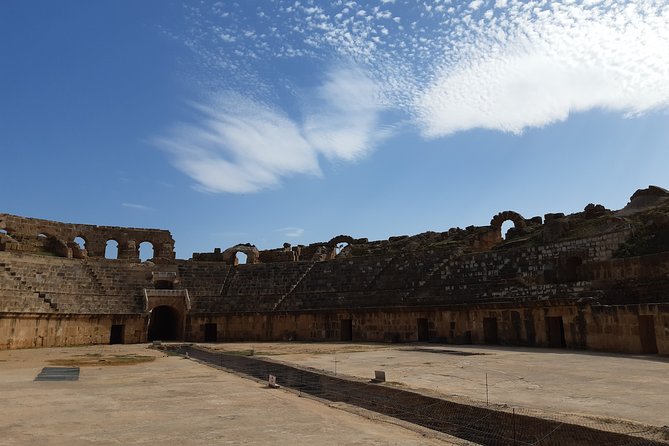
- Uthina amphitheater and a huge Roman footprint with views over the main access routes toward Carthage
- Zaghouan aqueduct to Carthage, a Roman engineering system stretching 132 km
- Thuburbo Majus at its best, including a very well-preserved Capitol and an amphitheater that once held 20,000 people
- A guide who teaches as you walk, with names like Fathi showing up in the stories people remember
- Air-conditioned private transport plus Wi-Fi, plus admissions included where it matters
- A route that stays practical, with stops timed so you do not lose the day to long transfers
Roman ruins in the hills: more Dougga and Bulla Regia outings
- Private Excursion to Testour, Dougga and Bulla Regia from Tunis.★ 5.0 · 100 reviews
- Full Day Dougga & Bulla Regia Via Testour Private tour with Lunch★ 5.0 · 29 reviews
- Private Guided Tour of Dougga and Testour Mosque★ 4.5 · 15 reviews
- Roman Archeology Guided Tour Thuburbo Majus & Uthina★ 4.5 · 7 reviews
A 7-hour Roman archaeology day from Tunis
This is the kind of tour that works if you want big Roman sites without doing your own logistics math. You are in Tunis, then you ride to archaeological stops in a private, air-conditioned vehicle, with Wi-Fi on board. The total day runs about 7 hours, and it is built to keep momentum.
At $140.96 per person, the value depends on what you prefer. If you like being driven between sites, getting entrance fees handled, and having someone point out what you would miss on your own, this is a fair price for a full half-day plus. If you are a total DIY traveler who already plans route, tickets, and timings, you might feel it is pricey. But the included admissions and transportation tilt the math toward convenience.
You also get a mobile ticket and a pickup option, which matters in North Africa where the easiest meeting spot is not always obvious. In practice, a day like this feels smoother when your time is protected.
Uthina (Oudhna): Punic origins, Roman scale, and an amphitheater you can picture
Uthina, also known as Oudhna, sits about 30 km south of Tunis. The site is positioned on a high point that once dominated key approaches into the Carthage region from the south and west, so it had strategic value long before the Romans arrived.
What I find compelling here is the layered timeline. The foundation seems to date back to the Berber era, and the place name itself hints at those older roots. Later, the city faced punishment and then Romanization. After that, it went through two periods under Vandal and Byzantine rule, each lasting close to a century, before a sharper decline after the Arab conquest in the 7th century.
Roman architecture covers a lot of ground, too. The backed-up archaeological area stretches over a hundred hectares, and it is described as packed with imposing buildings from Roman times. In a guided setting, that breadth becomes less overwhelming. You are not trying to figure out what each wall fragment is alone, you are being led through the major landmarks and the big transitions.
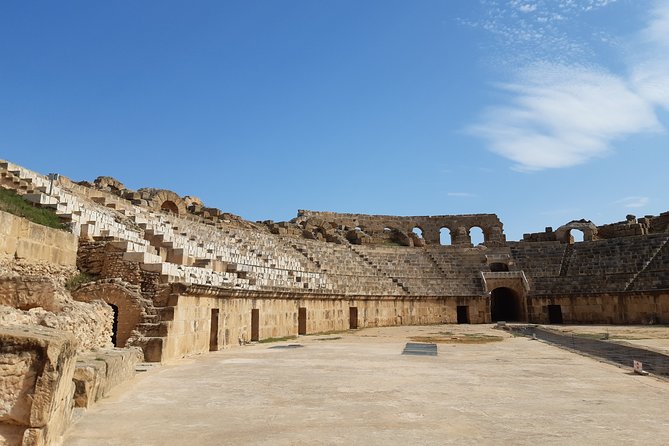
The amphitheater is the star draw for many people, and it is described as only recently fully excavated. That matters because when ruins are still coming into view, guides can help you understand what you are seeing as the site is revealed, not just as a finished museum.
Time on site is about 1 hour 30 minutes, which is enough to appreciate scale if you pace yourself. If you rush, you will just skim stones. Go slow and look outward, then back to details.
The Zaghouan aqueduct: 132 km of Roman water power, seen in a snapshot
The Roman aqueduct connected Zaghouan to Carthage and supplied water over an astonishing 132 km. This Zaghouan-Carthage hydraulic complex is described as the largest of its kind ever built. You are not just visiting a single arch, you are encountering the idea of an entire water network.
Built at the beginning of the 2nd century AD, the aqueduct had to solve a practical problem, carry water through a rugged route. Some parts run flush with the ground, other sections go underground, and on two portions the pipeline is raised by arcades. Some arcades reach more than 20 meters in height. That vertical effort is a big clue to why Roman cities could function like they did, with baths, fountains, and steady water supply.
The flow is estimated at around thirty million liters per day, which is a mind-bending number until you relate it to what it supported. Much of that water was stored in huge vaulted reservoirs at Maalga, at the entrance to Carthage, before being distributed to major sites like the Baths of Antonine.
The stop itself is short, about 20 minutes, and admission is free. This is one of those moments where your experience depends on how you want to photograph and how much you want to wander. In some cases, it can feel more like a view and photo stop than a long walk through the engineering details.
My practical advice: if you care about seeing a specific section more closely, ask. With a guide and driver, you often get a little more flexibility than you would on a fixed museum route.
Prefer someone talking you through it? More guided Tunisia trips

Thuburbo Majus: Capitol columns, forum steps, and an amphitheater that once hosted 20,000
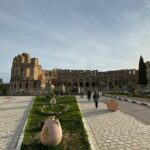
Thuburbo Majus is one of the most dramatic Roman sites you can visit in Tunisia, especially if you like when monuments are still standing up enough to imagine daily life. The city is on the side of a hill, surrounded by a fertile valley area that helps explain why the Romans valued it so much.
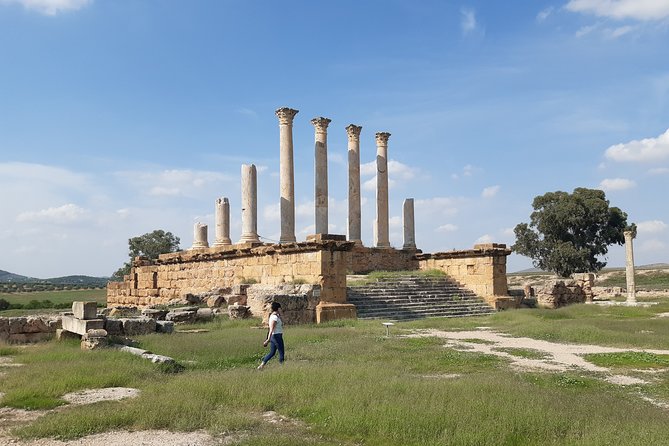
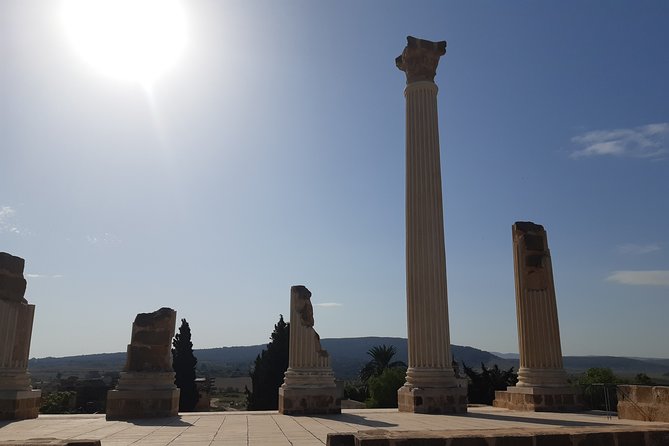
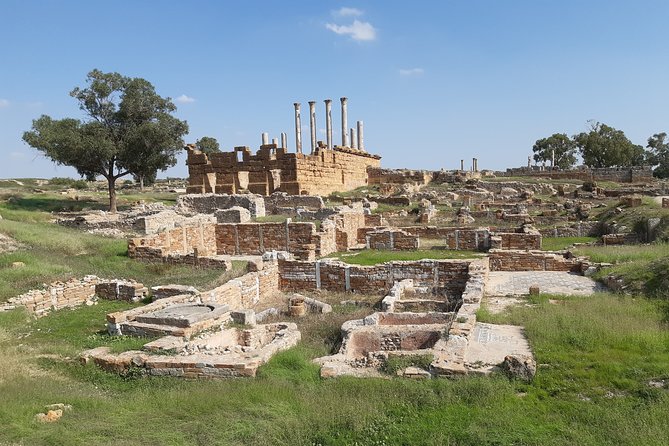
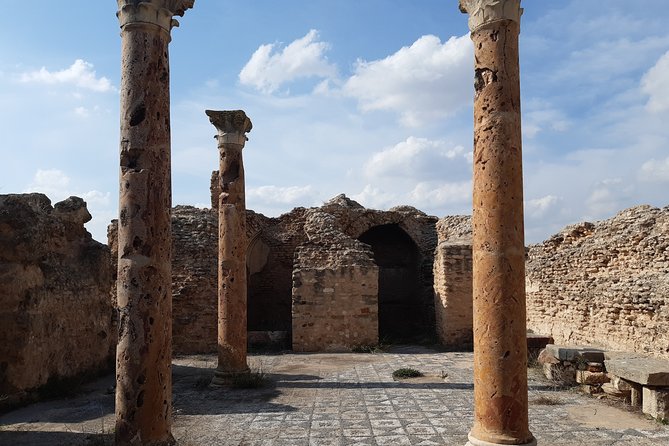
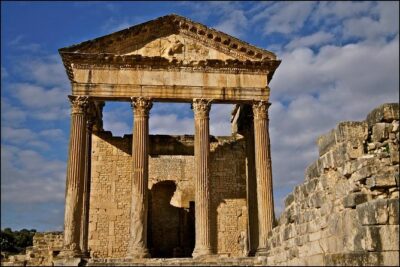
The Roman-era remains are what earn the big reputation. One of the most important buildings is the Capitol, described as the most important temple in Roman cities. It is among the best preserved in Tunisia. The facade used six Corinthian columns, and four of them are still intact. They overlook a wide staircase leading down toward the forum, so you can actually read the space as a civic stage, not just a set of stones.
Another detail I like is that Thuburbo Majus had two bathing establishments, one for winter and one for summer. That is such a practical Roman mindset, adjusting infrastructure to climate and comfort, not just copying a template.
Then there is the amphitheater. It is described as astonishing and once held up to 20,000 spectators. Standing near it, you start to understand why these cities were not quiet outposts. They were places where culture and status showed up in big public form.
Thuburbo Majus also has a story arc that makes the site feel alive. It declined in the middle of the 3rd century, then experienced a brilliant renaissance in the 4th century. During that later revival, it proclaimed itself Respublica Felix Thuburbo Majus, a name that signals pride and renewal.
The time here is about 1 hour, with admission included. It is not a full day in the ruins, but it is long enough to see the Capitol, get your bearings around the forum area, and appreciate the amphitheater without feeling like you are sprinting.
What makes this tour work: Fathi-style teaching and flexible pacing
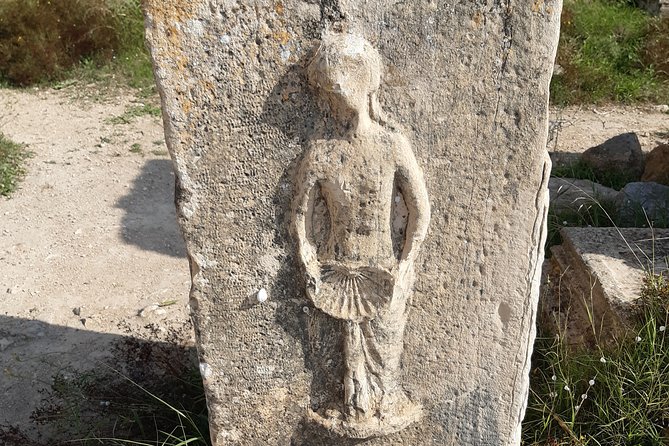
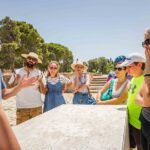
A big part of the satisfaction here is the way the tour gets taught on the move. Guides like Fathi, described as a retired professor with real passion for teaching, tend to do more than point and say dates. They explain how Roman architecture functioned and why certain sites were built in certain ways. When you understand the purpose, you stop seeing ruins as random fragments.
That teaching style also helps with the psychological side of archaeological travel. Roman sites can feel chaotic at first, because there is so much foundation, so many walls, and so many levels. A good guide helps you build a mental map fast. With Fathi mentioned by name in the tour experience, it is clear the instruction can be a major reason people remember the day.
There is also a hint of flexibility in how the day runs. Some people report being able to adjust start and end times. If you have a connecting flight, a hotel check-in, or you just want the day to feel less like a deadline, that matters.
Private tour format helps too. It is set up so only your group participates. That usually means fewer people pulling the guide away every ten minutes, and more time for questions when something clicks.
Comfort and value: tickets handled, Wi-Fi included, and transport that saves energy
For a Roman archaeology day, comfort can make or break the experience. This one checks several practical boxes: private transportation, an air-conditioned vehicle, Wi-Fi on board, and pickup offered. Add to that all fees and taxes included, plus admission tickets included for the stops where you would otherwise have to manage paperwork.
Admission at the aqueduct stop is free. For the other major sites, admissions are included as part of the tour. That is not just convenient, it also removes a common stress point, you do not have to time your day around ticket lines or separate purchase steps.
The timing is also sensible. You get longer site time where you can absorb details, like Uthina at 1 hour 30 minutes, and shorter focus stops like the aqueduct at 20 minutes.
Two practical cautions though. First, lunch is not included, so you should plan a meal stop or bring something light to hold you through. Second, you will be outdoors in the sun for parts of the day, so come ready with sun protection and comfortable walking shoes.
Who this tour fits best
This works best for people who want a strong hit of Roman archaeology in one day from Tunis, without turning the trip into a navigation project. It suits archaeology lovers, especially anyone drawn to civic architecture like forums, temples, and theaters.
It also fits travelers who want a guided explanation but do not want a slow, museum-only pace. You still get enough time at each site to appreciate what stands out, like the Capitol columns at Thuburbo Majus and the amphitheater at Uthina.
If you travel with a service animal, service animals are allowed. The tour also notes that most travelers can participate, which usually means the walking is reasonable for a typical guided ruin day, though you should still expect uneven ground and sun exposure at ancient sites.
Should you book this Roman archaeology guided tour?
If you want an organized way to see Thuburbo Majus plus Uthina and the Zaghouan aqueduct, I think this is an easy yes. The included admissions, private air-conditioned transport, and the fact that the route centers on major monuments make it good value for your time. The teaching style, with guide Fathi often singled out, is the difference between seeing ruins and understanding them.
I would hesitate only if lunch planning is a problem for you, or if you prefer long, slow wandering at one site over short stops across three. The aqueduct stop is brief, and you will need to enjoy the view-and-context style of that segment.
FAQ
How long is the Roman Archeology Guided Tour Thuburbo Majus & Uthina?
It runs about 7 hours.
What is the price per person?
The price is $140.96 per person.
Is pickup offered?
Yes, pickup is offered.
What stops are included?
You visit Uthina (Oudhna), the Zaghouan aqueduct area (aqueduc de Zaghouan), and Thuburbo Majus.
Are entrance tickets included?
Yes. Admission tickets are included for Uthina (Oudhna) and Thuburbo Majus. The Zaghouan aqueduct stop has admission listed as free.
Is lunch included?
No, lunch is not included.
What transportation and in-vehicle features are included?
You get private transportation in an air-conditioned vehicle with WiFi on board.
Is cancellation free if plans change?
Yes, free cancellation is available. You can cancel up to 24 hours in advance for a full refund.
A final quick read
If your goal is Roman Tunisia with minimal hassle, this route makes a lot of sense. You get major monuments, included admissions, and a guide who explains more than dates, all packed into one practical day.
A Wider Sweep of Tunisia
- Private Tour to Kairouan, El Jem & Monastir from Tunis_hammamet
- Private tour: Medina,Carthage ,Sidi Bou Said, Bardo Museum+lunch
- Carthage, Bardo Museum, Sidi Bou Said and Medina Private Day Tour
- Private Excursion to Testour, Dougga and Bulla Regia from Tunis.
- Guided Bike Tour of Carthage Archeological Site in Tunisia
Everything Else We Have Reviewed in Tunisia
- Private Tour to Kairouan, El Jem & Monastir from Tunis_hammamet
- Private tour: Medina,Carthage ,Sidi Bou Said, Bardo Museum+lunch
- Carthage, Bardo Museum, Sidi Bou Said and Medina Private Day Tour
- Private Excursion to Testour, Dougga and Bulla Regia from Tunis.
- Guided Bike Tour of Carthage Archeological Site in Tunisia
Roman Tunisia, Inland
Newest off the review desk in Tunisia
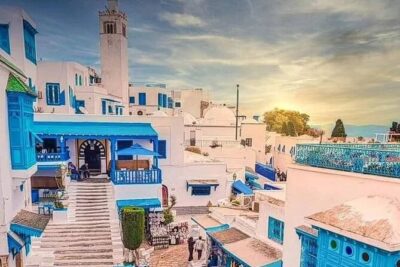
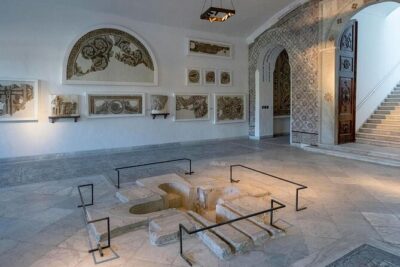
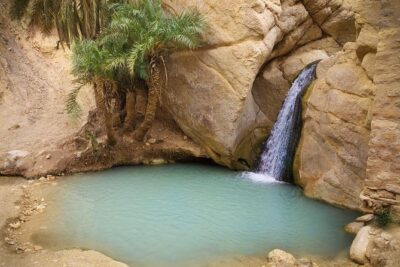


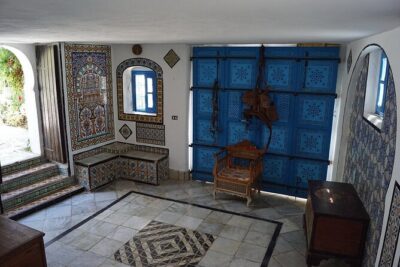
Dougga, Bulla Regia & the Roman Interior, side by side.
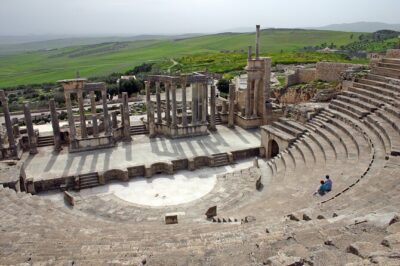 ★ 5.0Private Excursion to Testour, Dougga and Bulla Regia from Tunis.From $127100 reviews
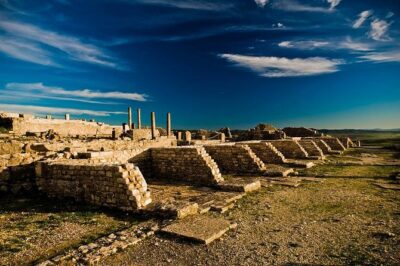 ★ 5.0Full Day Dougga & Bulla Regia Via Testour Private tour with LunchFrom $11529 reviews
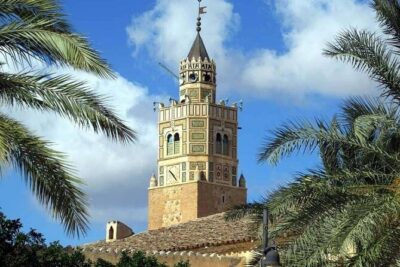 ★ 5.0Private Day Trip to Testour, Dougga and Bulla Regia from HammametFrom $13321 reviews
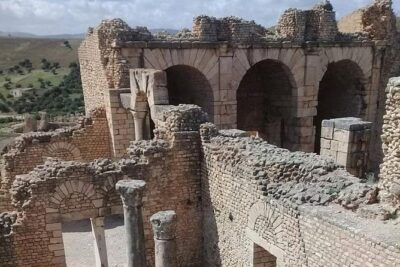 ★ 4.5Private Guided Tour of Dougga and Testour MosqueFrom $12715 reviews
 ★ 4.5Dougga and Bulla Regia Guided Tour From TunisFrom $14111 reviews
 ★ 5.0Private Day Tour DouggaFrom $2366 reviews
 ★ 4.5Bulla Regia and Beni Mtir Cascade Daytrip from TunisFrom $1416 reviews
 ★ 5.0Dougga Guided Day Tour from TunisFrom $1395 reviews
Also listed under