
REVIEW · TUNIS MEDINA & BARDO MUSEUM WALKS
Guided tour in the UNESCO world heritage Medina of Tunis
Medina of Tunis can feel like a puzzle. This guided walk turns the UNESCO labyrinth into a story you can follow, led by Tunisian National Tourism Office approved guide Saber ARRAKI and anchored at major landmarks like Zitouna Mosque. I especially love how the route mixes big-ticket sights with everyday life, so you see both the architecture and the way people actually use these streets. One thing to consider is that not every building’s entry is covered, so you may need to budget extra for Dar Lasram.
You get real structure in a place that’s easy to wander in circles. The small group size (max 15) helps the guide keep you moving at a good pace, while still pausing for photos and questions. The main drawback is the ticket mix: Dar Lasram’s admission is listed as not included, while other stops are free or included.
In This Review
- Key highlights you will feel fast
- UNESCO Medina of Tunis, made human with a certified guide
- Meeting in La Kasba at 9:00 AM and finishing in La Medina
- Zitouna Mosque: the Olive Tree heart of Tunis
- Dar Lasram: a traditional Tunisian house with real functions
- Medersa Slimaniya or Bir Lahjar: school buildings with sharp backstories
- Souk Al Attarine and Café du Souk: sensory stops that are not just shopping
- Rue de la Kasbah, Hammouda Pasha Mosque, and craft layers you can spot
- Dar El Jeld photo break and the monument string on Rue du Pacha
- Price and ticket value for a UNESCO medina overview
- Who should book this Medina walk, and who might skip it
- Should you book Saber ARRAKI’s UNESCO Medina tour?
- FAQ
- How long is the guided tour in the Medina of Tunis?
- Where does the tour start and where does it end?
- What is the price per person?
- What time does the tour begin?
- How many people are in the group?
- What is included in the price?
- Are entrance tickets included for all stops?
- Do I need private transportation?
- What language support should I expect?
- Is free cancellation available?
- Does the tour run in any weather?
- Are service animals allowed?
Key highlights you will feel fast
- Certified local guide, Saber ARRAKI, approved by the Tunisian National Tourism Office
- Zitouna Mosque context, including its origins tied to Malikism and Carthage-era columns
- A madrasas focus, with Medersa Slimaniya and the option for Madrasa Bir Lahjar
- Souk-to-souk route that includes perfumers, goldsmiths, chaouachine crafts, and hammam discovery
- Plenty of “inside” moments plus short windows to step into quieter lanes and monuments on Rue du Pacha
- Short stops that add up, so first-time visitors get a strong overview without getting lost
Souk legs not tired yet? More walks through the Tunis medina and the Bardo
- Private tour: Medina,Carthage ,Sidi Bou Said, Bardo Museum+lunch★ 5.0 · 230 reviews
- Carthage, Bardo Museum, Sidi Bou Said and Medina Private Day Tour★ 4.5 · 153 reviews
- Guided tour in the UNESCO world heritage Medina of Tunis★ 5.0 · 68 reviews
- Tunis: Carthage, Bardo Museum, Sidi Bou Said & Medina Group Tour★ 4.5 · 33 reviews
UNESCO Medina of Tunis, made human with a certified guide
Tunis’ Medina is UNESCO World Heritage for a reason. It’s huge, layered, and full of small turns that can either be fun or exhausting. What makes this tour work is the guide. Saber ARRAKI is a national certified guide approved by the Tunisian National Tourism Office, and that credential matters in the medina, where the difference between a good walk and a frustrating walk is often knowing where to look and what to ignore.
This also shows up in the way the tour is paced. You do not just get a list of names. You get context. For example, you will hear how major sites fit together, then you jump to souks and everyday corners so the architecture does not feel like a museum piece.
Meeting in La Kasba at 9:00 AM and finishing in La Medina
The tour starts in La Kasba, Tunis, and ends in La Medina. It runs about 2 hours 30 minutes to 3 hours 30 minutes, starting at 9:00 AM. That morning timing is smart because the streets can get hotter and busier as the day goes on.
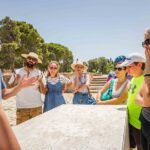
You also travel as a small group of up to 15. That’s big enough to keep it lively, but small enough that the guide can manage the crowd and still stop for photos. You will have a mobile ticket, and there are group discounts, which is useful if you are traveling with others.
Transportation is not included, so you plan your own way to the meeting point. The route is walking-focused, which means the biggest “logistics” item is comfort: wear shoes you can walk in for a couple of hours on uneven stone.
Zitouna Mosque: the Olive Tree heart of Tunis
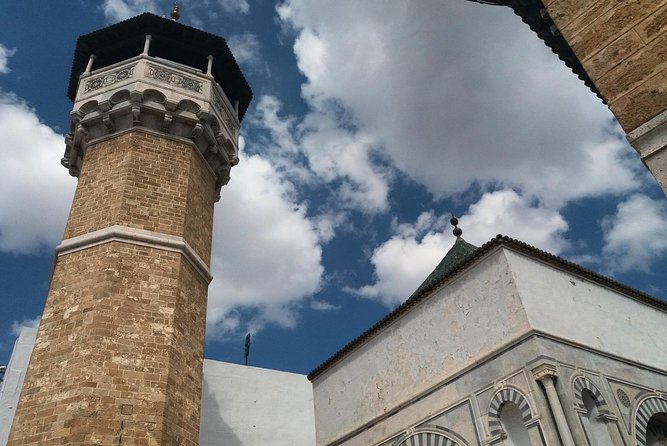
The first major stop is Zitouna Mosque, also called the Mosque of the Olive Tree. This is the main mosque in the medina and the kind of place where the guide’s narration instantly gives the whole area a framework.
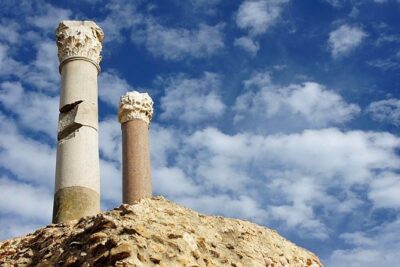
What you will learn here is not vague. The tour explains that Zitouna is attached to Malikism and is the oldest and largest sanctuary in Tunisia’s capital. It also covers scale and details, like the mosque sitting on about 5,000 m², having nine entrances, and featuring 184 ancient columns, many connected to the Carthage site.
That last detail matters. When you stand near these columns, you start noticing how layers of time appear in the built environment. You begin to see the medina as an archive, not just a shopping zone.
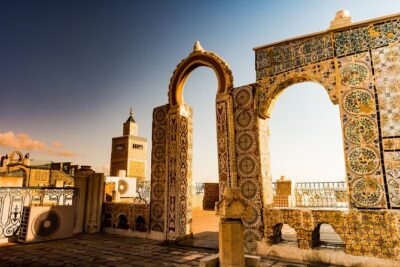
From the guidance and pacing, you should also expect a viewpoint moment. The rooftop perspective is specifically highlighted in customer feedback, including a panorama with sightlines toward Al-Zaytuna Mosque.
Prefer someone talking you through it? More guided Tunisia trips
Dar Lasram: a traditional Tunisian house with real functions
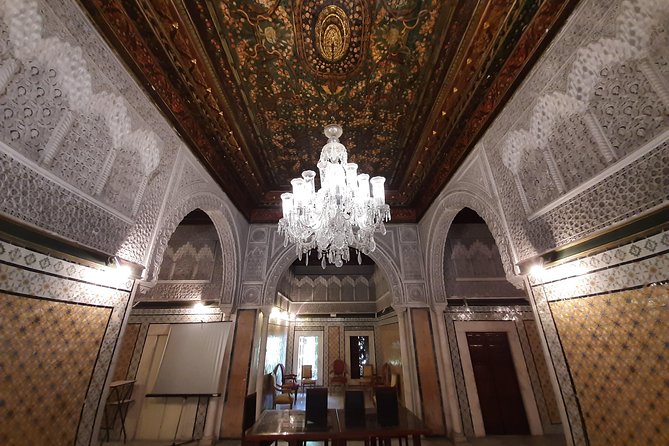
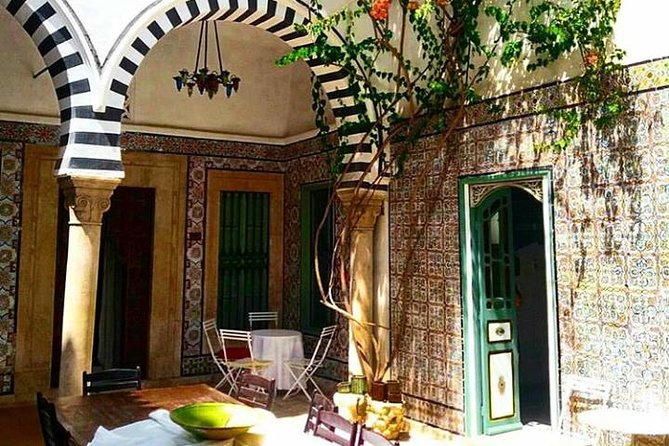
Next comes Dar Lasram, a traditional Tunisian house that shows how homes used to work, not just how they looked. The building is described as covering about 2,250 m², and the tour breaks it down by level:
- Ground floor: shop and service house
- Main upstairs living space
- Upper level: guest house
That layout helps you picture how commerce and daily life blended. In a medina, that blend is the whole point. You are not separating life from architecture. You are seeing how people organized space for work, visiting, and community.
Dar Lasram is also described as being split between the Medina Safeguarding Association and the Tahar-Haddad Cultural Club in the store. So even if you are not a history buff, this stop gives you a sense of how locals protect and reuse heritage buildings.
Timing: you spend about 30 minutes here. Important detail: the admission ticket for Dar Lasram is listed as not included, so plan for that extra cost if you want to go inside.
Medersa Slimaniya or Bir Lahjar: school buildings with sharp backstories
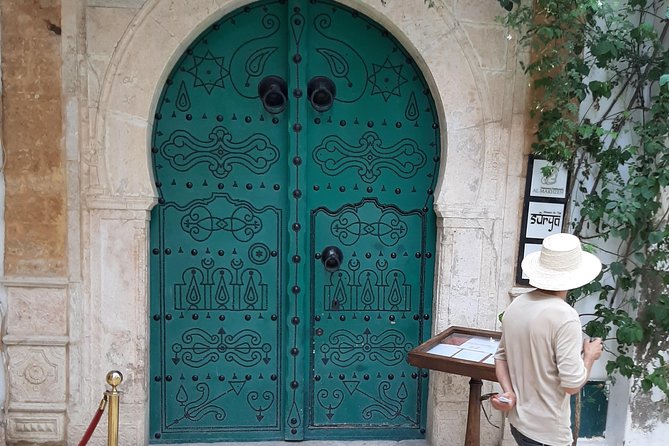
From the mosque zone, you move to education architecture, starting with Medersa Slimaniya. The tour frames this madersa as one of the key schools in the medina, built in 1754 by Ali I Pasha in memory of his son Suleiman, who is described as having been poisoned by his brother. That story gives the building emotional weight, which is exactly what you want for older religious and educational spaces.
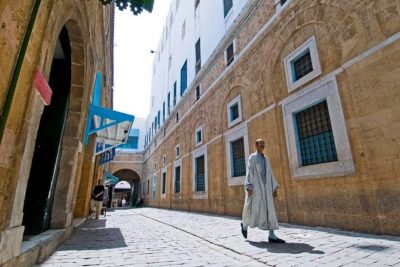
The location also matters: it sits near Zitouna Mosque, at the corner of souq El Koutbiya and souq El Kachachine. In other words, you are not traveling to a far-off monument. You are already in the heart of the medina’s daily routes.
The tour lists Medersa Slimaniya admission as included and gives it about 15 minutes.
There’s also a helpful flexibility built into the experience: during the tour you have a choice to visit Bir Lahjar or Slimaniya. If Bir Lahjar is the option you take, you will be walking through Madrasa Bir Lahjar, described as hosting Malikite students from different regions for decades. Its admission is listed as included for the stop.
So either way, you get an education-focused lens, but you might see one madersa or the other depending on how the day’s route is handled.
Souk Al Attarine and Café du Souk: sensory stops that are not just shopping
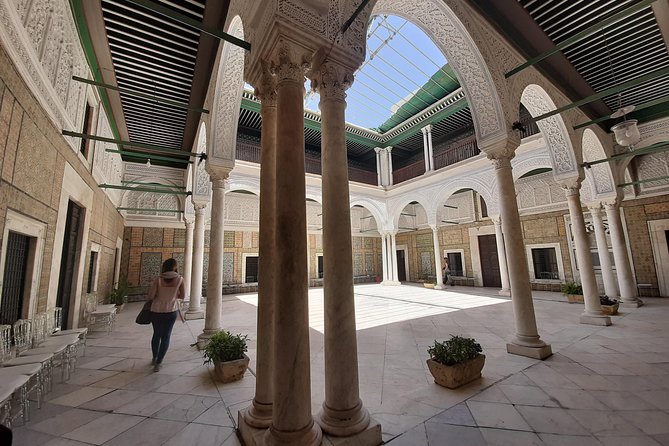
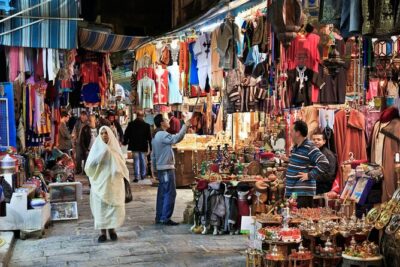
After the madrasas, the tour shifts into souk territory. Souk Al Attarine, the souk of perfumers, specializes in perfume and beauty products. This is a shorter stop, about 15 minutes, and it works best if you treat it as a guided orientation. A guide helps you understand what you are seeing without turning it into a sales pitch marathon.
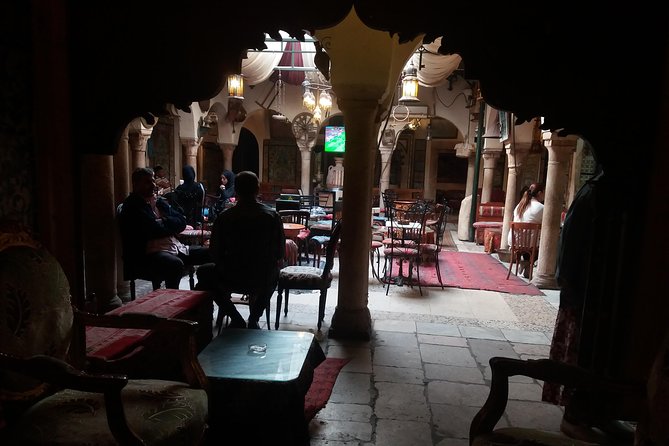
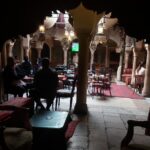
Then you move to Café du Souk for about 30 minutes. Admission is listed as free. The value here is less about the menu and more about the pause. The medina can be intense, with turns and sound and crowds. A sitting break lets your brain catch up, and it lets you watch how people move through the same lanes you are walking.
Even if you do not plan to shop, these souk stops are where the tour becomes “real life.” You start understanding how the medina functions, day to day.
Rue de la Kasbah, Hammouda Pasha Mosque, and craft layers you can spot
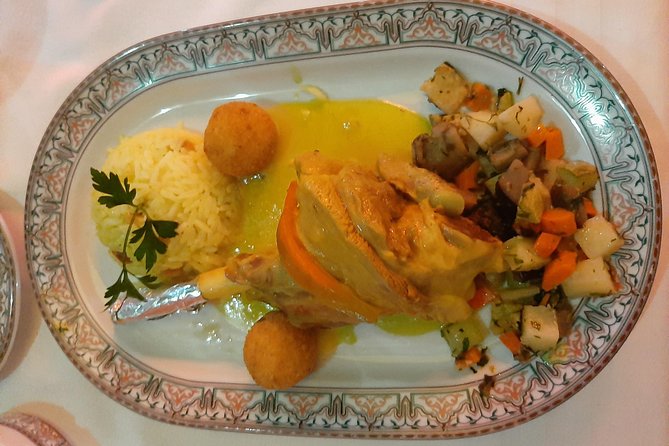
The route then moves through a series of shorter discoveries, each one giving you another layer of the medina.
You’ll stop along Rue de la Kasbah with a discovery of the Hammouda Pasha Mosque. This segment is brief, about 5 minutes, and it is designed as a quick orientation. You get to connect the corridor of streets to the presence of religious architecture without it feeling like a long detour.
Then come a couple of crafts and daily-life spaces:
- Souk el-Birka, the market of Goldsmiths (about 5 minutes)
- Hammam el Kachachine discovery (about 5 minutes)
These are not long visits, but that’s kind of the point. The medina is a network. You sample different nodes, so your mental map forms faster.
Next you visit Grand Souk des Chechias, focused on traditional Chaouachine crafts, about 15 minutes. This is a good chance to ask questions about materials and production if your guide is chatty that day, because a strong guide can turn a shop visit into a story about work and identity.
Dar El Jeld photo break and the monument string on Rue du Pacha
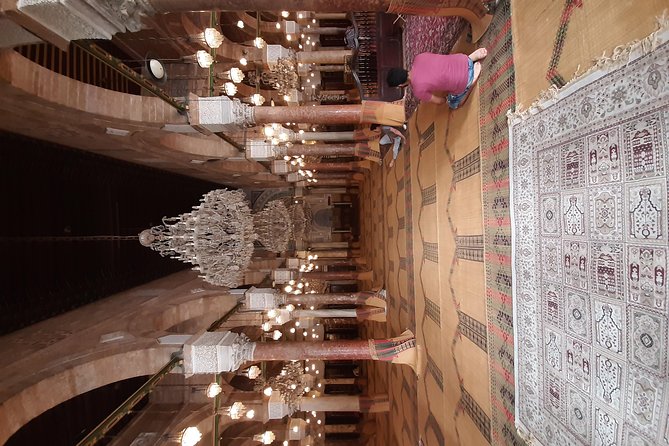
Midway through, the tour includes a photo break near Dar El Jeld, described as an old residence converted into a gourmet restaurant. This stop is very short, about 5 minutes, and admission is free. Use it for photos, but also for a useful mental trick: look at the exterior details and think about how restaurants and businesses repurpose historic spaces while keeping some of the old character.
Then you move onto Rue du Pacha, which the tour describes as full of monuments. This is one of the longer stretches at about 30 minutes, with multiple highlighted sites, including:
- Dar Hammouda Pasha
- Didi ben Arous mausoleum
- Hammouda Pasha Mosque
With a good guide, this segment is where the medina starts clicking into place. You stop treating the area as random streets and start seeing it as an organized set of neighborhoods with meaningful landmarks.
Price and ticket value for a UNESCO medina overview
At $46.53 per person, this is not just a “walk and hope” kind of tour. You are paying for a certified guide, a structured route, and the ability to spend your limited time seeing the kinds of places that are hard to find or understand on your own.
Duration helps here. At roughly 2 hours 30 minutes to 3 hours 30 minutes, it’s a solid half-day commitment that gives you a broad overview without swallowing your entire morning or day.
Now the part that affects value most: tickets.
- Medersa Slimaniya: admission ticket included
- Bir Lahjar (if chosen): admission ticket included
- Souk Al Attarine and Café du Souk: admission free
- Several discoveries and market stops: admission listed as free
- Dar Lasram: admission ticket not included
So, you should treat the tour price as “mostly included,” not fully all-in. If you want to avoid surprises, plan extra for Dar Lasram and bring a payment option that makes sense locally.
Also note a practical reality: the experience requires good weather. If conditions are poor, you should expect a reschedule or a full refund, which matters because walking tours depend on sidewalks and visibility.
Who should book this Medina walk, and who might skip it
Book this tour if:
- You are visiting the Medina for the first time and want a clear sense of direction
- You care about mosques, madrasas, and how the medina evolved
- You want local-life stops like perfumer souks, goldsmith areas, and hammam discovery, without getting overwhelmed by side streets
- You like tours where the guide answers culture questions patiently, including personal context, not just dates
You might want a different plan if:
- You are traveling very slowly and prefer long independent wandering sessions without structure
- You dislike mixed ticket situations, because Dar Lasram’s admission is not included
That said, one of the best signals in the feedback is how the guide handles different ages and attention spans. If you bring kids or you need frequent photo stops, the small-group format gives the guide room to manage the pace.
Should you book Saber ARRAKI’s UNESCO Medina tour?
I think this is a strong buy for most first-time visitors to Tunis. The reason is simple: the Medina can be gorgeous and exhausting at the same time. This tour gives you an organized route anchored at Zitouna Mosque, then connects you to madrasas, souks, crafts, and monuments so you leave with a mental map, not just photos.
Just go in with two prep items: wear good walking shoes, and expect that Dar Lasram may require an extra entry fee. If you want a guided backbone for your medina time, this is the kind of tour that makes the rest of your days easier.
FAQ
How long is the guided tour in the Medina of Tunis?
The tour lasts about 2 hours 30 minutes to 3 hours 30 minutes.
Where does the tour start and where does it end?
It starts at La Kasba, Tunis, Tunisia, and ends in La Medina, Tunis, Tunisia.
What is the price per person?
The price is $46.53 per person.
What time does the tour begin?
The start time is 9:00 am.
How many people are in the group?
The maximum group size is 15 travelers.
What is included in the price?
The tour includes all fees and taxes. A mobile ticket is used.
Are entrance tickets included for all stops?
No. Dar Lasram admission is listed as not included. Medersa Slimaniya and Arts center Bir Lahjar admission are listed as included, and several other stops are listed as free.
Do I need private transportation?
Private transportation is not included, so you will arrange your own way to the meeting point.
What language support should I expect?
Based on tour feedback, the tour has been delivered in both English and French.
Is free cancellation available?
Yes. You can cancel up to 24 hours in advance for a full refund, as long as you cancel at least 24 hours before the experience’s start time.
Does the tour run in any weather?
It requires good weather. If canceled due to poor weather, you’ll be offered a different date or a full refund.
Are service animals allowed?
Yes, service animals are allowed.
A Wider Sweep of Tunisia
- Private Tour to Kairouan, El Jem & Monastir from Tunis_hammamet
- Private tour: Medina,Carthage ,Sidi Bou Said, Bardo Museum+lunch
- Carthage, Bardo Museum, Sidi Bou Said and Medina Private Day Tour
- Private Excursion to Testour, Dougga and Bulla Regia from Tunis.
- Guided Bike Tour of Carthage Archeological Site in Tunisia
Everything Else We Have Reviewed in Tunisia
- Private Tour to Kairouan, El Jem & Monastir from Tunis_hammamet
- Private tour: Medina,Carthage ,Sidi Bou Said, Bardo Museum+lunch
- Carthage, Bardo Museum, Sidi Bou Said and Medina Private Day Tour
- Private Excursion to Testour, Dougga and Bulla Regia from Tunis.
- Guided Bike Tour of Carthage Archeological Site in Tunisia
Deeper into the Tunis Medina
- Private tour: Medina,Carthage ,Sidi Bou Said, Bardo Museum+lunch
- Carthage, Bardo Museum, Sidi Bou Said and Medina Private Day Tour
- Tunis: Carthage, Bardo Museum, Sidi Bou Said & Medina Group Tour
- Private Day Tour Tunis Medina Carthage Sidi Bou Said Bardo Museum
- Daytrip Carthage Sidi Bousaid Bardo and Tunis Medina
Newest off the review desk in Tunisia
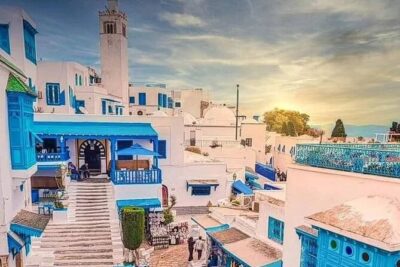
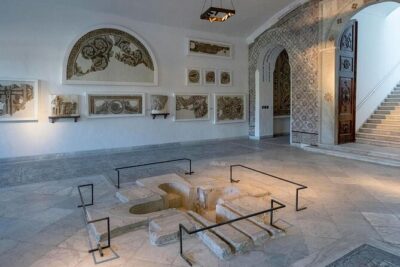
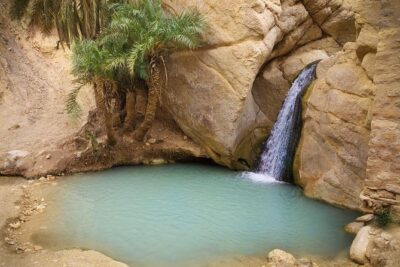

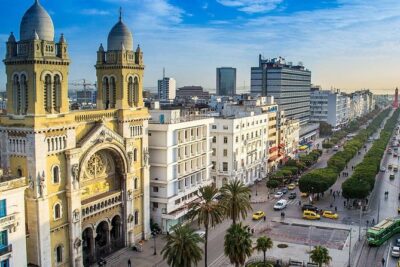
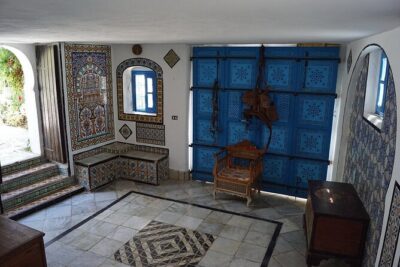
Tunis Medina & Bardo Museum Walks, side by side.
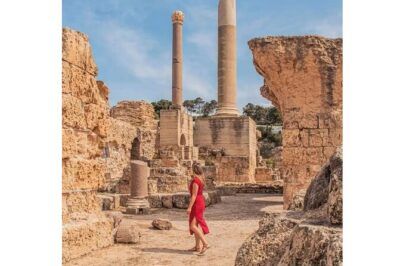 ★ 5.0VIP Tour: Tunis Medina/Bardo, Sidi Bou Said, Carthage |PICKUP ALLFrom $30512 reviews
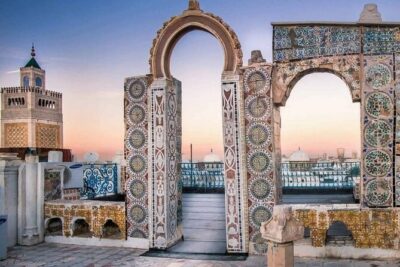 ★ 5.0Private tour: Medina,Carthage ,Sidi Bou Said, Bardo Museum+lunchFrom $46230 reviews
 ★ 4.5Carthage, Bardo Museum, Sidi Bou Said and Medina Private Day TourFrom $30153 reviews
 ★ 4.5Tunis: Carthage, Bardo Museum, Sidi Bou Said & Medina Group TourFrom $4533 reviews
 ★ 5.0Private Day Tour Tunis Medina Carthage Sidi Bou Said Bardo MuseumFrom $23430 reviews
 ★ 4.5From Hammamet or Tunis: Carthage, Bardo, Sidi Bou said and MedinaFrom $3530 reviews
★ 5.0Private tour: Medina,Carthage ,Sidi Bou Said, Bardo Museum+lunchFrom $4028 reviews
★ 4.5From Hammamet or Tunis: Carthage, Bardo, Sidi Bou said and MedinaFrom $3530 reviews
★ 5.0Private tour: Medina,Carthage ,Sidi Bou Said, Bardo Museum+lunchFrom $4028 reviews
 ★ 3.5Carthage, Sidi Bousaid, and La MédinaFrom $7527 reviews
Also listed under