
REVIEW · DOUGGA, BULLA REGIA & THE ROMAN INTERIOR
Private Guided Tour of Dougga and Testour Mosque
One road. Two UNESCO sites. One very odd clock. This private full-day tour gives you guided time at Dougga and Aïn Tounga, then wraps with the Great Mosque of Testour, including its famous counterclockwise minaret clock. It is a practical way to see a lot of Tunisia without stressing over getting from place to place.
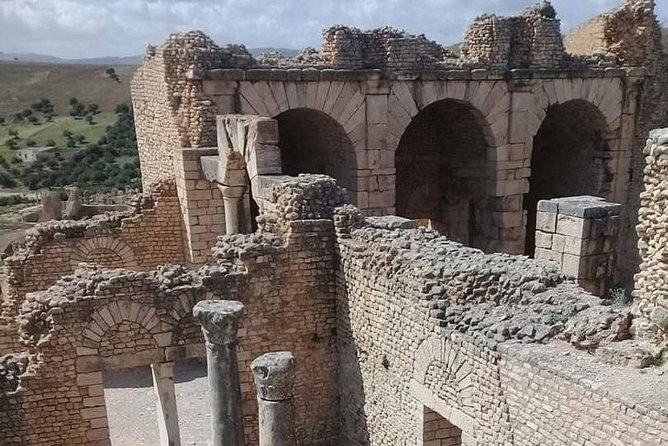
What I like most is how much Dougga feels like a whole ancient town, not a few scattered ruins. You get to walk among Roman streets and buildings, and the site also includes older Phoenician elements, like a Punic temple and a cleansing bath. I also like that the tour is truly private, so your guide can set the pace for your group instead of herding you through stops.
One consideration: this is a good-weather day. If conditions are poor, the plan can change or you may be offered a different date, so keep your schedule flexible if you can.
In This Review
- Key highlights to look for
- Dougga’s hilltop Roman town, where you can move like you mean it
- Ain Tounga on the hillside, a quieter archaeological stop worth your time
- Testour’s Great Mosque and its counterclockwise minaret clock
- Door-to-door private pickup: the underrated reason this tour works
- The real value of $127.81 per person
- How to pace a 6 to 7 hour day without getting cranky
- Who this tour fits best (and who might want something else)
- A word about guides, and why it matters here
- Should you book the Private Guided Tour of Dougga and Testour Mosque?
- FAQ
- How long is the Dougga and Testour Mosque private guided tour?
- What stops are included in the itinerary?
- Is pickup included, and where does it start from?
- Are admission tickets included?
- Is this tour private?
- Do I need a printed ticket?
- Is the tour dependent on weather?
- What is the cancellation policy?
Key highlights to look for
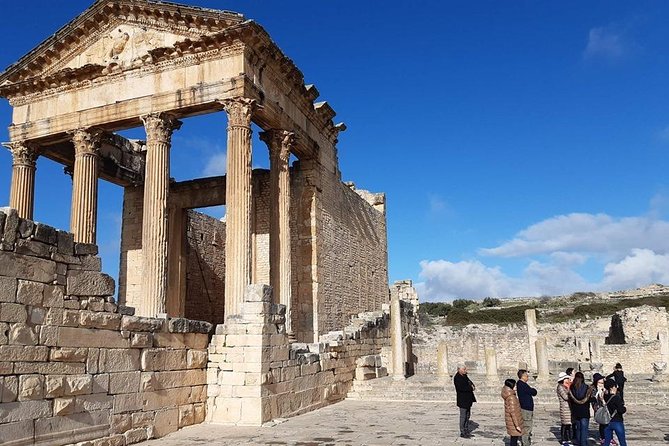
- Dougga as a preserved Roman town, not just isolated monuments
- Phoenician and Roman layers in the same archaeological area
- Aïn Tounga off the main circuit, with a quieter feel
- Testour’s Andalusian clock on the minaret, with counterclockwise motion and upside-down numbers
- Door-to-door pickup from Tunis or Hammamet, which protects your time
Roman ruins in the hills: more Dougga and Bulla Regia outings
- Private Excursion to Testour, Dougga and Bulla Regia from Tunis.★ 5.0 · 100 reviews
- Full Day Dougga & Bulla Regia Via Testour Private tour with Lunch★ 5.0 · 29 reviews
- Private Guided Tour of Dougga and Testour Mosque★ 4.5 · 15 reviews
- Roman Archeology Guided Tour Thuburbo Majus & Uthina★ 4.5 · 7 reviews
Dougga’s hilltop Roman town, where you can move like you mean it
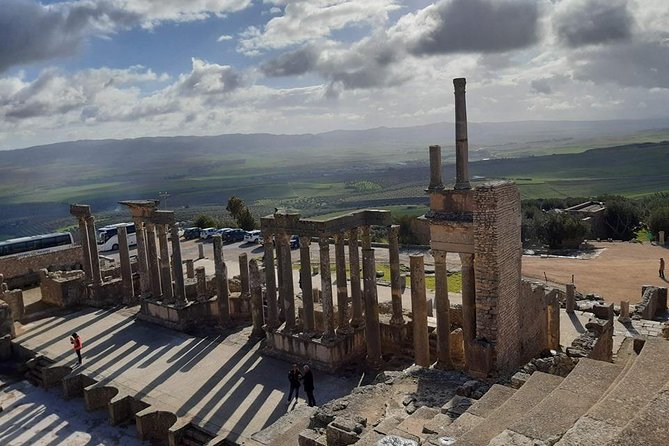
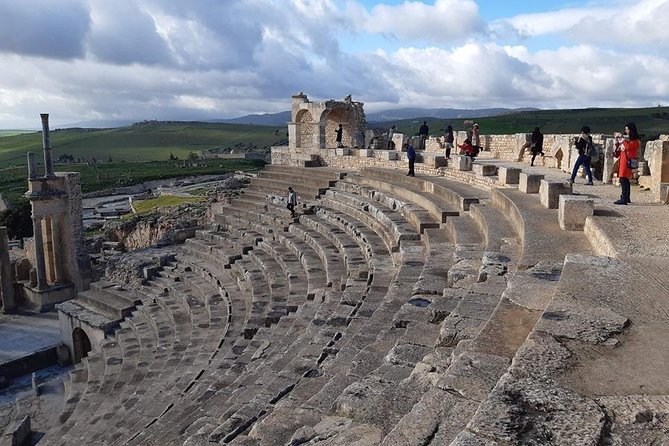
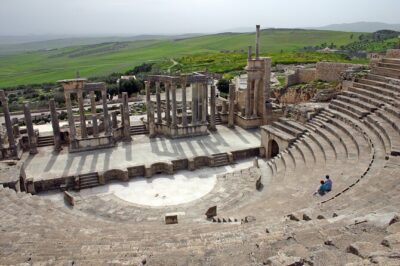
Dougga is the star of this day, and for good reason. It sits up on a hill, with wide views over valleys and olive country. The drive in matters too. You pass through rural roads and countryside views, so the day starts feeling more like a journey than a checklist.
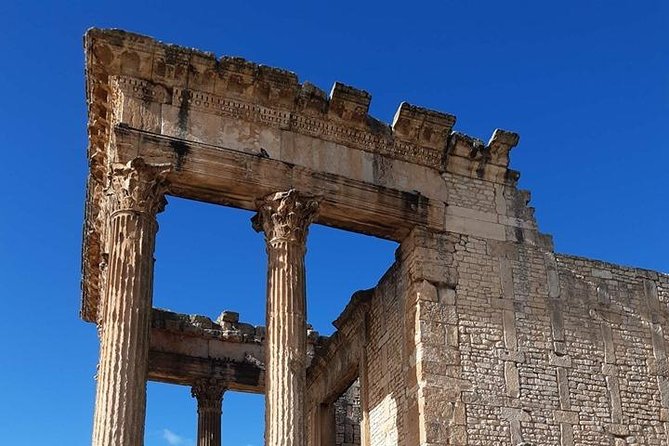
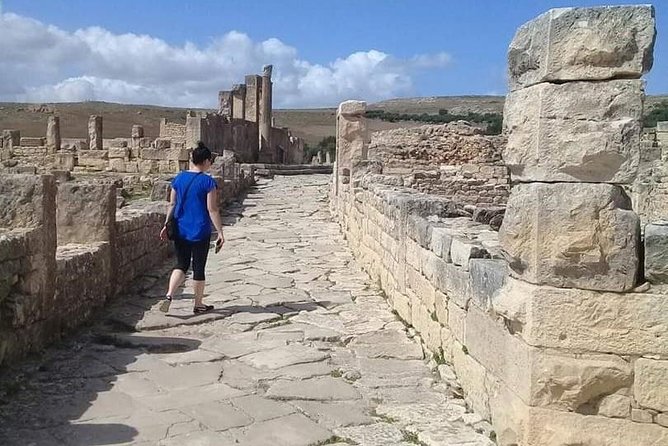
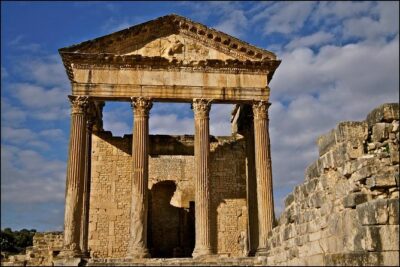
Then you arrive and the scale hits you fast. Many Roman sites in Europe, and even parts of North Africa, give you a few surviving pieces surrounded by modern life. Dougga is different. The ancient town layout still reads like a town, with Roman streets and plenty of buildings. The practical result is that you can wander through ruins in a more “walkable” way, rather than being forced to stay behind barriers all day.
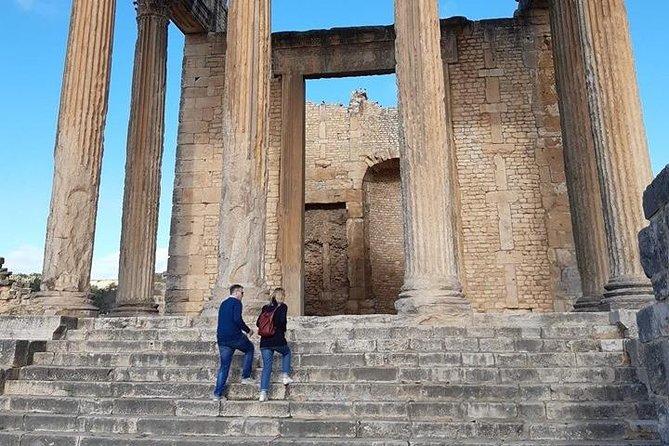
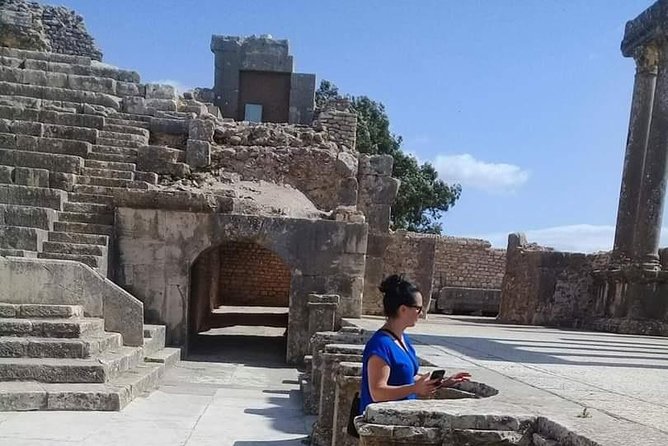
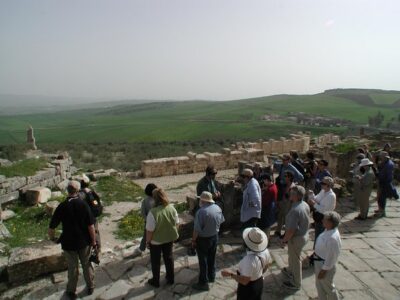
With a private guide, you also get help spotting the story. You are not just looking at columns and stones. You are learning how the town was organized. You can take your time climbing in and out of areas, stepping close to temples, theaters, and residential structures, and generally experiencing it at a human pace.
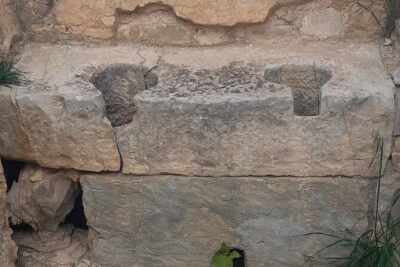
One more layer makes Dougga more interesting than the average Roman stop. You will also encounter older Phoenician features, including a Punic temple and a cleansing bath. That mix is a big part of why Dougga feels more complete than a single-period ruin.
Timing note: plan for about 2 hours at Dougga. If you like photos, sketching, or just slow wandering, it helps to keep your energy up for that part of the day.
Ain Tounga on the hillside, a quieter archaeological stop worth your time
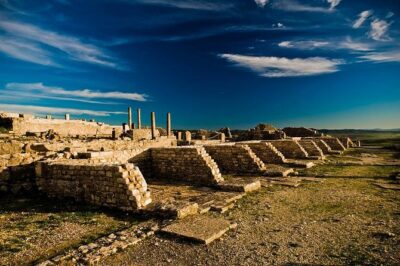
After Dougga, you head toward Aïn Tounga, a site that feels more “real world” because it is not built into a big tourist machine. The location is striking in a calm way, spread along a hillside with fields and olive groves around it.
Here is what makes Aïn Tounga a smart pairing with Dougga: it adds contrast. Dougga is preserved and structured enough that you can read the town layout. Aïn Tounga, by comparison, is the kind of archaeology that people still find, study, and preserve, even though it is not yet highlighted or fully developed for visitor visits.
That has benefits. You typically get more space to look around, and you can appreciate how archaeology fits into everyday terrain, with the countryside right there. It also has a drawback: since it is not heavily developed for visits, the experience can feel less “guided by infrastructure.” So come ready to rely on your guide for context and to take your time observing what is visible.
Practical tip: wear comfortable shoes with good grip. Even if you do not face major crowds, archaeological grounds can still be uneven or dusty.
Testour’s Great Mosque and its counterclockwise minaret clock
The final stop is the Great Mosque of Testour, and it is a great way to end the day because it shifts from open-air ruins to a living religious site with a distinctive cultural detail.
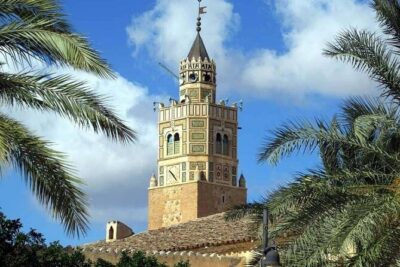
The headline detail is the minaret clock. This clock is installed in an unusual way, with hands turning in the opposite direction of a watch and the numbers placed upside down. The history behind it is also part of the fascination. The clock was installed by the Andalusians about 300 years ago, and it has been back in existence since December 2014 after a long downtime.
When you only have about 30 minutes here, you want to use that time well. I suggest you do two things quickly. First, stand back enough to take in the minaret and the clock as a whole, so you understand its placement. Second, look for the visual trick of the counterclockwise motion and the upside-down numbering. Even if you are not a “clock person,” the weirdness is the point.
Also, the Andalusian influence gives the mosque extra texture. You are not only seeing a functional religious space. You are seeing a piece of cultural history that ties Tunisia to wider Mediterranean movements.
Admission here is free, so you are not spending your budget at the final stop. That matters when you are trying to balance value across the day.
Prefer someone talking you through it? More guided Tunisia trips

Door-to-door private pickup: the underrated reason this tour works
This tour includes pickup offered from Tunis or Hammamet, with door-to-door vehicle transfers. That might sound like a basic perk, but it is a real deal for a day like this.
Dougga and Testour are not just “outside the city.” They are far enough that getting there efficiently changes how you feel at the end of the day. If you self-plan, you spend time lining up transport and negotiating routes. With included transfers, you protect your energy for walking the ruins and actually enjoying the stops.
Because it is private, only your group participates. That means your guide can adapt the day based on your pace and interests. If you want more time in Dougga’s streets and temple areas, your guide can steer the order. If you prefer faster movement, they can keep you from losing time.
One more practical note: the tour includes a mobile ticket. So you do not need to scramble with paper or printouts when you arrive.
The real value of $127.81 per person
At $127.81 per person, the price is not low, but it is not random either. For a full day, you get:
- A private guided format
- Door-to-door transfers from Tunis or Hammamet
- Admission tickets included (notably for Dougga)
- A second UNESCO-listed site experience through the day’s structure
- Time with a guide who helps you interpret what you see
In other words, you are paying for convenience plus guided meaning. If you already planned to drive yourself, you would still need to pay admission and figure out the order and transportation. If you planned to join a group tour, you might save money but lose flexibility. Here, you get a structured day with fewer coordination headaches.
And there is demand. The average booking window is around 5 days in advance, which suggests this is a popular “do it once” day trip for people in the region. If you are traveling in high season, booking ahead is smart.
How to pace a 6 to 7 hour day without getting cranky
This is listed as 6 to 7 hours total. That is long enough to see a lot, but short enough that you need good pacing.
Here is how I would plan your mindset:
- Treat Dougga as the main walking block
- Expect Aïn Tounga to be slower, more observation-based
- Use Testour for a focused cultural stop, especially for the minaret clock
A common mistake is trying to “see everything” everywhere and then feeling rushed. In this case, do not. Let Dougga be your deep stop. Then shift gears to the less developed Aïn Tounga experience, where your guide’s explanation matters more than chasing highlights. Finally, give Testour a calm, attentive pass.
Also, the tour requires good weather. Even if you have no control over skies, you can control your preparedness. Bring sun protection, water, and something light for shade, because outdoor time is a large part of the day.
Who this tour fits best (and who might want something else)
This is a great fit if you want:
- Two UNESCO-listed sites in one day without managing logistics
- Guided context for Roman ruins plus older Phoenician layers
- A look at Andalusian influence at the Great Mosque of Testour
- A private format so you can move at your group’s pace
It is especially good for first-time visitors to the area, because it gives you a structured sampling of what Tunisia can do beyond the obvious city sights. It also works well for people who like archaeology but do not want to spend all day on planning and transit.
If you hate driving days or you are only interested in a single landmark, then this might feel like too much. But if you want maximum learning and maximum variety in one outing, this is exactly the kind of day that justifies its own schedule.
A word about guides, and why it matters here
One of the reviews you can read is particularly clear about the guide impact. Ghassen, the guide mentioned in feedback, is praised for being friendly and for offering solid advice. That kind of guidance makes a difference at places like Dougga and Aïn Tounga, where details can blend together if you do not have someone pointing out what to look for.
Think of it this way: at Dougga, you could technically walk the ruins on your own. But a guide helps you connect the dots so the streets, buildings, and older temple elements feel like a story, not just a pile of stone.
Should you book the Private Guided Tour of Dougga and Testour Mosque?
Book it if you want an efficient, guided day that combines preserved Roman town ruins at Dougga, a quieter archaeological stop at Aïn Tounga, and a memorable cultural finale at Testour’s Great Mosque and its counterclockwise minaret clock.
Skip it, or at least be cautious, if your schedule cannot flex for weather. This tour is outdoor-heavy, and poor weather can affect the plan. Also, if you are allergic to long days in the car, make sure the 6 to 7 hour window is realistic for you.
Overall, this feels like strong value because you are paying for private guidance plus door-to-door transfers, and admission is handled for you. For many visitors, that is the difference between seeing sites and actually understanding them.
FAQ
How long is the Dougga and Testour Mosque private guided tour?
The tour lasts about 6 to 7 hours.
What stops are included in the itinerary?
You visit Dougga, Aïn Tounga, and the Great Mosque of Testour.
Is pickup included, and where does it start from?
Yes. Pickup and door-to-door vehicle transfers are included from Tunis or Hammamet.
Are admission tickets included?
Admission tickets are included for Dougga, and the admission ticket for the Great Mosque of Testour is free.
Is this tour private?
Yes. It is a private tour, and only your group will participate.
Do I need a printed ticket?
No. A mobile ticket is included.
Is the tour dependent on weather?
Yes. The experience requires good weather. If it is canceled due to poor weather, you will be offered a different date or a full refund.
What is the cancellation policy?
You can cancel up to 24 hours in advance for a full refund. If you cancel less than 24 hours before the start time, the amount paid is not refunded.
A Wider Sweep of Tunisia
- Private Tour to Kairouan, El Jem & Monastir from Tunis_hammamet
- Private tour: Medina,Carthage ,Sidi Bou Said, Bardo Museum+lunch
- Carthage, Bardo Museum, Sidi Bou Said and Medina Private Day Tour
- Private Excursion to Testour, Dougga and Bulla Regia from Tunis.
- Guided Bike Tour of Carthage Archeological Site in Tunisia
Everything Else We Have Reviewed in Tunisia
- Private Tour to Kairouan, El Jem & Monastir from Tunis_hammamet
- Private tour: Medina,Carthage ,Sidi Bou Said, Bardo Museum+lunch
- Carthage, Bardo Museum, Sidi Bou Said and Medina Private Day Tour
- Private Excursion to Testour, Dougga and Bulla Regia from Tunis.
- Guided Bike Tour of Carthage Archeological Site in Tunisia
Roman Tunisia, Inland
Newest off the review desk in Tunisia
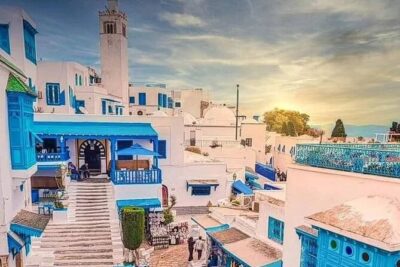
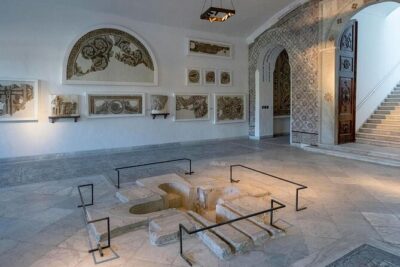
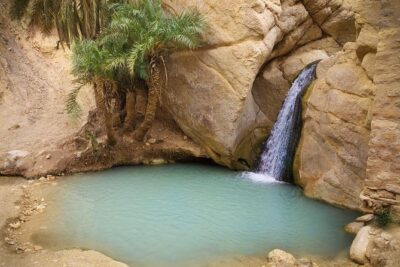


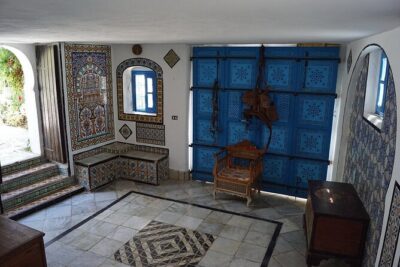
Dougga, Bulla Regia & the Roman Interior, side by side.
 ★ 5.0Private Excursion to Testour, Dougga and Bulla Regia from Tunis.From $127100 reviews
 ★ 5.0Full Day Dougga & Bulla Regia Via Testour Private tour with LunchFrom $11529 reviews
 ★ 5.0Private Day Trip to Testour, Dougga and Bulla Regia from HammametFrom $13321 reviews
 ★ 4.5Dougga and Bulla Regia Guided Tour From TunisFrom $14111 reviews
 ★ 4.5Roman Archeology Guided Tour Thuburbo Majus & UthinaFrom $1407 reviews
 ★ 5.0Private Day Tour DouggaFrom $2366 reviews
 ★ 4.5Bulla Regia and Beni Mtir Cascade Daytrip from TunisFrom $1416 reviews
 ★ 5.0Dougga Guided Day Tour from TunisFrom $1395 reviews
Also listed under