
REVIEW · ANCIENT CARTHAGE & SIDI BOU SAID
Carthage, Bardo Museum, Sidi Bou Said and Medina Private Day Tour
Carthage and mosaics in one day. That is the hook, and the payoff is a tight loop through Tunisia’s most famous Roman scenes plus the blue-and-white coast town people dream about. I especially liked the private hotel transfers in a climate-controlled car, which keeps the day from feeling like a slog in Tunis traffic.
Two things I like a lot are the chance to pair Roman treasures at Carthage and the Bardo Museum with quick cultural stops in the Medina, and the way many guides (like Boubou) call out photo spots and explain what you’re seeing as you go. One drawback to plan for: the schedule is full, and if you are visiting on Monday, the Bardo Museum is closed, so the day may need reshuffling.
In This Review
- Key highlights you should care about
- A packed day around Tunis, built for first-timers
- Carthage Archaeological Site: the Roman city with big-coast drama
- Carthage Aqueduct and Baths of Antoninus: short stops with a purpose
- Sidi Bou Said: cobblestones, blue-and-white scenes, and coastal lunch time
- Bardo Museum and its Roman mosaics: the indoor highlight
- Old Tunis route: Bab el Bhar, Zitouna Mosque, and the Medina walk
- Price and options: what you should verify before you pay
- Who should book, and who should skip this day plan
- Should you book this Tunis private day tour?
- FAQ
- What is the duration of the Carthage, Bardo Museum, Sidi Bou Said and Medina Private Day Tour?
- Is hotel pickup and drop-off included?
- What sites are included in the tour?
- Is the Bardo Museum open every day?
- Are entrance fees and lunch included?
- Can I request a vegetarian meal?
- Is the tour fully private, and are service animals allowed?
Key highlights you should care about
UNESCO pair in one outing: Carthage ruins and the Bardo Museum, both built around Roman-era Tunisia.
Sidi Bou Said time with sea views: enough wandering for cafés, cobblestones, and skyline photos.
A real Medina route: stop at Bab el Bhar, then Zitouna Mosque area, then walk through the souk lanes for cap-makers and perfume stalls.
Short site stops that still make sense: aqueduct and Antoninus Baths are brief, but they help connect the bigger Carthage story.
Private format with a licensed guide option: you are not meant to be stuck as a bystander in a crowd.
Flexible pacing when your guide is good: some guides (like Boutheina, Nour, Mohammed) keep things structured without turning it into a race.
Done with the Punic ports? More Carthage and Sidi Bou Said runs to compare
- Private tour: Medina,Carthage ,Sidi Bou Said, Bardo Museum+lunch★ 5.0 · 230 reviews
- Carthage, Bardo Museum, Sidi Bou Said and Medina Private Day Tour★ 4.5 · 153 reviews
- Guided Bike Tour of Carthage Archeological Site in Tunisia★ 5.0 · 88 reviews
- Group Guided Bike Tour of Carthage Archeological Site in Tunisia★ 5.0 · 57 reviews
A packed day around Tunis, built for first-timers
This tour works because it groups the places that most visitors struggle to line up on their own. You start with Carthage, then move into Tunis for museums and old-city landmarks, and finish with the seaside charm of Sidi Bou Said. It’s a classic “big hits” day, but it is also set up with time to look, ask questions, and breathe between stops.
At $30 per person, value depends on what option you choose. Some parts, like entrance fees and lunch, are only included if your booking option includes them. The good news is that the structure is efficient: you do not lose half your day to bus transfers and ticket lines. If your goal is to see a lot without micromanaging, this fits.
The day can feel intense, though. Even when walking time is built in, you are still moving through several major areas. If you hate tight schedules, you might wish you had more unstructured time in the Medina or more time at Carthage. On the other hand, if you like momentum, this day delivers.
Carthage Archaeological Site: the Roman city with big-coast drama
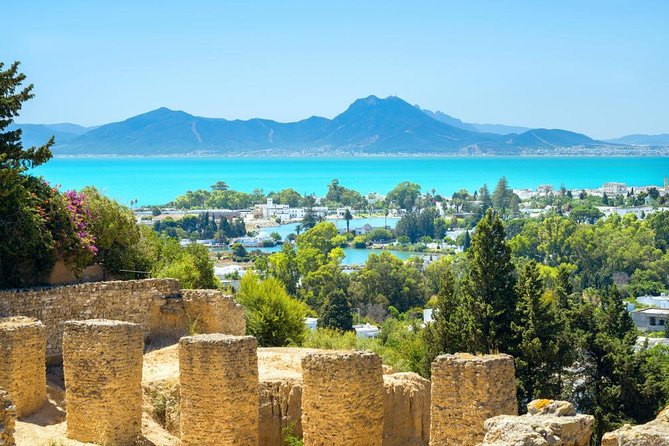
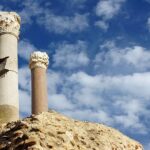
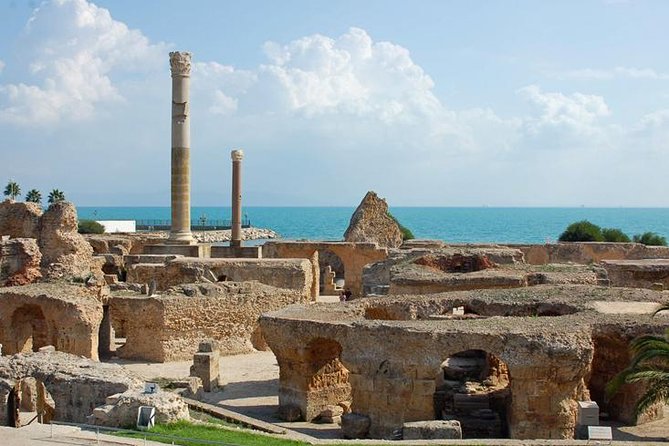
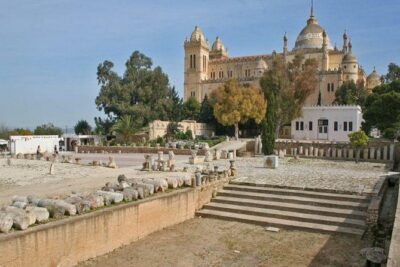
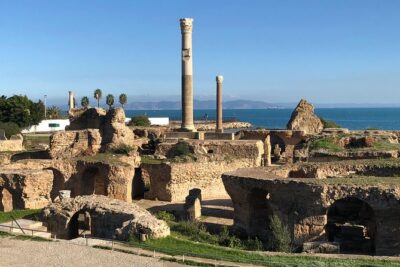
Carthage starts with views. The archaeological site sits where the coastline drops away, so you get a sense of why Romans wanted this location in the first place. Your guide leads you through the ancient footprint with context, and you get to connect ruins to real geography.
This is also the stop where Carthage’s story becomes more than name-dropping. You hear that the city was famously destroyed by the Romans in 146 BC, then excavations reveal details that make it feel oddly modern: five-story homes, sewage systems, and the remains of city walls that once stretched 21 miles (34 km) across the Byrsa Hill area. That kind of specificity matters, because it turns Carthage from a collection of stones into a functioning city layout.
Timing is about 2 hours, and you should treat that as the “walk and absorb” window rather than a full self-guided marathon. If you have already seen major Roman ruins elsewhere, Carthage may feel less massive than the biggest sites you know. Still, the combination of scale, coastal setting, and the way your guide frames the evidence is what makes this stop land.
What to watch for: take advantage of any short “pause here” moments your guide suggests. Even five minutes for photos or a calm look from a viewpoint can make the whole stop feel less rushed later.
Carthage Aqueduct and Baths of Antoninus: short stops with a purpose
Right after the main archaeological sweep, you get two quick connective stops, each built around a different side of Roman life.
The Carthage Aqueduct stop is only about 30 minutes. In that time, the goal is not to become an aqueduct engineer. It is to spot and understand how water infrastructure supported daily life and urban growth. Even a brief look helps you make sense of what you saw at the main site, because it explains how a city like this could work.
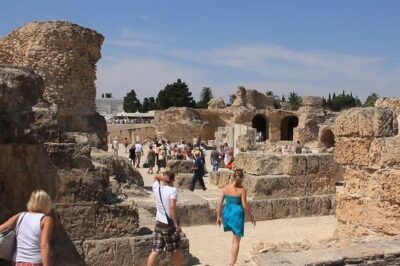
Then comes the Baths of Antoninus, also around 30 minutes. Roman baths were social spaces, not just hygiene. When your guide points out the layout and the idea of bathing, relaxing, and meeting, it helps you visualize how the baths fit into daily routines. This is one of those stops where good guiding makes a short visit feel meaningful.
The tradeoff is simple: if you crave deep time at each ruin, these short stops might leave you wanting more. But if you want the day to move, and you like the way the itinerary builds a storyline, this pairing works.
Tip from the format: bring your energy for the first and last big walking moments. You are not meant to go full tourist sprint at every stop.
Souk legs not tired yet? More walks through the Tunis medina and the Bardo

Sidi Bou Said: cobblestones, blue-and-white scenes, and coastal lunch time
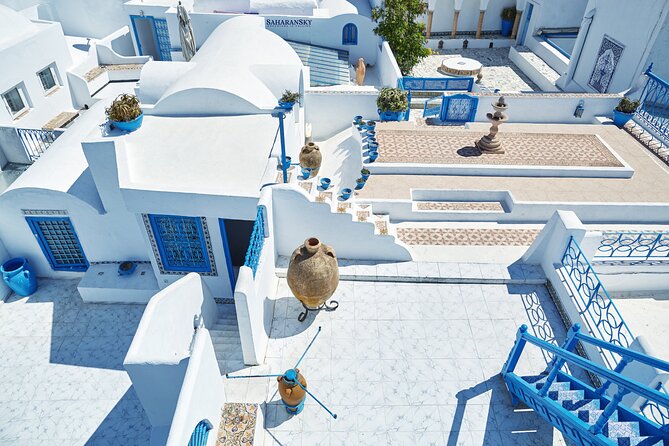
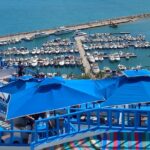
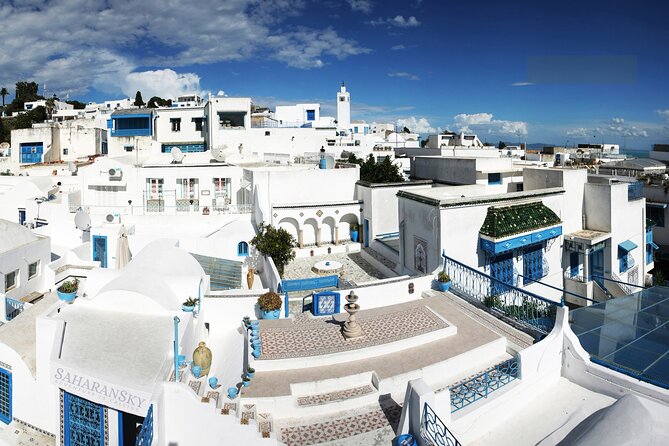
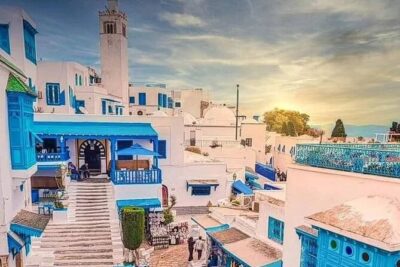
Sidi Bou Said is where the day shifts from ancient city logic to seaside mood. Expect a town on a promontory overlooking the Mediterranean, with cobbled streets and the famous blue-and-white houses that make this place look like a postcard.
Your time here is about 1 hour, and it is listed as admission-free. That hour is usually enough to:
stroll a handful of lanes without feeling trapped,
find an al fresco café or photo viewpoint,
and, if your booking includes lunch, eat along the coast.
Lunch is one of the nicest “soft benefits” of this itinerary because it breaks up the museum and ruins momentum with something local and relaxed. Some drivers (for example, Ali in one account) recommend a traditional Tunisian spot, which can be better than hunting for food in the middle of a fast-moving day.
The practical consideration: Sidi Bou Said is pretty, but it is also a small place with a lot of sightseers. If you want quiet, you may need to choose your walking pace carefully and rely on your guide to suggest where to pause.
When this stop goes well, it becomes the memory you feel later, the one that makes the rest of the day feel worth the travel time.
Bardo Museum and its Roman mosaics: the indoor highlight
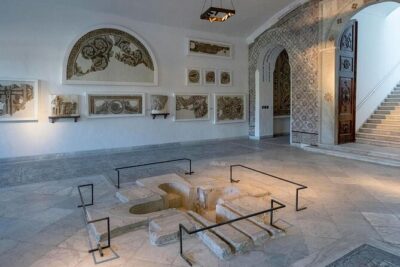
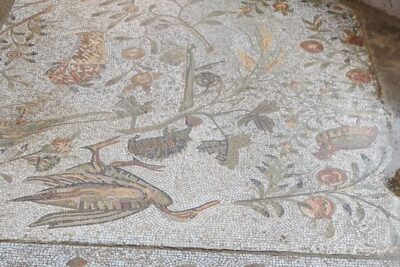
If Carthage is the “walk in the past” stop, the National Museum of Bardo is the “see how art survived” stop. You get about 1 hour here, with admission included in the right option. This museum is famed for its Roman mosaics, and the day’s flow makes it a smart pairing: ruins outside, art inside.
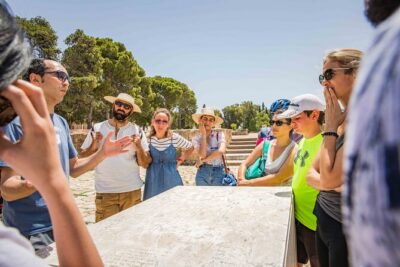
Your guide helps you focus. With mosaics, it is easy to wander room to room and lose the thread. When a guide sets a path, you end up seeing more of what matters instead of just collecting impressions.
The museum is also time-boxed for a reason. One hour is not enough to see everything at a major museum, but it is enough to see a high-impact slice. If you are a mosaic fan, you will likely want more time, but you can be grateful you are not crammed into a 20-minute stop.
A key caution, based on the tour details: Bardo is closed on Monday. If you are traveling Monday, check your date early and have a Plan B, because the museum stop might not run the way you expect.
Old Tunis route: Bab el Bhar, Zitouna Mosque, and the Medina walk
After Bardo, you step back outside into old-city landmarks.
First is Bab el Bhar (also known as Porte De France). It’s a city gate that marks the boundary between the Medina and the modern area. This stop is short, about 15 minutes, but it functions like a visual checkpoint. You can see how the city’s story changes at the edge of the old lanes.
Next is Zitouna Mosque, around 20 minutes. The mosque area is not just architecture, it is a centerpiece for religious and daily life in the old city. Even if your time is brief, your guide can help you understand what you’re looking at and why it matters in the rhythm of Tunis.
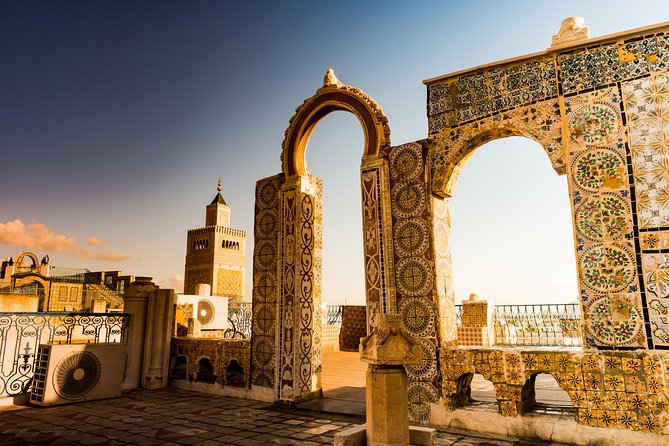
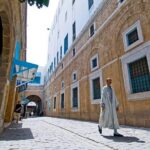
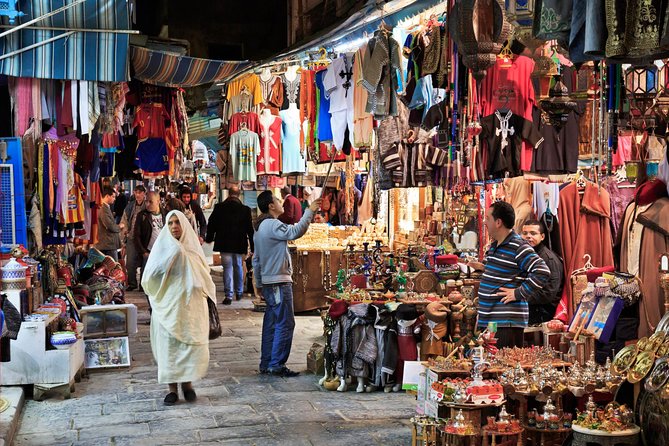
Then you move into the Medina of Tunis for about 1 hour. This is where markets come in. Your guide takes you through narrow streets toward the Zitouna Mosque area and past stops tied to traditional crafts, including cap-makers and a perfume market. It is also where you can feel the personality of Tunis beyond monuments.
There is a balancing act here. The Medina includes genuine crafts, but it also includes lots of tourist-oriented merchandise. If you want only local life, you should keep your eyes open and ask your guide what is worth slowing down for. When your guide is good, it can still feel worthwhile because the route is purposeful, not random shop-hopping.
Also plan for footwork. The Medina streets can be narrow and a little chaotic. A guided route keeps you from wandering in circles and helps you make sense of what you see.
Price and options: what you should verify before you pay
This tour is sold as private, but your experience depends on which inclusions you selected. Here is what I would verify before showing up.
1) Licensed guide and entrance fees
Entrance fees for Carthage and the Bardo Museum are included only if your option includes them. The licensed guide is also conditional on your booking choice.
2) Lunch inclusion
Lunch is included only if you selected the lunch option. If you did not, plan to eat elsewhere, and budget time because the day is already tight.
3) Day-of closures
Bardo Museum is closed on Monday. If your date is Monday, do not assume the itinerary will match the usual order.
4) Pickup details
Pickup is offered from Tunis or Hammamet hotels. Cruise port pickup costs extra, and you should confirm this if you are docking. One recurring lesson from busy cities is that meeting points can be tricky. I recommend confirming the exact pickup location and contact method before you leave your accommodation.
5) Private expectations during peak demand
The tour is described as private, but very busy holiday periods can cause last-minute adjustments. If you are traveling around major holidays, confirm the exact format the day before.
If you get these right, the day feels like a well-run highlights circuit, not a guessing game.
Who should book, and who should skip this day plan
This is a great fit if you:
want Carthage and Bardo without spending your vacation figuring out logistics,
like a mix of big sights plus cultural stops in the Medina,
enjoy having a guide handle the storytelling so you can just look,
and prefer comfort with hotel pickup and a driver in a climate-controlled car.
It might not be your best match if you:
hate “too many stops” days and prefer fewer locations,
already know you want hours and hours at one museum or one ruin,
or dislike market areas where you might see more tourist merchandise than local workshop life.
And one practical note: if you care about food, select the vegetarian option when booking. The tour data states it is available if you request it ahead of time.
Should you book this Tunis private day tour?
I would book this if your priority is a high-impact Tunis first-timer day: Roman ruins, Roman mosaics, a famous seaside village, and a guided Medina walk. The combination of Carthage plus the Bardo is especially strong, because it gives you both the architecture outside and the art that survived inside.
I would think twice if your trip is Monday, because Bardo is closed, or if you want a slow travel pace. Also, double-check that your booking option includes the guide, entrances, and lunch if those are part of your idea of value.
If you do book, pack an open mind for one intense day and lean on your guide. When you get a guide who sets a clear route, points out photo stops, and ties sites together, the day feels like it makes sense rather than just listing places.
FAQ
What is the duration of the Carthage, Bardo Museum, Sidi Bou Said and Medina Private Day Tour?
It runs about 7 to 8 hours.
Is hotel pickup and drop-off included?
Yes. Pickup and drop-off are included from Tunis or Hammamet hotels.
What sites are included in the tour?
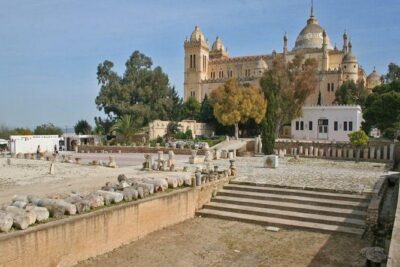
The tour includes stops at Carthage archaeological site, Carthage Aqueduct, Baths of Antoninus, Sidi Bou Said, National Museum of Bardo, Bab el Bhar, Zitouna Mosque, and the Medina of Tunis. Saint Louis Cathedral is outside only.
Is the Bardo Museum open every day?
No. The Bardo Museum is closed on Monday.
Are entrance fees and lunch included?
Entrance fees to Carthage and the Bardo Museum are included if you selected that option. Lunch is included only if you selected the lunch option.
Can I request a vegetarian meal?
Yes. A vegetarian option is available if you advise at booking.
Is the tour fully private, and are service animals allowed?
The tour is described as private, meaning only your group participates. Service animals are allowed.
Everything Else We Have Reviewed in Tunisia
- Private Tour to Kairouan, El Jem & Monastir from Tunis_hammamet
- Private tour: Medina,Carthage ,Sidi Bou Said, Bardo Museum+lunch
- Private Excursion to Testour, Dougga and Bulla Regia from Tunis.
- Guided Bike Tour of Carthage Archeological Site in Tunisia
- Guided tour in the UNESCO world heritage Medina of Tunis
Deeper into the Tunis Medina
- Private tour: Medina,Carthage ,Sidi Bou Said, Bardo Museum+lunch
- Guided tour in the UNESCO world heritage Medina of Tunis
- Tunis: Carthage, Bardo Museum, Sidi Bou Said & Medina Group Tour
- Private Day Tour Tunis Medina Carthage Sidi Bou Said Bardo Museum
- Daytrip Carthage Sidi Bousaid Bardo and Tunis Medina
Carthage and Sidi Bou Said, Compared
Newest off the review desk in Tunisia
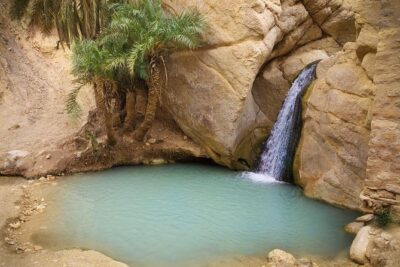


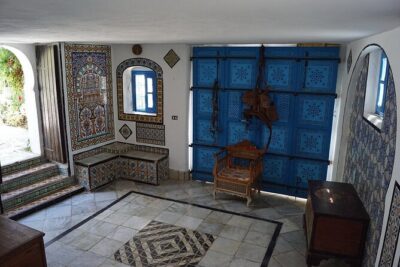
Ancient Carthage & Sidi Bou Said, side by side.
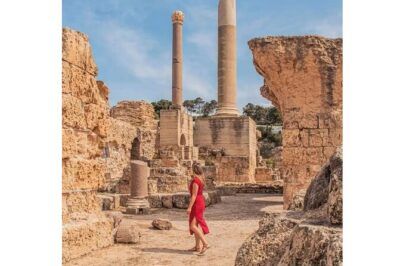 ★ 5.0VIP Tour: Tunis Medina/Bardo, Sidi Bou Said, Carthage |PICKUP ALLFrom $30512 reviews
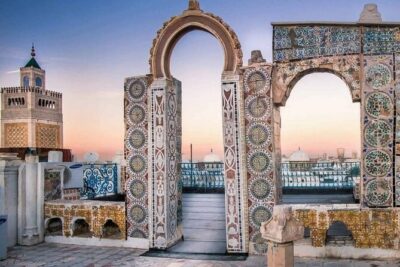 ★ 5.0Private tour: Medina,Carthage ,Sidi Bou Said, Bardo Museum+lunchFrom $46230 reviews
 ★ 5.0Guided Bike Tour of Carthage Archeological Site in TunisiaFrom $9188 reviews
 ★ 5.01 day excursion Tunis Sidi Bousaid Carthage departure from SousseFrom $11687 reviews
 ★ 5.0Group Guided Bike Tour of Carthage Archeological Site in TunisiaFrom $5657 reviews
 ★ 5.0Archaelogical Site Of Carthage + Picturesque Village Of Sidi Bou SaidFrom $11656 reviews
 ★ 5.0Historical Tour of Ancient CarthageFrom $10451 reviews
 ★ 4.5Tunis, Sidi Bousaid and Carthage day trip from HammametFrom $11644 reviews