
REVIEW · DOUGGA, BULLA REGIA & THE ROMAN INTERIOR
Private Day Trip to Testour, Dougga and Bulla Regia from Hammamet
Three sites, one unforgettable history lesson.
This private day trip turns your morning drive into a moving museum, with Testour’s Moorish- Andalusian architecture setting up two major Roman sites. I especially like how the route is paced with real time for the monuments, not just photo stops, and how the guides keep the story clear as you move from mosque details to Roman civic life to early Christianity. One thing to consider is that it is a long day in the car, and weather can affect the timing if rain shows up.
What makes it work is simple: you get guided context at Dougga and Bulla Regia, then you get hands-on local flavor in Testour with a cheese tasting. I also like that the tour is built for comfort, with pickup offered and only your group going with one team. The main drawback to plan for is logistics, since one day can run long, and any delay (like a traffic mishap) can eat into your time at the ruins.
In This Review
- Key highlights you will actually feel on the ground
- Why this trip is a smart pick from Hammamet
- The value play: What $133.57 buys you
- The 7:30 am start, pickup, and how to manage the long day
- Stop 1: Testour, Moorish-Andalusian architecture and a small taste of local life
- Dougga (Thugga): UNESCO ruins that still feel like a city
- Bulla Regia: Religious architecture built on centuries of change
- How the driving and pacing affect your experience
- Food and small cultural stops that make the day feel real
- Guides and what to look for when you meet them
- Who should book this tour
- Price and logistics, the honest way to judge it
- Should you book it?
- FAQ
- What time does the trip start from Hammamet?
- How long is the private day trip?
- Are admission tickets included for the archaeological sites?
- Is pickup offered?
- Is this a private tour or a group tour?
- Can service animals join the tour?
- What happens if the weather is poor?
Key highlights you will actually feel on the ground
- A morning start that beats the heat, with the day rolling at 7:30 am from your pickup
- Testour first, so you start with a living village and architecture before the Roman “wow” moments
- UNESCO Dougga with included entry, widely considered North Africa’s best-preserved small Roman city
- Bulla Regia’s religious layers, moving from Roman civic power into Christian basilicas and the church of Alexander
- Local food moments in the middle of sightseeing, including a cheese tasting and sometimes regional bites like pomegranate juice
- Guides named for thorough, practical explanations, with examples like Faouzi, Mohamed, and Chaoukni showing up in recent experiences
Still weighing up which day to give this one? Here is what else travellers are booking around Tunisia.
- Private tour: Medina,Carthage ,Sidi Bou Said, Bardo Museum+lunch★ 5.0 · 194 reviews
- Quad ride on the hills of Hammamet★ 4.0 · 104 reviews
- 2-Day Tunisian Sahara Tour with Food & Stay from Hammamet★ 4.5 · 80 reviews
- Tour to the Medina of Hammamet and the Spice Market of Nabeul★ 4.0 · 45 reviews
Why this trip is a smart pick from Hammamet
If you are based in Hammamet and you want more than one set of ruins, this route is efficient. You hit three places that each “read” differently: Islamic-Andalusian village life in Testour, Roman city planning at Dougga, then religious history at Bulla Regia. That variety is what makes the long drive feel worth it.
I also like that the tour is private, meaning your group can move at a pace that makes sense for your questions and your walking comfort. The typical duration is about 8 hours, with guided time and included admissions at the big archaeological stops.
And yes, the price is not cheap on paper. At $133.57 per person, you are paying for a full-day vehicle, local guiding, and entrance to the two main sites. In practice, that often turns out to be good value if you would otherwise pay for separate transport, tickets, and a guide.
The value play: What $133.57 buys you
This is listed as a private day trip, and that changes the math. With pickup offered, you are not spending your day figuring out buses, taxis, and timing between three distant stops.
You also get practical add-ons that matter in real travel. A mobile ticket helps you avoid last-minute ticket confusion. Admission tickets are included for Dougga and Bulla Regia, which is the part of the day where you most want to avoid extra spending after already paying for a guided program.
The booking pace is another hint: it is often reserved about a month in advance. If you travel in a busy season, plan early so you do not get stuck with only inconvenient departure times.
The 7:30 am start, pickup, and how to manage the long day
The tour kicks off at 7:30 am from the meeting point, with pickup offered. For an 8-hour day, that early start is doing a lot of work for you, especially in warmer months.
Here is how I would think about the day if you are planning around it:
- Expect a steady drive between sites, since Dougga and Bulla Regia are not next door to Hammamet.
- Build in a flexible mindset for timing, because delays can happen on roads.
- Bring something for weather changes. One guide approach I saw described is making sure you cover the key areas quickly if rain starts.
Good news for comfort: service animals are allowed, and the experience says most travelers can participate. A guide who notices your needs and helps you keep moving can make a big difference at archaeological sites, where surfaces are uneven.
Just your group in the car? Other private Tunisia bookings

Stop 1: Testour, Moorish-Andalusian architecture and a small taste of local life
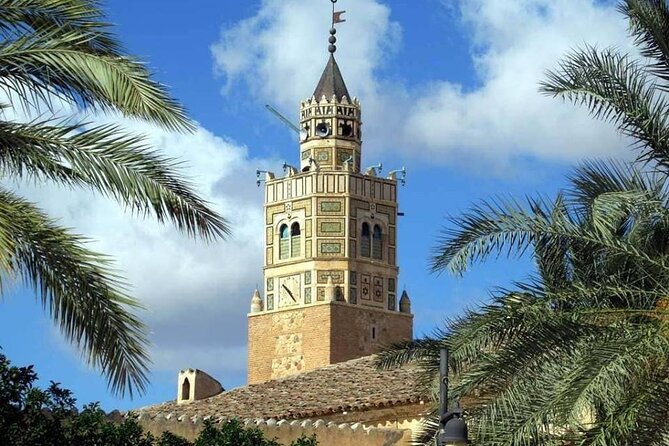
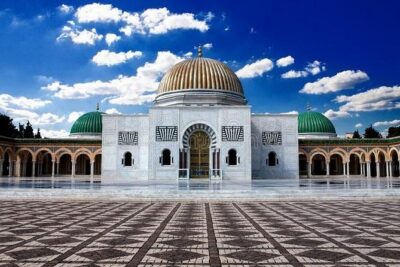
Testour is your first stop, and it is a smart warm-up before the Roman monuments. This village was founded by the Moorish people at the beginning of the 17th century, and you can feel that influence in the architecture.
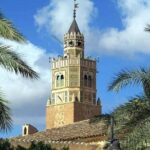
Your main anchor here is the Great Mosque and its minaret, which is about 23 meters tall and octagonal in shape. The facade is opened by small double windows with glazed inscriptions, and there is also a mechanical clock at the top. The clock hands are described as turning counterclockwise, which is the kind of detail that makes you slow down and look upward.
This minaret is said to resemble Aragonese bell towers from southern Spain. Even if you do not know Spanish architecture, that comparison helps you imagine the visual language: strong vertical rhythm, decorative inscriptions, and that old-world clock presence.
Then you get a local food moment. The experience includes a cheese tasting, and in at least one day plan I saw referenced, there was also a refreshment like pomegranate juice. These tiny breaks are not random, they are how you connect the architecture to the region’s everyday flavors.
What to watch for here:
- If you like photos, take your time around the minaret and windows. That is the best area for details.
- If your group needs shorter walking, this stop is often easier to adjust than the big ruins later.
Dougga (Thugga): UNESCO ruins that still feel like a city
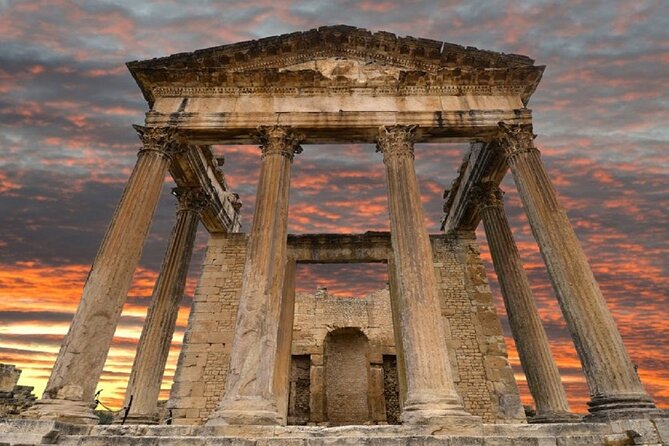
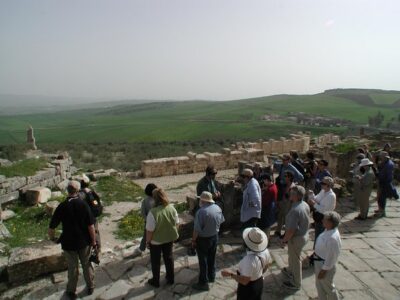
Dougga is the headline stop for most history lovers, and it has the receipts to back it up. It was classified as UNESCO World Heritage in 1997, described as the best preserved small Roman city in North Africa. That is not hype, it is a specific claim about preservation quality.
You get about 2 hours here, and the admission ticket is included. In that time, you want to focus on the places that show Roman civic life in layers.
What you can expect to see includes:
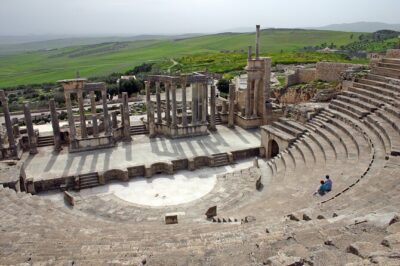
- The theater, one of the showpiece spaces
- The capitol and civic center buildings
- The forum and market areas
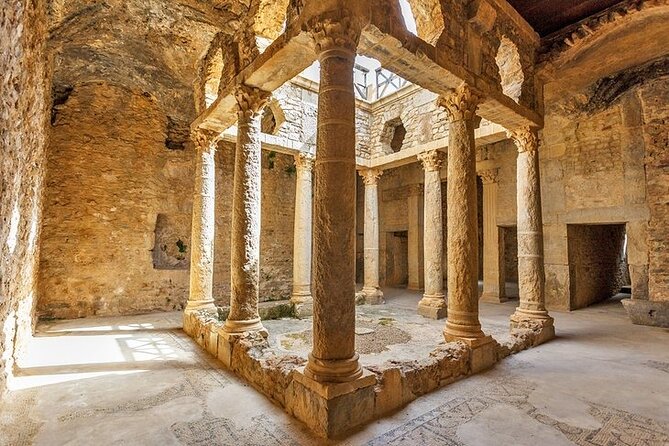
- Thermal baths, which tell you a lot about daily routines
- Houses that reflect residential life
- The place of the rose of the winds, a detail-rich concept space
- The triumphal arch
- The Libyco-Punic Mausoleum
A helpful way to understand Dougga is to treat it like a city with zones. The monumental center gives you the political and religious spine. The buildings for shows help you imagine public entertainment. The public baths show how Romans handled body and social life, not just governance.
One more practical point: Dougga can feel big, even when it is “small” for Roman standards. A good guide plan matters because they help you connect the architecture and tell you where to spend your limited time.
Bulla Regia: Religious architecture built on centuries of change
After Roman city planning, Bulla Regia gives you a different kind of story. This site is north of Jendouba in the northwest of Tunisia and is a major cultural tourism stop in the region.
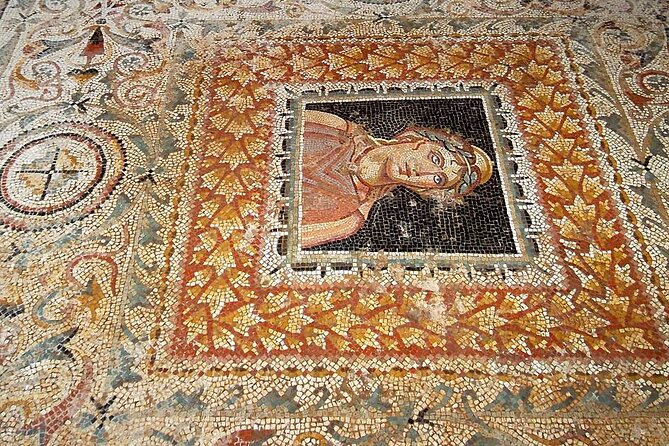
The background timeline is deep. The agglomeration was founded by the Numidians at the end of the 6th century BC at the latest, then it became a royal residence. During the Roman period it moved through political stages: autonomous early on, then erected as a municipality under the Flavians, and later as a Roman colony under Emperor Hadrian (117 to 138).
Then the religious story shifts. By the end of the 5th century, Augustine judged the inhabitants as bad Christians. That line is a reminder that religion here is not just stone and decoration, it is conflict, identity, and changing beliefs.
You get about 2 hours at Bulla Regia, with admission included. Key monuments you will likely visit include:
- The capitol
- The temple of Apollo
- Two Christian basilicas
- The church of Alexander
This mix is the point. You are not just looking at “one religion” at one moment. You are seeing how a place can be repurposed, reinterpreted, and rebuilt as power and belief evolve.
If you like when a site answers questions for you, Bulla Regia is good for that. It is the stop where Roman civic structures and Christian worship spaces sit close enough to feel connected, but far enough apart to show real change over time.
How the driving and pacing affect your experience
This tour is built as a private day trip, so you should expect a consistent, guided flow rather than bouncing between independent providers. Pickup offered also reduces friction, especially if you do not want to plan transport across rural roads.
Still, it is a full day. Even if you love ruins, your energy will dip. That is why the mix matters. Testour gives you a lighter “human scale” start, Dougga hits your Roman big hitters, and Bulla Regia closes with religious and cultural context.
One real-world note from a past day plan: there was a car crash while the group was in transit, causing delays but no serious injuries. That is a reminder to keep expectations flexible, especially when you book an all-in-one day. In most cases, it will run smoothly, but nothing on the road is 100 percent predictable.
Food and small cultural stops that make the day feel real
A common complaint about archaeology tours is that they can become pure monuments. This itinerary tries to avoid that by adding real regional moments.
Testour’s cheese tasting is one. Another example included a roadside stop to see a Berber woman baking bread in an ancient furnace, then eating the bread. Even if that specific stop is not identical each day, the pattern is clear: you get a chance to step away from stone for a moment and see how people live nearby.
In practical terms, those food breaks also help you pace yourself. You are walking around Dougga and Bulla Regia, and your body will thank you for one good break in the middle.
Guides and what to look for when you meet them
A strong guide can turn ruins into a story you can hold in your head. Based on the names repeatedly associated with this tour, you may be guided by people like Faouzi, Mohamed, or Chaoukni.
Look for the style that actually helps you:
- They should connect monuments to everyday life, not just recite dates.
- They should point out what to notice first, then let you explore without feeling lost.
- If weather turns bad, the best guides adjust quickly so you still cover the expected key areas before rain.
One described approach is getting priorities done early when rain arrives. That is smart planning, because a wet Roman site can feel slippery and reduce how long you can comfortably walk and look.
Who should book this tour
This is a great fit if:
- You love archaeology and want multiple major sites in one day.
- You prefer private guiding over wandering on your own.
- You like context, not just pictures of columns.
It is also a good choice if you are staying in Hammamet and you do not want the hassle of stitching together transport and tickets. Even the admitted time at each main site is built for a day that still feels like you got somewhere.
If you are traveling with slower walkers, you might still find it workable. The experience notes most travelers can participate, and one guide was described as helpful when someone had walking issues. Still, wear supportive shoes, because ruins are not polished floors.
Price and logistics, the honest way to judge it
At $133.57 per person for an 8-hour private day trip, you are paying for a full bundle: transport, guiding, and included admissions at Dougga and Bulla Regia. If you count only tickets, the price looks high. If you count the drive from Hammamet, the guide time, and the convenience, it becomes easier to justify.
Here is my practical rule:
- If you will not want to rent a car or hire separate transport and you care about a guided experience, this can be good value.
- If you are mainly chasing the ruins and are comfortable self-navigating, you might compare costs and decide it is not worth a guide.
Also check your tolerance for long days. One day can feel long, and delays can happen. If you are sensitive to tight schedules, build in cushion elsewhere in your trip.
Should you book it?
Yes, I think you should book this tour if you want a focused archaeology day with clear structure: Testour’s Moorish-Andalusian architecture, Dougga’s UNESCO-level Roman city planning, then Bulla Regia’s shift from Roman power to Christian worship spaces.
Skip it or rethink it only if you dislike long driving days or you know you need extremely flexible timing. The sites are worth it, but the day is packed.
If you want the best outcome, go in with one mindset: treat this as three chapters of one story. When you do that, Testour’s minaret details, Dougga’s theater and baths, and Bulla Regia’s basilicas start to connect, and the day feels like more than three separate stops.
FAQ
What time does the trip start from Hammamet?
The start time is 7:30 am.
How long is the private day trip?
The duration is approximately 8 hours.
Are admission tickets included for the archaeological sites?
Admission tickets are included for Dougga and Bulla Regia.
Is pickup offered?
Pickup is offered, and the tour starts from the meeting point at the scheduled time.
Is this a private tour or a group tour?
This is a private tour or activity, so only your group participates.
Can service animals join the tour?
Service animals are allowed.
What happens if the weather is poor?
This experience requires good weather. If it is canceled due to poor weather, you will be offered a different date or a full refund.
Private Bookings in Tunisia
Everything Else We Have Reviewed in Tunisia
Newest off the review desk in Tunisia
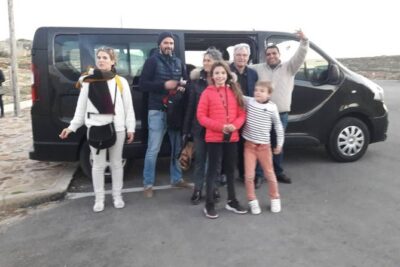

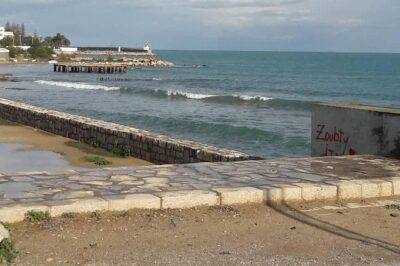
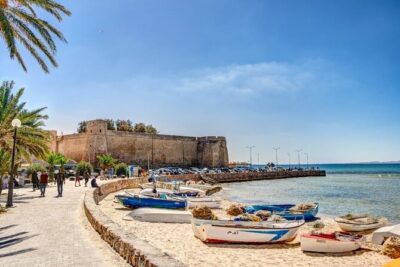
Dougga, Bulla Regia & the Roman Interior, side by side.
 ★ 5.0Private Excursion to Testour, Dougga and Bulla Regia from Tunis.From $127100 reviews
 ★ 5.0Full Day Dougga & Bulla Regia Via Testour Private tour with LunchFrom $11529 reviews
 ★ 4.5Private Guided Tour of Dougga and Testour MosqueFrom $12715 reviews
 ★ 4.5Dougga and Bulla Regia Guided Tour From TunisFrom $14111 reviews
 ★ 4.5Roman Archeology Guided Tour Thuburbo Majus & UthinaFrom $1407 reviews
 ★ 4.5Bulla Regia and Beni Mtir Cascade Daytrip from TunisFrom $1416 reviews
 ★ 5.0Private Day Tour DouggaFrom $2366 reviews
 ★ 5.0Dougga Guided Day Tour from TunisFrom $1395 reviews
Also listed under