
REVIEW · HAMMAMET, NABEUL & THE CAP BON PENINSULA
Tour to the Medina of Hammamet and the Spice Market of Nabeul
Medinas plus spices, in four hours. This half-day tour strings together Nabeul’s market life and Hammamet’s seafront medina views in a tight schedule you can actually handle on vacation. I especially like the guided walk that explains how the old towns are built and how people used to move through them, and I also like that you get real craft time at a pottery workshop where you can see how the work is made.
One thing to keep in mind is that this format can feel a bit uneven, depending on how much time you spend walking with the guide versus browsing on your own. A few guests noted the tour can run quickly, and the spice stop can come across as more retail quick-hit than a long, wander-every-aisle market day.
In This Review
- Key highlights at a glance
- A Four-Hour Loop Through Nabeul and Hammamet’s Waterfront Medinas
- Price and Logistics: Is $29.04 Good Value?
- Stop 1: Medina of Yasmine Hammamet, Where Architecture Has Rules
- Stop 2: Nabeul Market and the Spice Stop for Harissa and Neroli Water
- Kerkenis Ceram: The Pottery Workshop Stop That Makes It Feel Real
- Hammamet Medina: Seafront Lanes, Roof Terraces, and Souk Strolling
- How the Guide and Group Experience Usually Plays Out
- What to Buy, What to Expect, and How to Keep Shopping Enjoyable
- Best for Families, Culture Lovers, and Short-Window Travelers
- Should You Book This Medina and Spice Market Half-Day?
- FAQ
- How long is the tour?
- What time does the tour start?
- Does the tour include pickup?
- What stops are included?
- Is there an admission fee for the attractions?
- Do I need a paper ticket?
- What is the group size limit?
- How much does it cost?
- What happens if the tour is canceled due to weather or minimum travelers?
- What is the cancellation window?
Key highlights at a glance
- Guided medina architecture talk in Yasmine Hammamet, focused on how the streets and buildings work
- Nabeul spice market stop tied to local flavors like harissa and neroli water
- Kerkenis Ceram workshop visit for a close look at pottery-making
- Hammamet seafront medina time with roof-terrace views and souk strolling
- Pickup and a small-group feel (max 50) with a typically comfortable minibus setup
Based on Cap Bon? More Hammamet and Nabeul outings to consider
- Tour to the Medina of Hammamet and the Spice Market of Nabeul★ 4.0 · 45 reviews
- Sea Trip on Catamaran in Hammamet with Transfer★ 3.5 · 22 reviews
- Paddle with us in Golf Hammamet★ 5.0 · 21 reviews
- DayTrip to KORBOUS Thalasso-Thermal Bath & Spectacular SEA Cliffs★ 4.5 · 5 reviews
A Four-Hour Loop Through Nabeul and Hammamet’s Waterfront Medinas
This tour is built for people who want culture without turning the day into a marathon. You start in Hammamet, then the route takes you into Nabeul for market energy and craft watching, and you circle back for Hammamet’s medina along the coast. The whole thing runs about 4 hours, which is a big deal if you are on a tight schedule or juggling beach time.
What I like about the structure is that it gives you two different “medina moods.” Yasmine Hammamet’s old quarter is more about understanding the layout and the rules of old-town life. Hammamet’s medina leans more toward strolling, soaking in the seafront atmosphere, and taking in views from higher spots like roof terraces.
If you are the type who enjoys walking old lanes and reading a city through its design, this works well. If you expect a slow, hangout-style market day with zero rush, plan mentally for a quicker pace.
Price and Logistics: Is $29.04 Good Value?
At $29.04 per person, this is the kind of excursion that feels priced for real-world vacations, not for guilt-free souvenirs. You are paying for guided context plus three key blocks: medina time, a spice market stop, and a pottery workshop. Most of the “admission” pieces listed for the stops are free, so the money mostly goes toward the guide and the transportation loop.
The other value factor is duration. Four hours is long enough to get something meaningful, short enough to still enjoy a meal later or catch the last light near the beach. The tour also includes pickup offered and uses a mobile ticket, which makes the whole thing simpler when you are moving between hotels and meeting points.
One practical note: group tours in this area can involve multiple hotel pickups. One review specifically called out a long loop of hotel stops on both ends. That does not mean it will happen to you, but it is a good reminder to bring water and keep your expectations flexible.
Stop 1: Medina of Yasmine Hammamet, Where Architecture Has Rules
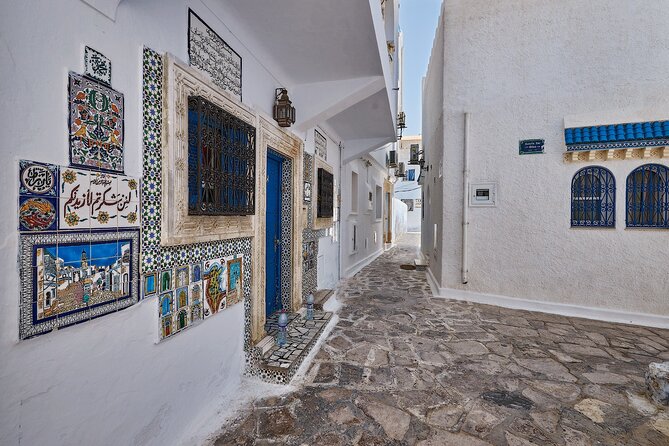
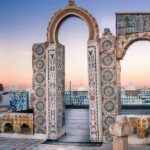
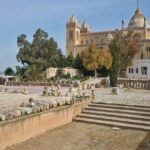
Your first guided stop is the Medina of Yasmine Hammamet, and it is not just about pretty streets. The guide’s focus is on history plus architecture, including the social codes that were built into how the town functioned. That means you will spend less time getting lost and more time noticing details you might otherwise skip.
Look for the street patterns and how buildings relate to the walkway. In older medinas, design often tells you where movement and meeting were expected, and a guide who points that out makes a big difference. You get about 1 hour 30 minutes, which is a good window for a guided orientation and then a little personal browsing.
The main drawback to watch for is that some people found the experience felt rushed. So if you like slow photo stops and longer conversations, arrive with a “scan and soak” mindset. You can still enjoy it, just do not expect everything to feel unhurried.



Stop 2: Nabeul Market and the Spice Stop for Harissa and Neroli Water
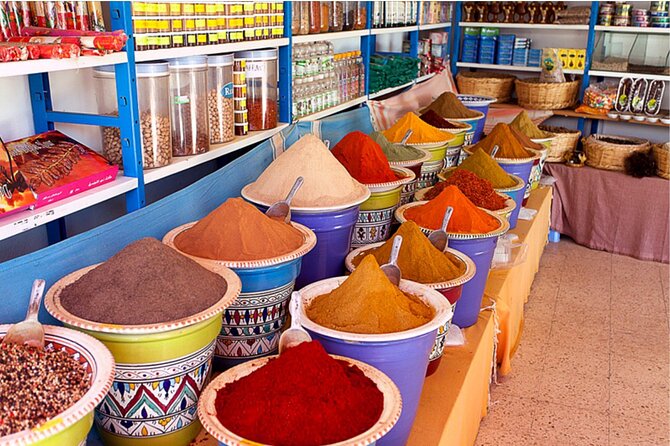
Next up is Nabeul, often described as a ceramics and pottery center, but today you are here for the daily market experience, especially the spice market. This is framed as the daily market of Tunisians, so you are not only shopping. You are getting a snapshot of how people actually buy and use ingredients.
The specific theme here is local culinary know-how, including harissa and neroli water. If you have ever wondered why harissa tastes different from one place to another, this is the kind of stop where you can see the choices side by side. Neroli water is another helpful anchor, because it is a flavor and fragrance you notice in Tunisian sweets and teas.
Now the caution. Some guests reported the spice market portion was more of a kiosk-style setup and that they did not get what they expected in terms of time or market atmosphere. I would treat it as a short, guided taste-and-buy moment rather than an all-day market expedition. Go in curious, and set your expectations accordingly.
Souks can also bring sales pressure. One review mentioned vendors in the souks can be quite pushy. If you want a calmer experience, keep your answers simple, slow your pace, and do not stop in the middle of a walkway where sellers can swarm you.
Kerkenis Ceram: The Pottery Workshop Stop That Makes It Feel Real
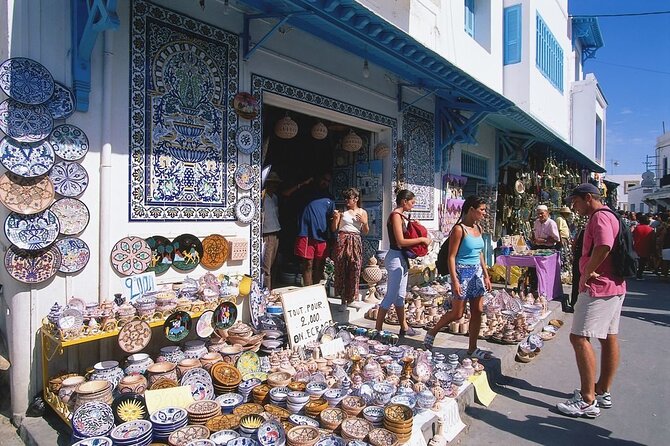
The highlight for many people is the ceramics angle, and for you it comes via Kerkenis Ceram. This is where you get hands-on craft observation and a chance to admire the craftsmanship that comes from generations of making pottery.
What makes this stop valuable is that it is not only about buying decorative items. You are watching a production mindset, the kind where quality is built into the process. Even if you do not plan to purchase, seeing how ceramics are handled and prepared is a great cultural “aha.”
You get about 1 hour here, which is a workable amount of time to see the workflow without turning the day into a factory tour. One practical tip: if you are shopping for ceramics, take your time with shape and weight. Items can look similar from a distance, but sturdiness and finish matter once you hold them.
A couple of people mentioned the guide did not walk them through every step during some portions, leaving them to browse more on their own. If that happens, do not panic. Treat the workshop like a museum stop where you follow what you can see, ask basic questions when you can, and then browse with your own pace.
Hammamet Medina: Seafront Lanes, Roof Terraces, and Souk Strolling
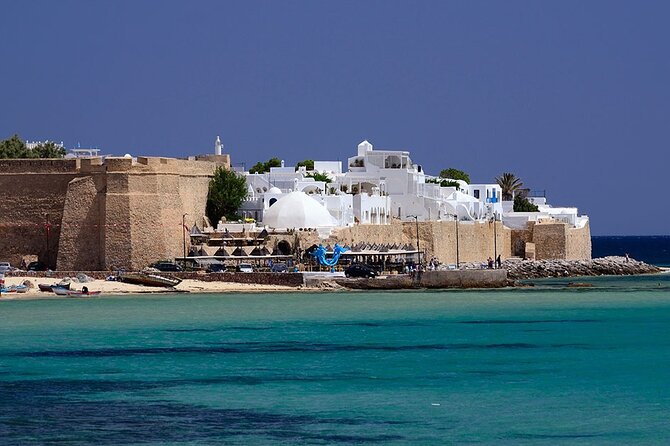
After Nabeul and the ceramics stop, the tour heads back to Hammamet for a guided tour of the Medina of Hammamet. Hammamet is sometimes nicknamed the Tunisian Saint-Tropez, mainly because the area has a seaside glamour. The medina, though, is where you see the older soul of the place, built on the seafront with viewpoints that make the coastline feel close.
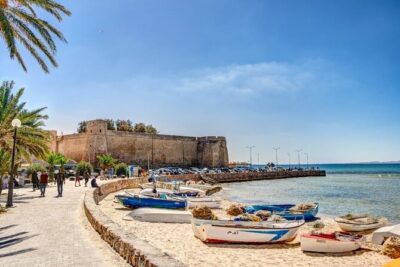
Expect souks and a stroll that helps you connect the dots between what you saw earlier in Yasmine Hammamet and what is distinct here. You also get time around the old fishing port area, which adds an everyday angle to the food, goods, and street life you are seeing in the market stops.
One key benefit of this medina time is the views. Roof terraces can give you a sense of how the town’s layers stack and how the streets feel from above. If you like photos, this is one of your best chances on the tour to get the “Tunisian coast + old town” look without needing a separate excursion.
Again, watch the pace. A few reviews flagged the feeling that the tour could be rushed. If you are the type who wants slow wandering, you might want to come back to Hammamet later on your own for a longer second pass.
How the Guide and Group Experience Usually Plays Out
A lot of the satisfaction here comes down to the guide. The most positive comments emphasize a guide who is engaged, multi-lingual, and willing to translate for English speakers in mixed groups. Some groups are mostly French, so if your French is basic, you will likely appreciate that the guide can shift and keep you in the loop.
You should also know what you are signing up for. The itinerary is guided, but a few people noted the guide did not always walk them through every market segment, leaving them with self-paced time in some stops. That does not automatically mean the tour is bad. It just means you should come prepared to do some light exploring on your own inside the guided framework.
Group size is kept reasonable, with a maximum of 50 travelers. In practice, that usually means you can still hear instructions and find your group after a short break, but it is not a private tour.
What to Buy, What to Expect, and How to Keep Shopping Enjoyable
You will likely see three “shopping lanes” on this tour: ceramics, spices, and general medina goods like copper, leather, embroidery, and other locally made craft items. The pottery workshop stop is the most straightforward place to buy, because you are connected to the making process.
For spices, think in small, practical quantities. If you want harissa, check how it is mixed and whether it is designed for immediate use or drying and rehydrating. For neroli water, treat it like a specialty ingredient. If you take it home, you will use it in specific ways, not as a general pantry purchase.
In the medina souks, sales pressure can pop up. One review called out pushy vendors. Here is how I would handle it: pause near the side, look first, ask one neutral question, then decide. If you are done, say a polite no and keep walking. You will lose less time and enjoy the medina more.
Also, a quick reality check. If your main dream is a long, deep market stroll, this is still a structured half-day. You will see enough to understand the vibe, but not enough to become a master shopper.
Best for Families, Culture Lovers, and Short-Window Travelers
This tour fits best if you want culture in a manageable half-day and you like the medina-to-market-to-craft rhythm. People who enjoy learning through stories about old towns tend to enjoy it most, especially when guides explain how architecture and social life shaped the streets.
It is also a good pick for families, based on the positive family feedback. The time blocks are short enough to stay engaged, and the mix of walking, market sights, and craft watching gives everyone something to focus on.
Who might not love it as much? If you only enjoy slow, free-form shopping and you hate feeling timed, you may find it a bit rushed. If you need a fully “guide walking beside you the whole time” experience, you will want to confirm what the guide coverage looks like in Nabeul and the spice stop, because some guests reported less guided walking than expected.
Should You Book This Medina and Spice Market Half-Day?
I think this is a solid booking if you want a compact, guided snapshot of Tunisia in one morning: Yasmine Hammamet’s medina context, Nabeul’s spice market flavors like harissa and neroli water, and ceramics craftsmanship at Kerkenis Ceram, followed by Hammamet’s seafront medina and port atmosphere.
Book it if:
- You want an easy plan that still feels culturally specific
- You enjoy guided storytelling in old-town streets
- You want to see craft work and have a chance to buy directly
Skip it or temper expectations if:
- You need a long, unhurried market experience
- You expect the spice stop to be a large, open-air market with lots of wandering time
- You are very sensitive to scheduling, especially hotel pickup loops
If you are okay with a well-paced half-day and you want the best parts of Nabeul and Hammamet without stress, this one makes sense.
FAQ
How long is the tour?
It lasts about 4 hours (approximately).
What time does the tour start?
The start time is 8:00 am.
Does the tour include pickup?
Yes, pickup is offered, and you are collected from your hotel area.
What stops are included?
You visit the Medina of Yasmine Hammamet, the Nabeul spice market, and the Kerkenis Ceram pottery workshop, then you also go to the Medina of Hammamet for a guided visit.
Is there an admission fee for the attractions?
The information provided lists admission ticket free for the relevant stops.
Do I need a paper ticket?
No, you can use a mobile ticket.
What is the group size limit?
The tour has a maximum of 50 travelers.
How much does it cost?
The price is $29.04 per person.
What happens if the tour is canceled due to weather or minimum travelers?
If it is canceled due to poor weather or the minimum number of travelers is not met, you will be offered a different date or a full refund.
What is the cancellation window?
You can cancel for a full refund up to 24 hours in advance of the experience start time.
A Wider Sweep of Tunisia
Everything Else We Have Reviewed in Tunisia
Around Cap Bon
Newest off the review desk in Tunisia


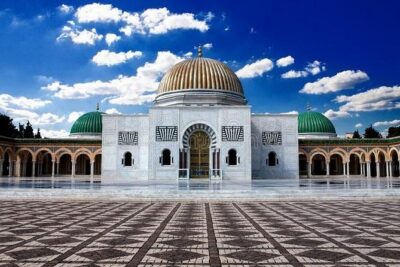
Hammamet, Nabeul & the Cap Bon Peninsula, side by side.
 ★ 4.0Quad ride on the hills of HammametFrom $46104 reviews
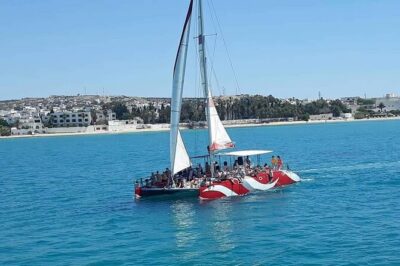 ★ 3.5Sea Trip on Catamaran in Hammamet with TransferFrom $5822 reviews
 ★ 5.0Paddle with us in Golf HammametFrom $4621 reviews
 ★ 4.5Daytrip to Kerkouen Unesco Site Kelibia and Houaria CavesFrom $1417 reviews
 ★ 4.0Day trip to Cape BonFrom $1085 reviews
 ★ 4.5DayTrip to KORBOUS Thalasso-Thermal Bath & Spectacular SEA CliffsFrom $1295 reviews
 ★ 4.5Private Excursion of Friguia Park and Medina of HammametFrom $1404 reviews
 ★ 5.0Private Excursion to the Cap Bon PeninsulaFrom $1354 reviews
Also listed under