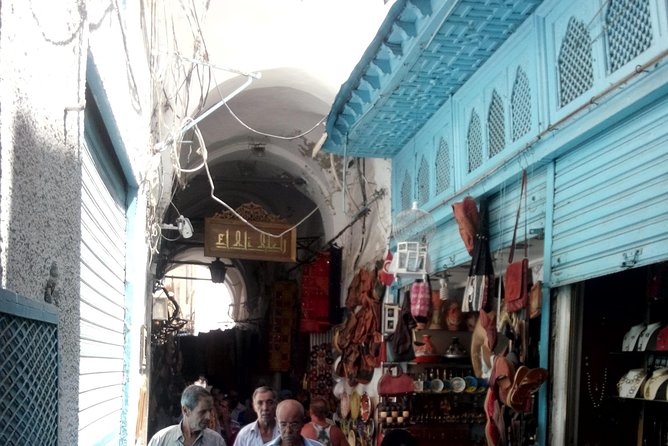
REVIEW · TUNISIA
The Medina
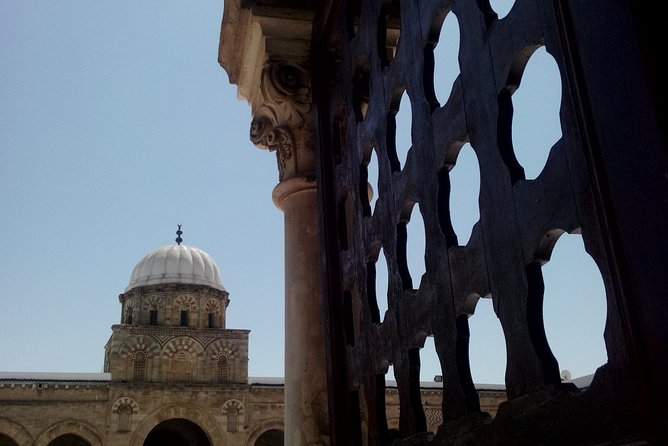
Tunis Medina feels like a living map. I love the Ez-Zitouna Mosque start and the rooftop tea break, because they make the whole warren of streets feel understandable fast. This is a guided loop through the city center that gives you context for the monuments, palaces, mosques, and marketplaces you’ll see along the way.
You’ll also get real value from the guide as you move from one landmark to the next, including stops at Quran schools and the old perfumer souk area. One possible drawback to plan for is timing glitches, since I’ve seen situations where a guide ran late after dealing with rain and traffic, and that can turn a tight 2-3 hour outing into a longer wait.
In This Review
- Key things to know before you go
- Getting oriented fast in the UNESCO Medina of Tunis
- Ez-Zitouna Mosque: your starting point in Tunisian Islamic culture
- Bab Bhar and the Medina loop: souks, marabouts, hammams, and the Great Mosque area
- Fondouk El Ghala at the Marche Central: food culture inside a historic market space
- Medersa Slimaniya: an 18th-century Quran school and ornate architecture
- Souk Al Attarine: the old perfumers souk and a sensory change of pace
- Arts center Bir Lahjar: an old Quran medressa turned into something you can visit
- Rue du Pacha: one of the Medina’s beautiful streets, plus coffee and a local snack
- Price and logistics: is $49.33 a good deal for this Medina route?
- Timing tips for a 2-3 hour Medina walk
- Should you book The Medina guided tour?
- FAQ
- How long is The Medina tour in Tunis?
- Where does the tour start?
- Does the tour include tickets or entry fees?
- What does the tour cover?
- Is there a choice of tour time?
- Is it a private tour?
- What ticket format do I receive?
- What if the weather is bad or I need to cancel?
Key things to know before you go
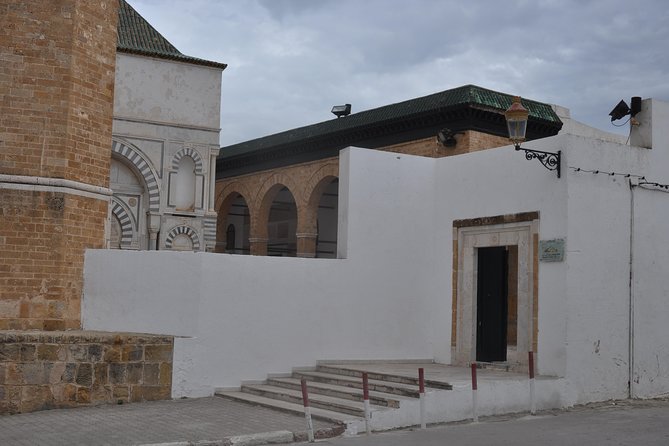
- Ez-Zitouna Mosque first: a strong starting point that sets the tone for the Medina.
- A guided walking loop: Bab Bhar, the souks, and the Great Mosque area in an order that makes sense.
- Rooftop tea with views: you get a breather and a high-up perspective over the Medina.
- Medressas and Quran schools: Medersa Slimaniya and Bir Lahjar add architectural and religious context.
- Market stop at Fondouk El Ghala: a practical way to taste the Medina through its food culture.
- Short, focused itinerary: roughly 2-3 hours, so it fits even if you have limited time.
Still weighing up which day to give this one? Here is what else travellers are booking around Tunisia.
- Private Tour to Kairouan, El Jem & Monastir from Tunis_hammamet★ 5.0 · 301 reviews
- Private tour: Medina,Carthage ,Sidi Bou Said, Bardo Museum+lunch★ 5.0 · 230 reviews
- Carthage, Bardo Museum, Sidi Bou Said and Medina Private Day Tour★ 4.5 · 153 reviews
- Private Excursion to Testour, Dougga and Bulla Regia from Tunis.★ 5.0 · 100 reviews
Getting oriented fast in the UNESCO Medina of Tunis
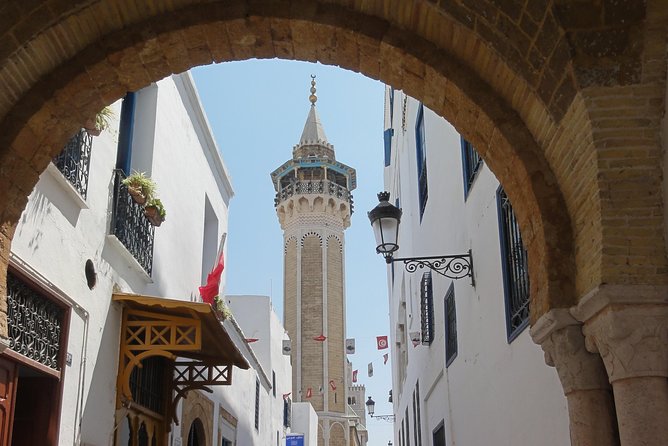
If you’re new to the medina, Tunis can feel like it’s made of perfect confusion. That’s exactly why I think a guided walk works so well here. The Medina of Tunis is part of the UNESCO World Heritage listing, and the tour is built to help you connect what you’re seeing, why it matters, and where to look next.
You meet at the I Love Tunis sign at Q5XH+RG3, then you’re walked around the center and returned to the same meeting point at the end. The tour runs about 2-3 hours, and you can usually choose a morning or afternoon time slot.
The other big “value” detail is the guide. Even with great photos in your phone, the Medina is the kind of place where context changes everything. With a private guide, you’re not just following crowds, you’re learning how the city center shaped trade, culture, and power over time, including the long chain of influences that touched Tunis.
Ez-Zitouna Mosque: your starting point in Tunisian Islamic culture
The tour begins at Ez-Zitouna Mosque, right in the heart of the medina. This isn’t a random first stop. It’s the kind of place that acts like a compass: once you know what you’re looking at, the rest of the streets feel less random.
Admission here is free, and the stop is about 30 minutes. I like how this timing works because it gets you grounded early, before you start weaving through souks and smaller lanes. You also get a sense of why Ez-Zitouna is often described as a keystone of Islamic culture in North Africa and the Maghreb, which helps explain why the surrounding areas feel so intentional.
What to pay attention to: how the mosque anchors the area, how the streets feed into it, and how the neighborhood’s rhythm changes once you’re near a major religious center. Even if you only catch a few minutes of the atmosphere, it frames your walk in a way that’s hard to do on your own.
Bab Bhar and the Medina loop: souks, marabouts, hammams, and the Great Mosque area
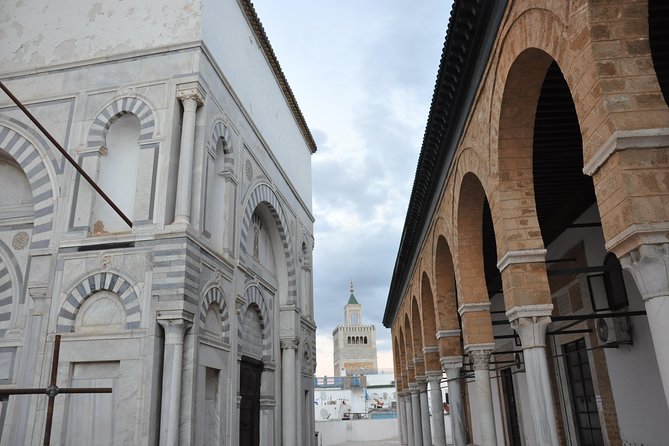
After Ez-Zitouna, you head into the main walking loop through the Medina. The route is designed to take you through the Bab Bhar area and the souks until you reach the Great Mosque area, which is described as the heart of the medina. This is one of the most satisfying parts of the tour because you’re not doing a straight line, you’re doing a purposeful circuit.
The stroll also includes a turnback that lets you see additional types of sites without you missing them. You’ll look out for medressas, hammams, souks, and marabouts, which means the city doesn’t feel like it’s only one thing. Tunis shows up as a mix of faith, daily life, learning, and commerce.
One practical highlight is the tea on the roof of an old palace. This is more than a drink stop. From up high, you can finally see how the Medina layers buildings, streets, and courtyards. You also get a pause from walking, which matters because the medina is often best appreciated at walking speed, not running speed.
A small consideration: the best “panoramic” moment is weather-dependent. The tour requires good weather, so if conditions are rough, you may want to choose the time slot that feels safest for walking.
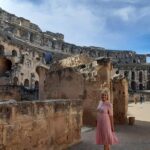
Fondouk El Ghala at the Marche Central: food culture inside a historic market space
Next up is a food-focused stop: Marche central de Tunis and Fondouk El Ghala. This is often where the tour shifts from sightseeing to everyday life, and I think that balance is smart.
The time here is about 20 minutes, and admission is free. A “food basket of Tunis” is exactly the right way to describe the feeling of a place like this. It’s not just restaurants and snack stands, it’s a marketplace logic, where products, smells, and local routines tell you what people buy, cook, and share.
If your goal is to leave the Medina with more than photos, this stop helps. You can use it to sample small bites and get a sense of what locals treat as normal. And because it’s part of the guided route, you’re not stuck trying to decode what to try or where to stand.
Medersa Slimaniya: an 18th-century Quran school and ornate architecture
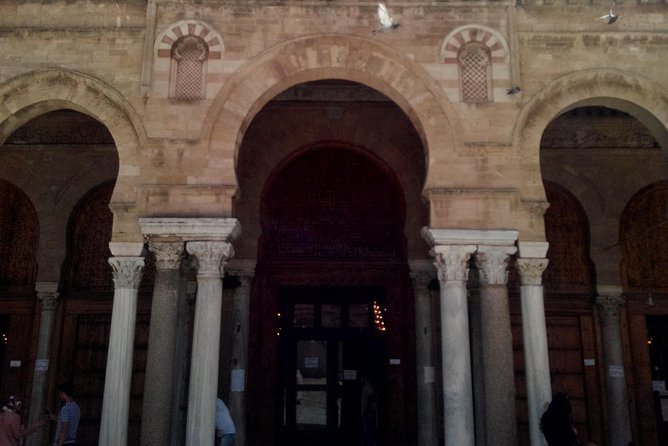
Now the tour shifts into learning spaces. Medersa Slimaniya is a Quran school from the 18th century, and it’s described as a masterpiece of local architecture and ornamentation. The stop is about 30 minutes, with admission free.
This is one of those locations where the guide’s context matters. On your own, you might appreciate the building and move on. With a guide, you understand why this kind of medressa design exists, what it signals in the city, and why it still reads as important centuries later.
What to look for: patterns, detailing, and how the building style differs from the nearby street-level shopping areas. A medressa is often quieter in function, even when it sits inside a lively neighborhood. That contrast is part of the educational payoff.
Souk Al Attarine: the old perfumers souk and a sensory change of pace
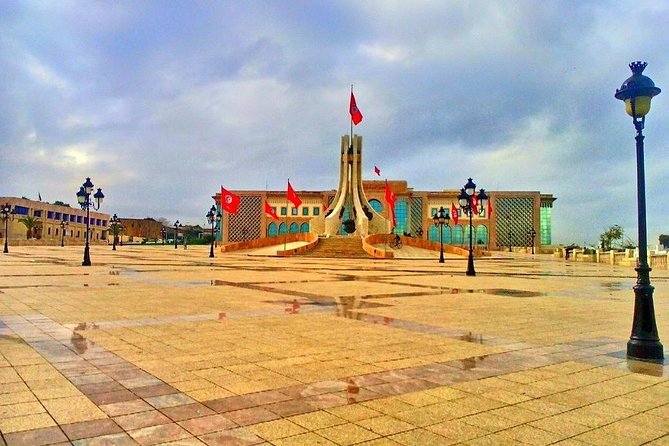
Then comes Souk Al Attarine, known as the old souk of perfumers. This stop is shorter, about 15 minutes, and admission is free.
If you like variety in your itinerary, this is a good one. After medressas and broader Medina landmarks, the perfumers souk adds a different kind of atmosphere. It’s often where you slow down for a moment, notice packaging, scents, and the way shop owners set up goods.
Practical tip: expect more sensory input than normal street walking. If you’re sensitive to strong smells, keep that in mind and focus on visual details rather than inhaling deeply.
Arts center Bir Lahjar: an old Quran medressa turned into something you can visit
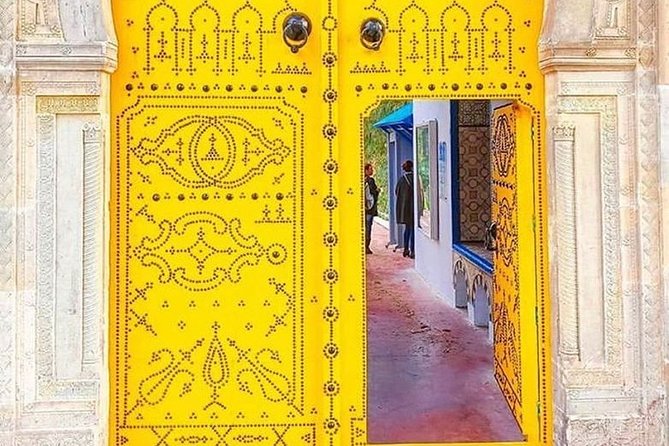
Another education-related stop follows: Arts center Bir Lahjar, described as an old medressa of Quran. This is about 15 minutes and admission is free.
This works well after Souk Al Attarine because it keeps your mental map aligned. You’re still in the “learning” theme, but now you’re seeing how spaces shift use over time. The tour framing helps you connect the dots between the Medina’s religious education spaces and the city’s later cultural uses.
What makes this stop worth it is the pacing. At 15 minutes, you won’t feel like you’re stuck indoors. It’s enough time to appreciate the space, spot key details, and move on with renewed understanding.
Rue du Pacha: one of the Medina’s beautiful streets, plus coffee and a local snack
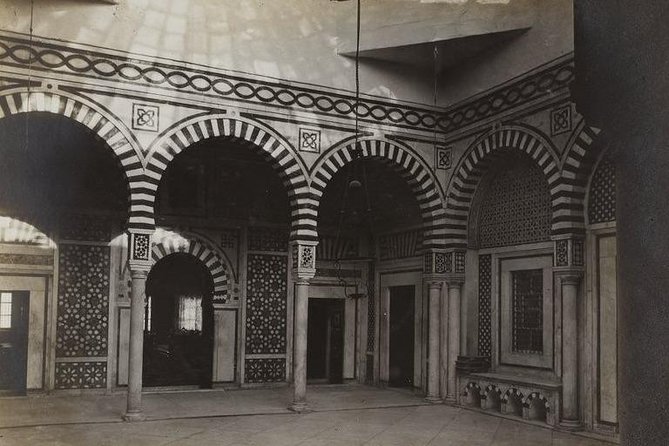
Near the end, you get a change of pace on Rue du Pacha, described as one of the most beautiful streets of the medina. This stop is about 15 minutes and admission is free.
You also add street time: street coffee and a local snack. I like that the tour doesn’t treat food as optional. This is exactly the kind of small, easy break that makes the rest of the walking feel less exhausting.
Rue du Pacha is a great “final impressions” stop. By then, you’ve seen mosque and medressa architecture, souks, and market energy. Sitting with a drink and snack on a photogenic street helps you remember what the Medina felt like, not only what it looked like.
One small consideration: street food is best with a patient approach. Don’t rush the line or shove for photos. Let the moment be part of the experience.
Price and logistics: is $49.33 a good deal for this Medina route?
At $49.33 per person, this tour sits in a mid-range price zone for Tunis. The value comes less from the number of stops and more from how the guide organizes them into a meaningful route you can actually enjoy in a short window.
A key factor is the scale. The tour is listed as private, and the maximum group size is up to 20 travelers. In practice, that can still feel like a “guided walk with room to breathe,” especially because the stops are spread and you have short segments that don’t require long museum-level patience.
The other value point is that many entries are free or included at the stops you hit. Ez-Zitouna is free, the Medina walk includes the tea admission experience, and the medressas and souk stops are free as well. That means your money is buying interpretation and a clean route, not a pile of paid ticket lines.
Guide quality is the make-or-break piece. I’ve learned that a strong guide can turn the Medina from a maze into a story. On the positive side, guides can steer you to the most beautiful areas and give you history that actually helps you appreciate the city. On the caution side, one of the few real risks is guide timing. If you’re choosing this as your only Medina plan, give yourself buffer, especially around rainy or traffic-heavy days.
Timing tips for a 2-3 hour Medina walk
This is a 2-3 hour experience, and it requires good weather. So treat it like a timed neighborhood stroll, not an all-day wandering mission.
Pick the time of day that matches your energy. Morning slots often feel calmer for walking, while afternoon can offer different light on stone and street textures. Either way, you’ll be outside and moving between key sites, so comfortable shoes matter more than you’d think.
Bring a simple plan for the rooftop tea moment. If you want photos, take them before you relax, because you’ll want both hands free once you start enjoying the break.
Should you book The Medina guided tour?
I’d book this if you want to see the Medina in a short window and you prefer a guided route that helps you connect mosques, medressas, souks, and everyday market life. The mix of Ez-Zitouna, the walk through the core areas around Bab Bhar and the Great Mosque, plus medressa stops and the rooftop tea break makes this a strong first-time Medina option.
Skip it, or at least think twice, if you hate guided walking or you need a fully flexible, self-paced itinerary. And if your schedule is tight, don’t plan to stack other commitments immediately before or after, since timing hiccups can happen.
Overall, this is one of those tours where the “secret sauce” is the guidance. If you show up ready to walk and ask questions, you’ll leave Tunis with a much clearer sense of how the Medina works.
FAQ
How long is The Medina tour in Tunis?
The tour lasts about 2 to 3 hours.
Where does the tour start?
The meeting point is at the I Love Tunis sign, Q5XH+RG3, Tunis, Tunisia.
Does the tour include tickets or entry fees?
Ez-Zitouna Mosque has free admission. The Medina of Tunis tea stop is included. Other stops listed are also free admission.
What does the tour cover?
You’ll visit Ez-Zitouna Mosque, explore the Medina of Tunis including Bab Bhar and the souks, stop at Marche central de Tunis and Fondouk El Ghala, see Medersa Slimaniya, visit Souk Al Attarine, go to Arts center Bir Lahjar, and finish at Rue du Pacha with street coffee and a local snack.
Is there a choice of tour time?
Yes, you can choose from a morning or afternoon tour time.
Is it a private tour?
Yes, it is described as a private guided tour, with a maximum of 20 travelers.
What ticket format do I receive?
You receive a mobile ticket.
What if the weather is bad or I need to cancel?
The experience requires good weather. If it’s canceled due to poor weather, you’ll be offered a different date or a full refund. You can cancel for free up to 24 hours in advance for a full refund.
Everything Else We Have Reviewed in Tunisia
- Private Tour to Kairouan, El Jem & Monastir from Tunis_hammamet
- Private tour: Medina,Carthage ,Sidi Bou Said, Bardo Museum+lunch
- Carthage, Bardo Museum, Sidi Bou Said and Medina Private Day Tour
- Private Excursion to Testour, Dougga and Bulla Regia from Tunis.
- Guided Bike Tour of Carthage Archeological Site in Tunisia