
REVIEW · SAHARA DEPARTURES FROM DOUZ
The Tunisian South between Oasis and Mountain: 3 Days / 2 Nights Douz and Tozeur
Desert routes and Roman stone in three days. This tour strings together oasis towns, desert salt flats, and the kind of Roman monument you do not expect to find in the Sahara’s orbit. The timing is tight, but that’s the point, you get a broad view of southern Tunisia in 2 nights.
I love how the itinerary mixes big-name sights with lived-in places you can actually walk through, from Kairouan’s cedar doors and medina souks to Tozeur’s palm grove. I also like the balance of comfort and texture, you ride in an air-conditioned vehicle, then switch to short excursions like the carriage ride in Tozeur’s oasis and included 4×4 sand time.
The main drawback is simple: it’s packed and long. Expect early mornings and long days on the road, plus sand is part of the deal.
In This Review
- Key things to notice before you go
- Entering southern Tunisia the efficient way
- Price and value: what $638.80 buys you
- Day 1 Kairouan and Tozeur: cedar doors and date palms
- Tozeur oasis time: carriage ride and Chak Wak
- Day 2 Chebika and Tamerza: mountain oases and canyon roads
- Star Wars sets in the desert: Decor Star Wars Tunisie
- Nefta and Chott el-Jerid: springs, salt, and mirage conditions
- Douz: gateway to the Sahara and the sunset payoff
- Day 3 Matmata troglodyte homes: underground living done for real
- El Jem amphitheater: Roman scale in the middle of nowhere
- Your comfort plan: long days, lots of driving, and meal rhythm
- Who this tour is best for (and who should think twice)
- Should you book this 3-day oasis and mountain desert route?
- FAQ
- What time does the tour start?
- How long is the experience?
- Is pickup included?
- What’s included in the price?
- What quad and camel costs should I expect?
- Are entrance fees included for all the stops?
- Is this a private tour?
- What should I do if the weather is bad?
- Can I cancel for a full refund?
Key things to notice before you go
- Private group format: only your group participates, which usually means fewer waiting gaps and easier pace control
- Early start rhythm: meeting at 7:00 am helps you see places before the heat and crowds hit
- Included 4×4 excursions: Great Sand Dunes Ong jmel plus Chebika and Tamaghza are built into the program
- Optional add-ons are clearly priced: quad is 30 euros per person, camel is 20 euros per person
- Two strong anchors: Roman El Jem plus Matmata troglodyte homes keep the trip from feeling purely desert-focused
- Guide quality shows up in feedback: guides such as Chaouki, Ahmed, Yahya, with drivers like Usama and Hamsa, are repeatedly credited for safety and clarity
Still weighing up which day to give this one? Here is what else travellers are booking around Tunisia.
- Private Tour to Kairouan, El Jem & Monastir from Tunis_hammamet★ 5.0 · 301 reviews
- Private tour: Medina,Carthage ,Sidi Bou Said, Bardo Museum+lunch★ 5.0 · 230 reviews
- Carthage, Bardo Museum, Sidi Bou Said and Medina Private Day Tour★ 4.5 · 153 reviews
- Private Excursion to Testour, Dougga and Bulla Regia from Tunis.★ 5.0 · 100 reviews
Entering southern Tunisia the efficient way
This tour is designed for people who want real southern Tunisia, not just a day trip where you blink and the calendar changes. In three days you move through Kairouan, Tozeur, Chebika, Nefta, Douz, Matmata, and end at El Jem. That’s a lot of geography, but the schedule is planned around day-by-day region shifts, so you are not repeating the same “two hours driving, ten minutes standing” pattern.
I like the way the program reads like a route map: start in the north of the south with Kairouan’s religious heart, slide into the oasis belt around Tozeur, then shift into mountain-oasis and desert-play territory. By day three you swap desert heat for underground dwellings and Roman scale.
The other quiet win is that the itinerary gives you a mix of what to look at and what to do. You are not only watching sites from a bus window. You also walk medinas, see the inside of troglodyte homes, and get hands-on desert time through included 4×4 excursions.
Price and value: what $638.80 buys you
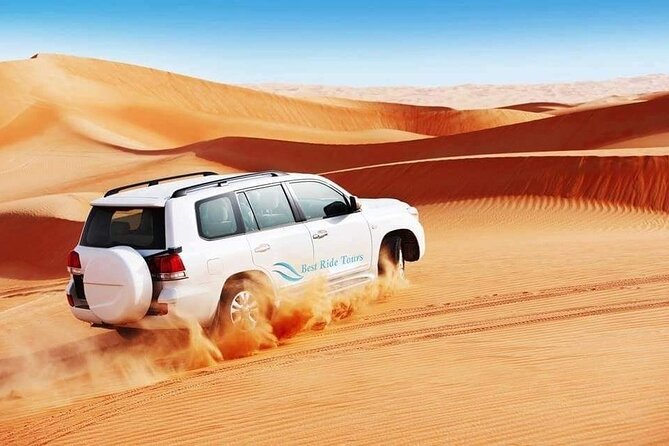
At $638.80 per person for about three days, the value comes from what’s bundled versus what’s optional. This is not just transport and tickets, it includes air-conditioned vehicle use, entrance fees to the listed sites and museums, two breakfasts and two dinners, plus key excursions by 4×4. There is also a carriage ride included in Tozeur.
What is not included is also clearly handled. If you want the sand-ride thrill, you pay separately for a quad (30 euros per person) or camel (20 euros per person). That means you can keep the cost down if you’d rather spend time photographing dunes or relaxing.
One more value point: the pickup is offered and the start time is early. That matters in Tunisia’s south, where a late start can turn a good plan into a heat complaint by midday.
Day 1 Kairouan and Tozeur: cedar doors and date palms
Your first big day starts with Kairouan, and it’s a smart move. Kairouan’s Great Mosque is the symbol of the city, built in 670, and it’s famous for its fortress-like look made of adobe-style forms. When you visit, pay attention to the details they highlight for you: the imposing minaret, the large courtyard, arcades, and the sundial. The doors made of richly carved cedar wood are also the kind of thing that makes you pause, because it’s not just a pretty building, it’s craft.
After that, you shift from monumental to everyday life in the medina of Kairouan. This is where the program’s “walk and taste” value shows up. You get time for souks and for trying Kairouan pastries, especially mekroudhs, plus you can see artisanal carpet work. Even if you do not buy, the medina gives you context for why Kairouan mattered historically.
From there you roll into Tozeur, the palm and oasis capital of the Bled El Jerid region. Tozeur is known for its sun-baked brick architecture and for its dates, especially deglet ennour. The program’s numbers help you understand the scale: the oasis economy supports millions of palms, including 400,000 in the city, and about 200 springs.
Practical note: Tozeur’s oasis towns feel calmer than the big tourist traps, but you still want light layers. Walking areas can be shaded in places, but the sun does not negotiate.
Tozeur oasis time: carriage ride and Chak Wak
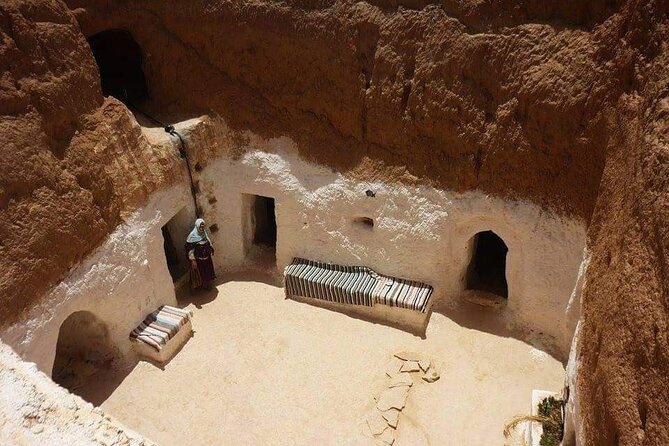
The Tozeur portion gives you an actual oasis break, not just a photo stop. The included horse-drawn carriage ride and an oasis walk are the easiest way to understand the palm grove as something lived in, not a postcard prop.
Then you add a stop that’s more playful than typical museum culture: Chak Wak. It’s a park spread over about five hectares with mini-museums, caves, huts, and lots of figurines, including dinosaurs and animal characters. If you like quirky stops, this is a good one. If you prefer strictly “historical site only,” you might find it a bit strange, but it does keep the day varied.
Where Chak Wak helps most is timing. It gives your brain a rest between the older, more serious places and the desert-driving intensity that comes next.
Day 2 Chebika and Tamerza: mountain oases and canyon roads
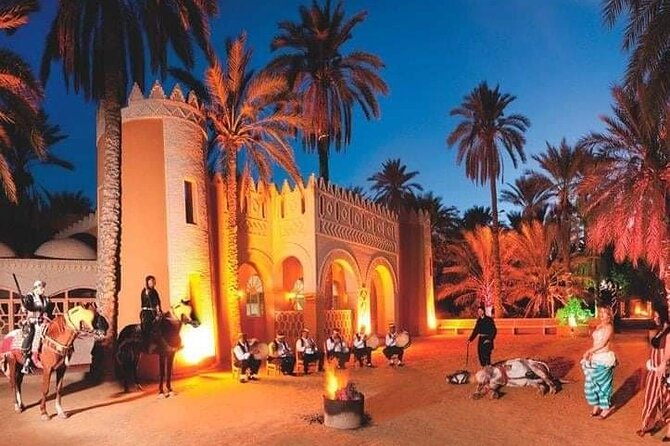
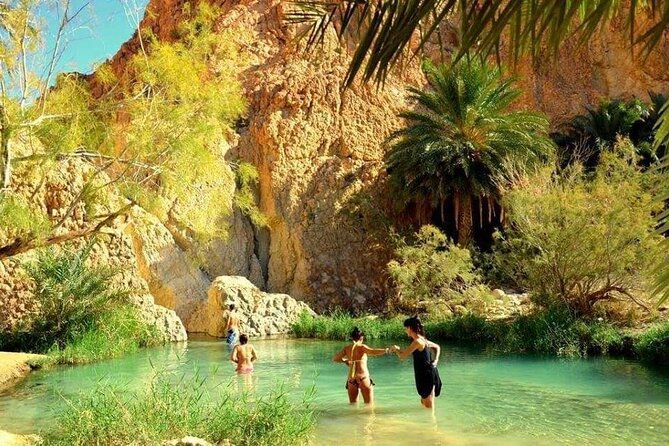
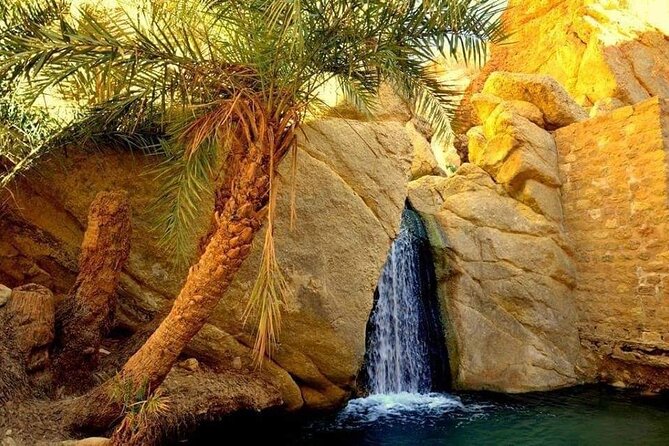
Day two is where the title of the tour starts to make sense. Chebika is a mountain oasis, and that shift from flat oasis to elevated rocky terrain is a real change in feel. It’s short time-wise in the schedule, but it’s one of those places where your eyes keep tracking the contrast between greenery and surrounding stone.
Right after, you go to Tamerza (also referenced as Tameghza), about 14 kilometers north of Chebika. This stop connects the present landscape to older layers of defense and empire. The program notes it was once an ancient Roman and Episcopal defensive position in Byzantine times. The drive itself also matters: the road to Tamerza is winding along a canyon for about 10 kilometers.
One detail I’d file away because it gives the trip texture: the program mentions the road construction timeline tied to World War II, with Rommel coming from the north while besieged by the allies. You do not have to memorize it, but it helps you look at the area with more context than “pretty canyon and that’s it.”
Star Wars sets in the desert: Decor Star Wars Tunisie
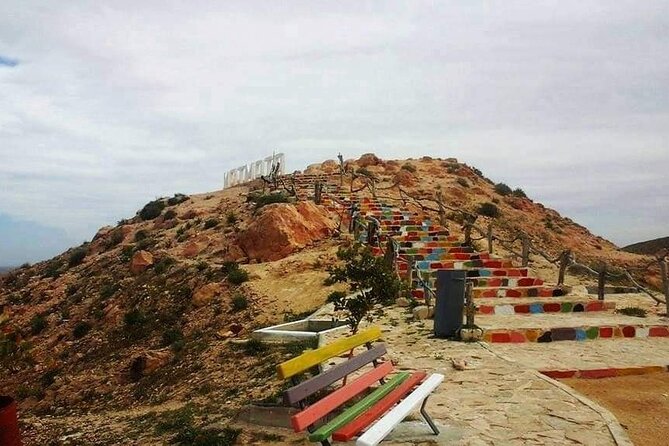
Between religious sites and oasis towns, you also get a film-location stop: Decor Star Wars Tunisie, about 14 kilometers from Nefta and 38 kilometers from Tozeur. The program says Georges Lucas set scenes there, with sets used for Star Wars episodes I and II.
This stop is short, but it works if you treat it like desert architecture more than a movie museum. You’ll notice how the terrain and built sets coexist, and you get a quick reminder that this region has been filmed because it looks otherworldly in real life.
If you are not a Star Wars person, you can still enjoy it as a visual intermission. It breaks up the “we keep driving through desert until sunset” monotony.
Nefta and Chott el-Jerid: springs, salt, and mirage conditions
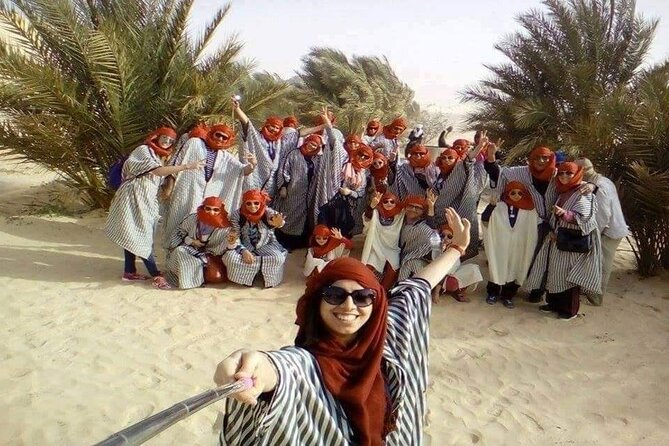
Then you hit Nefta, known for its irrigation system. The program describes the basket of Nefta as a crevice shaped like a basket, from which 152 springs emerged to irrigate the palm grove. When those springs dried up in the 1980s, it led to desolation similar to what happened in nearby places like El Hamma, Degache, and Tozeur.
That’s important, because it turns an oasis stop into a story about water systems and how fragile they can be. You are not just looking at palms, you are seeing the infrastructure behind them.
Next up is Chott el Jerid, Tunisia’s large salt lake or sebkha, described as around 5,000 km². In hot climates, salt flats can create mirage effects, and this stop is where you can catch that shifting look depending on the day. Even if you never get a perfect mirage moment, you still get a huge sense of scale and a different kind of desert texture.
Douz: gateway to the Sahara and the sunset payoff
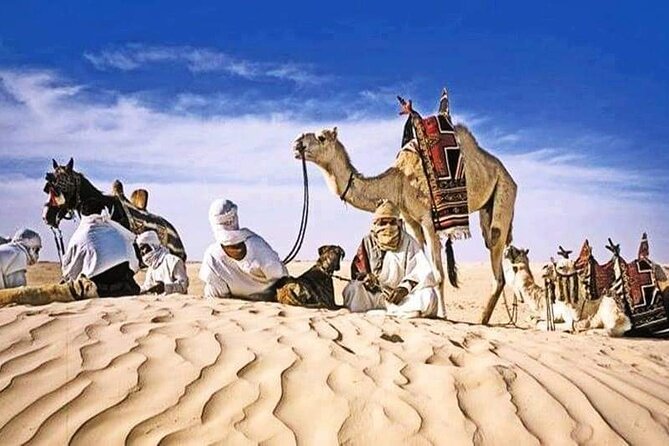
Finally, you reach Douz, described as the gateway to the Sahara. The program calls out one of the big reasons this stop earns its reputation: you get the chance for a superb Sahara sunset. If you like photos, this is your moment.
The itinerary also keeps the fun options open. You can do a quad ride or a camel ride as optional add-ons, priced at 30 euros per person for the quad and 20 euros per person for camel rides. Since both are separate, you can decide based on your energy level and how much sand time you want.
A practical tip: bring something to cover your mouth and nose if you are prone to breathing issues around dust. Sand is going to be everywhere at some point. Plan like an adult, not a hero.
Day 3 Matmata troglodyte homes: underground living done for real
Day three shifts away from the desert surface and into underground living. You visit Matmata and specifically the Casas Trogloditas de Matmata. The program describes Matmata as an ancient Berber village spread over hills, with houses built as troglodyte dwellings inside pits.
What to look for: the homes are underground, with a pit shape, and each pit (called a houch) has a circular courtyard with drawings and colors, then rooms extending from there. It’s a very visual place because your brain expects solid ground and you end up looking down into a whole built world.
One review snippet highlights a very human part of Matmata. In at least some experiences, you may be welcomed by a Berber family in a traditional troglodyte home, with tea, fresh bread, and honey. That kind of interaction is the reason this stop feels more than just a sightseeing box. You should still be ready for a short visit, but you can get genuine context from the people who live that lifestyle.
El Jem amphitheater: Roman scale in the middle of nowhere
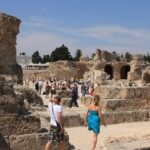
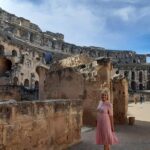
Then you end with Amphitheatre D’el Jem, and it’s a strong closer. The amphitheater is built entirely of cut stone, and it’s not dug into a hill. The program lists dimensions of about 148 meters by 122 meters, with an estimated capacity around 35,000 spectators. That size hits differently when you realize it was built for show, in a place you might not imagine as a Roman stage.
What I like about this stop is how it changes your mental map. Until you reach El Jem, you might think the trip is all about desert and oasis survival. El Jem reminds you that this region also had big public spectacle culture and engineering.
If you like Roman architecture, you’ll appreciate the comparison they make to the Colosseum’s model. You are not in Rome, but the ambition feels familiar.
Your comfort plan: long days, lots of driving, and meal rhythm
This is not a slow travel route. The program timing, with a 7:00 am start, typically means you’re in motion most of the day. Reviews mention long days like roughly 5 to 6 pm ends, and the drive distances in Tunisia can be the real challenge, not the walking.
The good news is you have air-conditioned vehicle time, plus you get built-in meals. Two breakfasts and two dinners are included, and in practice that helps you avoid the “every day we scramble for food” fatigue. You can focus on the stops instead of planning meals while also trying to function through heat and traffic.
If you are sensitive to fatigue, I’d treat this as a “go see it” itinerary, not a “relax and wander” itinerary. You will get your money’s worth in variety, but you do need stamina.
Who this tour is best for (and who should think twice)
This tour suits you if you want a big sweep of southern Tunisia and you prefer guided structure. It’s also good if you like contrasts: mosque courtyards, palm groves, mountain canyons, salt flats, underground Berber homes, then Roman stone on the final day.
It’s less ideal if you hate long driving days, or if you only want one type of scenery. The schedule moves fast between different regions. Also, if you want lots of free time to shop slowly or linger for hours at a single site, you might find the day lengths demanding.
Should you book this 3-day oasis and mountain desert route?
I think you should book if your goal is to understand southern Tunisia in one shot, with major stops handled and the desert time built in through included 4×4 excursions. The combination of Kairouan’s mosque and medina, Tozeur’s oasis walk and Chak Wak, Chebika and Tamerza’s canyon scenery, Matmata’s troglodyte homes, plus El Jem’s amphitheater is a strong mix for a short trip.
I’d hesitate only if you want a relaxed pace. This route is action-packed by design, and the value comes from staying busy, not from lingering.
If you do book, plan for early starts, pack for dust, and decide ahead of time if quad or camel rides matter to you. That one choice can help you match the trip to your comfort level.
FAQ
What time does the tour start?
The start time is 7:00 am.
How long is the experience?
It runs for about 3 days.
Is pickup included?
Pickup is offered.
What’s included in the price?
The offer includes carriage ride, air-conditioned vehicle, entrance fees to the listed sites and museums, 4×4 excursions to the Great Sand Dunes Ong jmel plus Chebika and Tamaghza, and 2 breakfasts and 2 dinners.
What quad and camel costs should I expect?
Quad is 30 euros per person and camel is 20 euros per person. These are listed as not included.
Are entrance fees included for all the stops?
Entrance fees are included for the sites and museums mentioned in the program. Some stops are marked free in the schedule as well.
Is this a private tour?
Yes. It’s described as private, and only your group participates.
What should I do if the weather is bad?
The experience requires good weather. If it is canceled due to poor weather, you will be offered a different date or a full refund.
Can I cancel for a full refund?
Yes. You can cancel up to 24 hours in advance for a full refund.
Everything Else We Have Reviewed in Tunisia
- Private Tour to Kairouan, El Jem & Monastir from Tunis_hammamet
- Private tour: Medina,Carthage ,Sidi Bou Said, Bardo Museum+lunch
- Carthage, Bardo Museum, Sidi Bou Said and Medina Private Day Tour
- Private Excursion to Testour, Dougga and Bulla Regia from Tunis.
- Guided Bike Tour of Carthage Archeological Site in Tunisia
Newest off the review desk in Tunisia

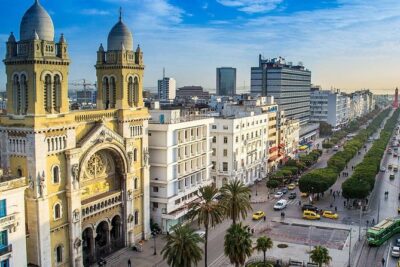
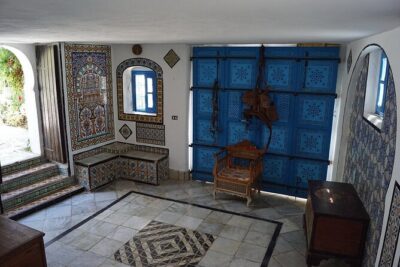
Sahara Departures from Douz, side by side.
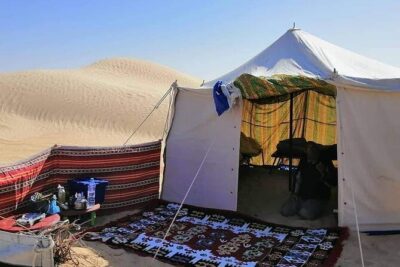 ★ 5.0A Private Night at Desert Douz TozeurFrom $28429 reviews
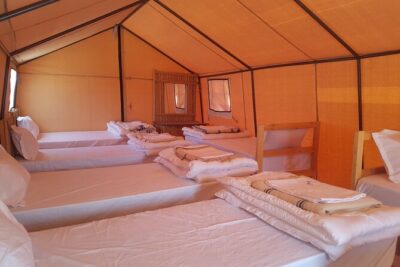 ★ 5.02-Day Tunisia Sahara Desert Camel Trek from DouzFrom $24027 reviews
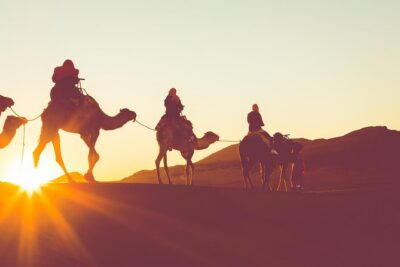 ★ 4.5Sunset or Sunrise Camel ride in the Sahara Desert of DouzFrom $659 reviews
 ★ 5.03-Day Tunisia Sahara Desert Camel Trek from DouzFrom $2709 reviews
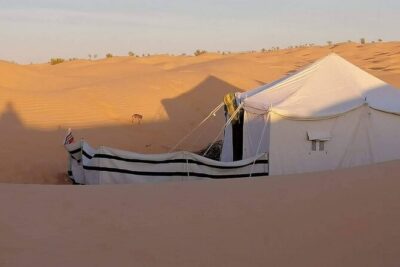 ★ 4.52 days tour to Douz & Ksar Ghilan oasis. and an overnight in the sahara under bedouin tent .. Dinner in the camp, Private Jeep – with english speaking guide.From $2348 reviews
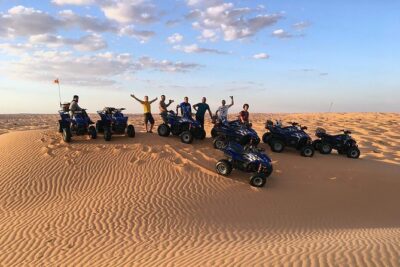 ★ 5.0Quad Biking (ATV) in Douz Tunisia Sahara DesertFrom $287 reviews
 ★ 5.0Douz Overnight Camp Stay in Sahara Desert with Dinner By CamelFrom $1406 reviews
 ★ 4.0Overnight Tunisia Sahara Desert Safari by 4×4 from DouzFrom $2904 reviews