
REVIEW · ANCIENT CARTHAGE & SIDI BOU SAID
Carthage Discovery Half-Day Tour with Licensed Guide
Carthage in one focused half-day. This private tour takes you from Tunis to the UNESCO-listed ruins of ancient Carthage and strings together the big stops people come for: Byrsa Hill sights, the Tophet, the museum, and the old port area. I like that it is built for real time on the ground, with a licensed guide who explains how Phoenicians, Carthaginians, Romans, and later periods connect.
Two things stand out most. First, the guide experience seems to be the heart of the day, with Nouraddean cited for making complex history clear and human. Second, the tour is structured so you see a wide mix of sites without feeling like you are zigzagging across town on your own. It is also good value for a guided route, because the key entrances are included.
One thing to consider is pacing. You get a lot into four hours, including multiple stops with walking, and Carthage can feel hot in season. If you prefer slower museum time and very few steps, you may want to plan for breaks and comfortable shoes.
In This Review
- Key things to know before you go
- How this half-day Carthage route stays manageable
- Stop 1: Site Archeologique de Carthage and the Byrsa Hill story
- Stop 2: Tophet de Carthage and the uncomfortable debate
- Stop 3: Carthage Museum near Saint-Louis Basilica
- Stop 4: Punic Ports and Museum area, what is left of the power
- Price and value: what $94.90 buys you in real life
- Transfers, timing, and the reality of a condensed UNESCO day
- Who this tour fits best
- Small tips to get more from your guide
- Should you book this private Carthage half-day tour?
- FAQ
- How long is the Carthage Discovery half-day tour?
- Where does pickup happen?
- Is this tour private?
- What does the tour include besides the guide?
- Are entrance fees included?
- Is lunch included?
- Is there a mobile ticket?
- Can I bring a service animal?
- Are children allowed?
- What is the weather condition for the tour?
Key things to know before you go
- Private guide for your group, so you can ask questions and adjust at the stops
- Pickup from Tunis or Hammamet in a private, air-conditioned vehicle
- UNESCO Carthage stops, including Byrsa Hill area sights and the museum
- Tophet de Carthage adds a difficult, controversial archaeological story
- Entrance fees included, with the Punic Ports area marked as free
- Mobile ticket and group discounts (good if you are sharing the cost)
Done with the Punic ports? More Carthage and Sidi Bou Said runs to compare
- Private tour: Medina,Carthage ,Sidi Bou Said, Bardo Museum+lunch★ 5.0 · 230 reviews
- Carthage, Bardo Museum, Sidi Bou Said and Medina Private Day Tour★ 4.5 · 153 reviews
- Guided Bike Tour of Carthage Archeological Site in Tunisia★ 5.0 · 88 reviews
- Group Guided Bike Tour of Carthage Archeological Site in Tunisia★ 5.0 · 57 reviews
How this half-day Carthage route stays manageable
A four-hour tour sounds short for a place with millennia of layers. The trick here is that this itinerary is not trying to cover every stone on the site. Instead, it concentrates on the stops that help you understand Carthage, not just photograph it.
You start with pickup from your hotel in Tunis (or Hammamet, depending on where you are staying). The ride is about 25 minutes to Carthage, and that matters because it protects the limited time you have. Once you arrive, you stay with a professional guide, so you spend less energy figuring out what you are looking at and more time making sense of it.
Also, because it is private, you are not stuck waiting while a group chats, wanders, or lags behind. The best version of this day feels like a guided “greatest hits” with real context, and the reviews back up that the guides are flexible, including tailoring the tour to match a visitor’s needs.
Practical note: the tour duration is about four hours, with different time blocks at each stop. That is enough time to walk through key areas and absorb the explanations, but it is still a condensed plan. If your priority is slow wandering, build in extra time on your own before or after, or consider a longer format.
Stop 1: Site Archeologique de Carthage and the Byrsa Hill story
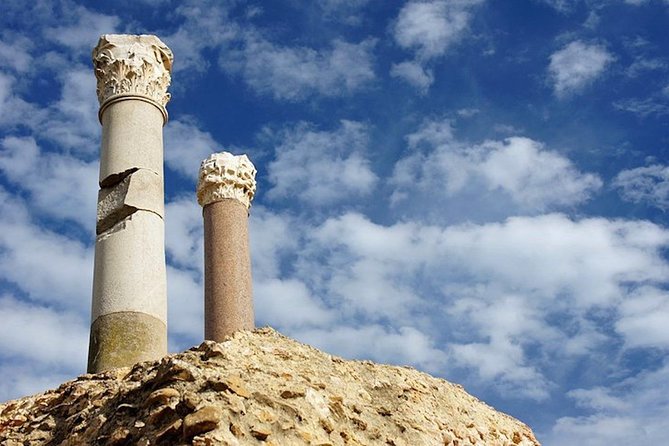
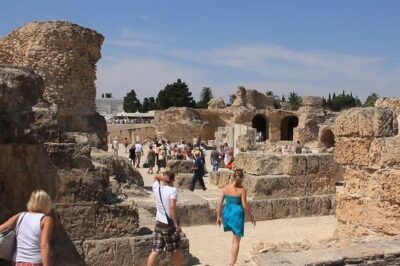
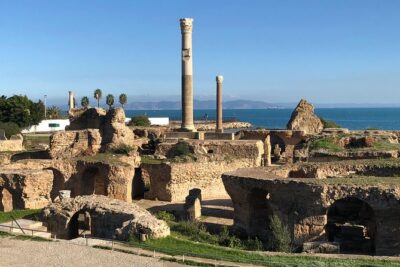
This is where Carthage starts to feel real. You begin at the Site Archeologique de Carthage and you will see the kind of ground archaeology that lets the guide explain how an ancient city worked.
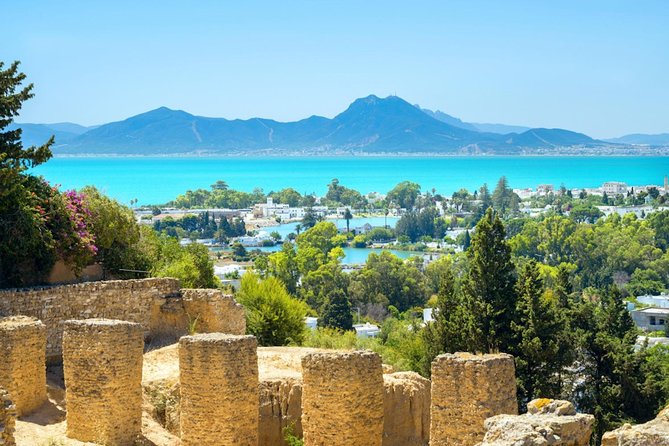
The time block is about two hours, which is plenty to get beyond the “ruins are old” feeling. The guide walk through the area and the wider coastline views help you understand why Carthage mattered to trade and power. On clear days, you can almost picture the city as a living coastal hub, not just a set of excavations.
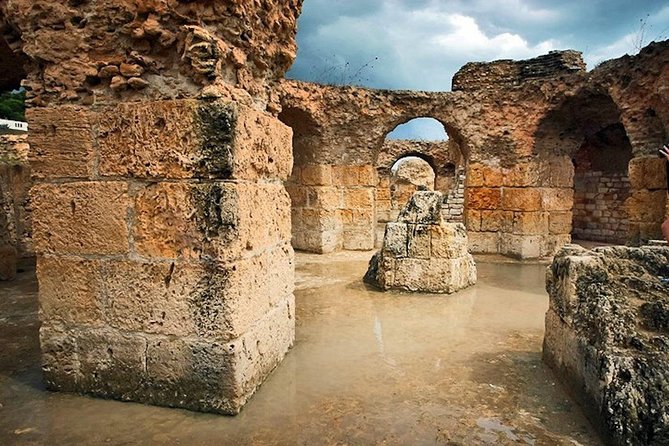
What I think makes this stop valuable is the level of detail you can connect to. Carthage was famously destroyed by the Romans in 146 BC, but excavations revealed practical information about daily life and infrastructure. You are told about the scale of the city, including city walls that once stretched about 21 miles (34 km) across Byrsa Hill. You also hear about major domestic and civic systems, like sewage systems and the remains of surprisingly tall homes, described as five-story houses.
That mix is powerful because it moves Carthage from a headline to a functioning society. It also gives you a framework for the rest of the tour: ports, religious sites, and museums start to connect back to what the city needed to live and rule.
A possible drawback is that two hours can include a fair amount of standing and walking. If you are sensitive to heat or uneven ground, wear supportive shoes and plan to pace yourself at your own speed, even with a group tour. The upside is that the guide’s explanations should keep you engaged, so you are not just moving through empty spaces.
Stop 2: Tophet de Carthage and the uncomfortable debate
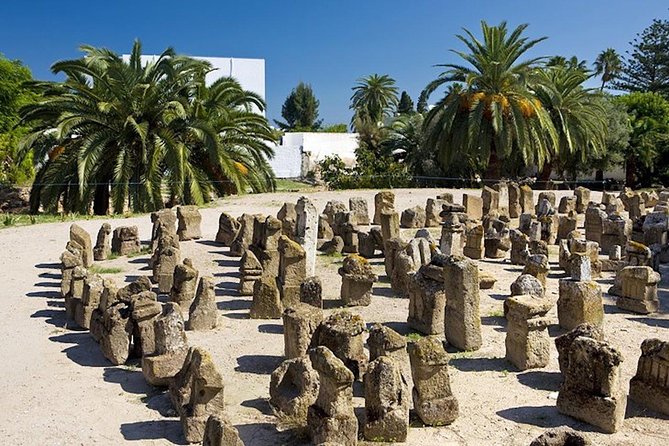
Then you head to Tophet de Carthage, a site at the center of one of the most contentious archaeological debates in northern Africa. This is the stop people either find deeply fascinating or emotionally challenging, depending on how you process the topic.
The time block here is about one hour, and that is a good duration. You do not want this story rushed, but you also do not want to spend your whole day only on one topic. The guide helps you understand why the Tophet matters, and it is not a simple story of “this happened exactly like X.” The cemeteries are linked to ritual use, and they are believed by some scholars to involve sacrifice of children and animals. The wording is deliberately careful, because the controversy is part of the reason you are learning it with a guide rather than reading headlines alone.
Why I think this stop is worth including: it gives you a fuller picture of Carthaginian religion and fear, power, and community obligations. Ancient history is not only monuments and kings. It is also belief systems, grief, and the way societies explain life and death.
If you are traveling with kids, check your group comfort level. The tour requires children to be accompanied by an adult, and this is the kind of topic where adult guidance matters. If you are sensitive to difficult subject matter, you might want to prepare yourselves mentally, and use the guide’s explanations to keep things grounded.
Prefer someone talking you through it? More guided Tunisia trips


Stop 3: Carthage Museum near Saint-Louis Basilica
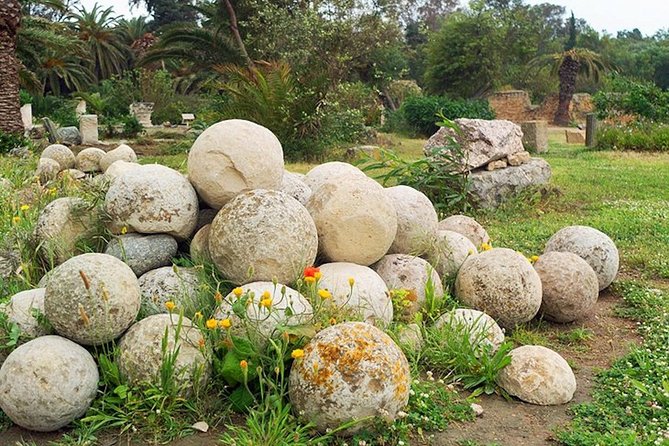
Next up is the Carthage Museum, scheduled for about 30 minutes with admission included. This is the shortest stop on paper, but it works because it acts like a pause button after outdoor ruins.
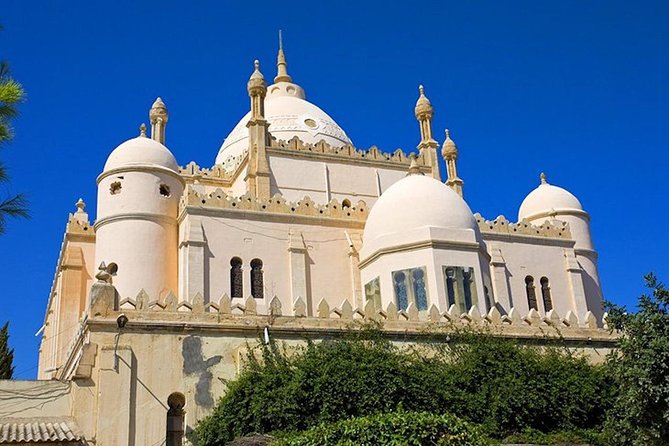
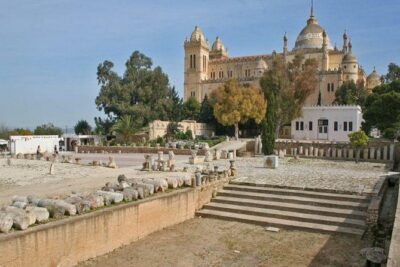
The museum sits in a building area described as a scholasticate linked to a Catholic religious site, adjacent to the Saint-Louis basilica built at the end of the 19th century. The museum is placed on the broader historic ground connected to the Carthage acropolis. Even if you are not a museum person, that location helps you feel how layers of faith and power have stacked up over centuries.
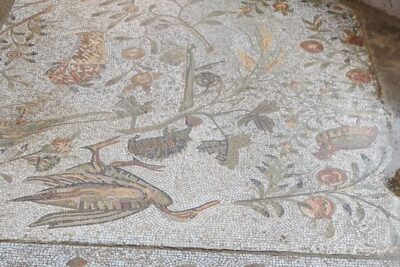
Inside, you focus on objects from the site of Carthage, with collections covering the Phoenician-Punic period, the Roman-African period, and later the Arab-Muslem period. That is a major value because it helps you stop thinking of Carthage as one civilization that vanished. You see a longer timeline of occupation, adaptation, and change.
Is 30 minutes enough? If you are the type who reads every placard, it will feel brief. But if your goal is context while keeping the day moving, it is a smart compromise. You get the “what you are looking at outside” connections without turning your half-day into a half-day inside a building.
My practical suggestion: use the guide’s cues here. Ask what objects best match what you just saw, and you will leave with sharper mental maps.
Stop 4: Punic Ports and Museum area, what is left of the power
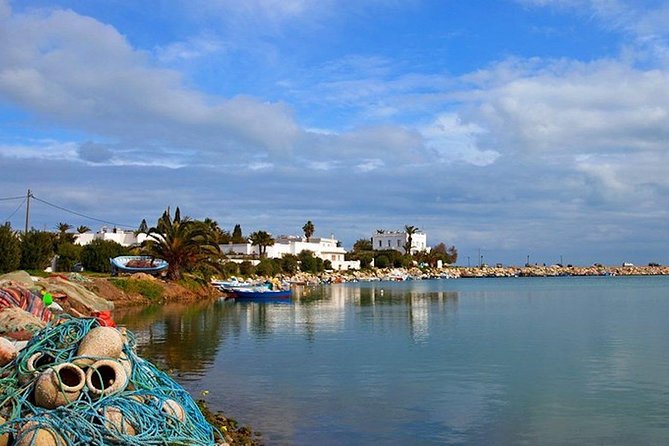
The final stop is Punic Ports & Museum, about 30 minutes. Here the tone shifts from “what the city looked like” to “what the city used to do to stay powerful.”
Even though a lot is gone, the remaining port shapes explain Carthage’s strategy. You learn about a narrow channel that connected a southern oblong merchant port to a northern circular naval port. The naval side was designed to be hidden from outside, meaning the military port could be obscured, while the navy could still see out to sea. This is the kind of detail that makes the ruins feel engineered rather than accidental.
You also hear about the naval base capacity, described with moorings for about 220 vessels in dry docks and around quay edges. On the commercial side, the commercial port is described as covering about 7 hectares and bordered by quays and warehouses. Those numbers are useful, because they give you a sense of scale.
This stop is listed with admission as free, which is nice, especially when entrance fees are otherwise included. The free admission detail also hints that what you are getting here is mainly guided interpretation of site remains and port layout, not a big museum ticket.
Time-wise, 30 minutes is short, but it is enough if your guide is focused. If you want deeper port archaeology, treat this as your orientation and then consider adding an independent visit later if you have time.
Price and value: what $94.90 buys you in real life
At $94.90 per person for a licensed guide and a four-hour private route, this is not the cheapest way to see Carthage. But it can be good value if you compare it to the cost of piecing together transport, tickets, and a guide to explain what you are actually looking at.
Here is what helps the price make sense:
- Hotel pickup and drop-off from Tunis or Hammamet cuts out stressful logistics.
- Private vehicle transport means less time stuck in uncertain city routing.
- Entrance fees are included for major stops, reducing surprises.
- The experience is private, so you are not paying for less attention.
There is also a quiet value benefit: the day stays coherent because one guide connects the dots between ruins, cemeteries, and museum collections. In a condensed schedule, that coherence is hard to replicate on your own.
If you are traveling solo, the per-person price can feel steep. If you are splitting cost with a small group, it can suddenly feel like a smart spend for a guided UNESCO day. And if you already plan to visit the same core sites, the included tickets reduce your total hassle.
Transfers, timing, and the reality of a condensed UNESCO day
This tour is built around a straightforward flow:
- about 25 minutes travel time each way,
- roughly two hours at the main archaeological site,
- one hour at the Tophet,
- about 30 minutes at the museum,
- about 30 minutes at the port area.
That structure matters because it helps you manage expectations. You are not going to get a slow, hours-long wander through every corner of Carthage. You are getting a guided overview designed to leave you understanding the major themes: city life, power and ports, and the religious controversy connected to the Tophet.
In practical terms, I recommend you plan for a day where comfort beats speed. Wear shoes that handle uneven ground. Bring water, since you may spend time outdoors in Tunisian heat. If your schedule is tight, the private format is also helpful for minor timing adjustments, and that flexibility showed up in real experiences where flight delays required amending the tour plan.
One more timing note: confirmation happens at booking time, and the tour is dependent on good weather. If weather is poor, the tour may be rescheduled or refunded. So, if your itinerary includes other Tunis stops, keep one day buffer if you can.
Who this tour fits best
This is a strong match if you want a focused, guided UNESCO visit without stress. It is especially good for:
- first-timers who want a clear story from Phoenician beginnings to the Roman destruction in 146 BC,
- history-minded visitors who like having a guide explain why places matter,
- travelers who prefer comfort and convenience, with air-conditioned transport and pickup.
It may not be ideal if you:
- want to spend long hours at each site and read everything slowly,
- dislike any content that can be emotionally heavy, since the Tophet topic is controversial,
- have very limited mobility, since the itinerary includes walking outdoors across ancient site areas.
The upside is that the best guides can adjust the pace. The reviews point to guides who are attentive and helpful, including offering support during your stay and tailoring the route to your needs.
Small tips to get more from your guide
Because this is a private tour with a licensed guide, you can treat it like an interview. A few prompts that usually pay off quickly:
- Ask what part of Carthage most surprised the guide historically, like sewage systems or the scale of walls.
- At the Tophet, ask how scholars interpret the evidence and why the debate persists.
- In the museum, ask which objects connect most directly to what you just saw outside.
If you want photos, ask the guide when light is best and where the best viewpoints are for the coastline. And if you feel rushed at any stop, say so early. A good guide can rebalance time so you do not lose the important parts.
Should you book this private Carthage half-day tour?
Book it if you want a guided, structured UNESCO introduction to Carthage that fits into a tight schedule. For most people, the combination of pickup convenience, included entrances, and the quality of guide storytelling makes this a solid way to see the core sites without guessing your way through ruins.
Skip or adjust if you want a slower, deeper archaeological experience with lots of self-paced time. Also think twice if difficult topics like those connected to the Tophet are not your thing, or if you prefer to choose only what feels comfortable.
If your goal is clarity, comfort, and a story that connects Phoenicians, Punic power, Roman destruction, and later periods, this half-day format is a strong fit. You will leave with more than photos, you will have a framework for what Carthage used to be, and why the places you visited still spark big debates today.
FAQ
How long is the Carthage Discovery half-day tour?
The tour is about 4 hours.
Where does pickup happen?
Pickup and drop-off are offered from hotels in Tunis or Hammamet.
Is this tour private?
Yes. It is a private tour/activity, so only your group participates.
What does the tour include besides the guide?
It includes transport by private vehicle, pickup and drop-off, a licensed guide, and entrance fees.
Are entrance fees included?
Yes, entrance fees are included for the stops that list admission tickets. The Punic Ports & Museum stop is listed as free admission.
Is lunch included?
No, lunch is not included.
Is there a mobile ticket?
Yes, the tour includes a mobile ticket.
Can I bring a service animal?
Service animals are allowed.
Are children allowed?
Children can participate, but they must be accompanied by an adult.
What is the weather condition for the tour?
The experience requires good weather. If it is canceled due to poor weather, you will be offered a different date or a full refund.
A Wider Sweep of Tunisia
- Private Tour to Kairouan, El Jem & Monastir from Tunis_hammamet
- Private tour: Medina,Carthage ,Sidi Bou Said, Bardo Museum+lunch
- Carthage, Bardo Museum, Sidi Bou Said and Medina Private Day Tour
- Private Excursion to Testour, Dougga and Bulla Regia from Tunis.
- Guided Bike Tour of Carthage Archeological Site in Tunisia
Everything Else We Have Reviewed in Tunisia
- Private Tour to Kairouan, El Jem & Monastir from Tunis_hammamet
- Private tour: Medina,Carthage ,Sidi Bou Said, Bardo Museum+lunch
- Carthage, Bardo Museum, Sidi Bou Said and Medina Private Day Tour
- Private Excursion to Testour, Dougga and Bulla Regia from Tunis.
- Guided Bike Tour of Carthage Archeological Site in Tunisia
Carthage and Sidi Bou Said, Compared
- Private tour: Medina,Carthage ,Sidi Bou Said, Bardo Museum+lunch
- Carthage, Bardo Museum, Sidi Bou Said and Medina Private Day Tour
- Guided Bike Tour of Carthage Archeological Site in Tunisia
- Group Guided Bike Tour of Carthage Archeological Site in Tunisia
- Archaelogical Site Of Carthage + Picturesque Village Of Sidi Bou Said
Newest off the review desk in Tunisia



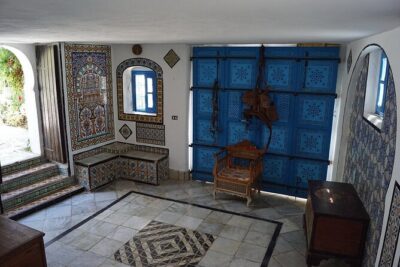
Ancient Carthage & Sidi Bou Said, side by side.
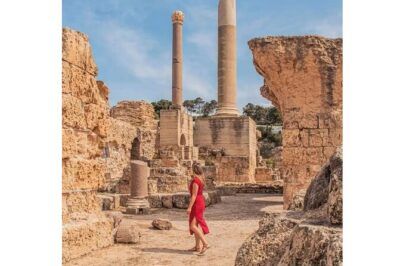 ★ 5.0VIP Tour: Tunis Medina/Bardo, Sidi Bou Said, Carthage |PICKUP ALLFrom $30512 reviews
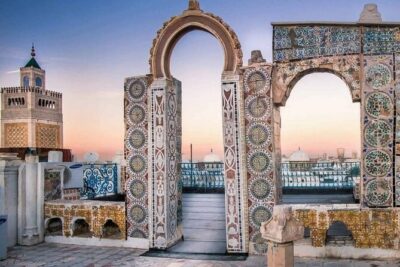 ★ 5.0Private tour: Medina,Carthage ,Sidi Bou Said, Bardo Museum+lunchFrom $46230 reviews
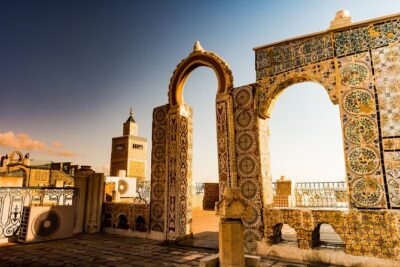 ★ 4.5Carthage, Bardo Museum, Sidi Bou Said and Medina Private Day TourFrom $30153 reviews
 ★ 5.0Guided Bike Tour of Carthage Archeological Site in TunisiaFrom $9188 reviews
 ★ 5.01 day excursion Tunis Sidi Bousaid Carthage departure from SousseFrom $11687 reviews
 ★ 5.0Group Guided Bike Tour of Carthage Archeological Site in TunisiaFrom $5657 reviews
 ★ 5.0Archaelogical Site Of Carthage + Picturesque Village Of Sidi Bou SaidFrom $11656 reviews
 ★ 5.0Historical Tour of Ancient CarthageFrom $10451 reviews
Also listed under