
REVIEW · MULTI-DAY GRAND TOURS OF TUNISIA
7 Day Guided Tunisia Tour Including Pickup
Roman ruins meet Sahara scenery in one week. This 7-day guided trip from Tunis strings together UNESCO sites, desert-era Berber architecture, and Mediterranean villages, with a guide team that keeps the day moving and the stories making sense. I especially like the way the route mixes major hits with off-the-main-road stops, from El Jem’s giant amphitheater to Matmata’s underground homes. And I really appreciate the human touch I’ve seen in the guide teams, with people like Salem, Yassine, Daoud, Ziad, and Kais praised for making the history feel clear, not like a lecture.
Two big pluses for me are the included breakfasts and dinners that take daily meal planning off your plate, and the practical value of pickup plus a guided flow across long distances. One thing to factor in: monument entrance fees are not included, so you should budget extra on top of the tour price for sites where tickets apply.
In This Review
- Key highlights worth your attention
- Why This 7-Day Tunisia Route Feels Efficient
- Price and Value: What You’re Really Paying For
- Day 1: Sousse Medina, El Jem Coliseum, and Matmata Troglodytes
- Day 2: Chenini Ksour and Tataouine’s Fortified Granaries
- Day 3: Douz, Chott el Djerid Salt Flats, and Desert-Edge Perspective
- Day 4: Ain Chebika Waterfall, Old Tamerza Ruins, and Ong Jemel Dunes
- Day 5: Sbeitla Roman Ruins and Kairouan’s Spiritual Center
- Day 6: Dougga UNESCO Ruins and the Medina of Tunis
- Day 7: Sidi Bou Said Views and Carthage’s Tophet and Baths
- The Human Factor: Guides That Make the Difference
- What to Pack for Tunisia’s Mixed Terrain
- Who This Tour Suits Best
- Should You Book This Guided Tunisia Week?
- FAQ
- Where does the tour start?
- Is pickup included?
- How long is the tour?
- What meals are included?
- Are monument entrance fees included?
- Is the tour private?
- What ticket method do I use?
- What are the available hours for the experience?
- What is the cancellation policy?
- How early are people typically booking?
Key highlights worth your attention
- Pickup from Carthage Airport area so you start without the scramble.
- A strong mix of Tunisia’s layers: Roman ruins, Islamic heritage, Berber ksour, and desert scenery.
- Sahara-adjacent stops like Douz, Chott el Djerid, Chebika, and Ong Jemel, with Star Wars connections you’ll actually see.
- Major UNESCO anchors including El Jem, Dougga, and the medina of Tunis.
- Guides who work at your pace, with reviews calling out flexibility, enthusiasm, and real historical detail (Salem, Yassine, Daoud, Ziad, and others).
Got a full week? More long Tunisia circuits reviewed end to end
- 7 Day Guided Tunisia Tour Including Pickup★ 5.0 · 27 reviews
- 8 Days Tunisia Essential Discovery Private Tour★ 5.0 · 16 reviews
- 4 Days Tunisia Discovery Private Tour★ 5.0 · 15 reviews
- The Best of Tunisia, 3 Days Guided Tour with Lunch★ 5.0 · 7 reviews
Why This 7-Day Tunisia Route Feels Efficient
Tunisia is a long country. If you try to DIY it in a week, you end up spending too much time on logistics and not enough time seeing the places. This kind of guided week is built for motion. You get a planned route that takes you from the Mediterranean coast inland and back out again, while a team handles timing and route decisions.
It’s also set up so you don’t have to be the expert. You’re shown what to look at in places that can feel overwhelming on your own, like the Roman ruins and the medinas. That matters because many sites reward context. Even a short explanation about what you’re standing in front of can change your whole experience.
Finally, the private-group setup helps. Being in your own group usually means fewer waiting games and less “everyone do your own thing” chaos.
Price and Value: What You’re Really Paying For
At $1,858.33 per person, you’re not just buying tickets to sights. You’re paying for the whole package: guided interpretation, transportation through a multi-day route, and set meals.
Here’s what I’d treat as the value math:
- Included breakfasts (6) and dinners (6) reduce the number of meals you need to plan and pay for each day.
- The itinerary includes a sequence of high-effort destinations, including remote desert-region stops, which are rarely as easy as they look on a map.
- Many stops list admission as free, which helps your day-to-day budget, but some key experiences show included admission and others do not.
The catch is simple. Entrance fees at the monuments are not included, and “all fees and taxes” are also listed as not included. So the real cost is tour price plus your on-the-ground ticket budget for the days where fees apply.
Day 1: Sousse Medina, El Jem Coliseum, and Matmata Troglodytes
You start with Sousse, and the first stop is the Medina of Sousse, a UNESCO site and one of the best-preserved examples of an Islamic city. Expect narrow lanes, courtyards, shops, and the kind of everyday street life that makes medinas feel real. Even with only about 30 minutes, it’s a strong orientation to Tunisia’s older urban fabric, especially around major landmarks like the Great Mosque.
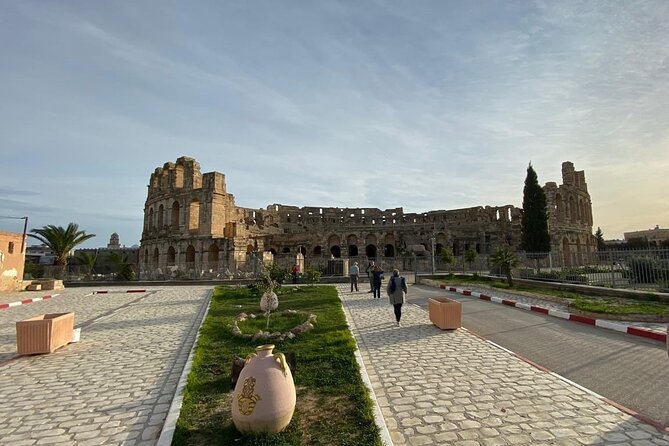
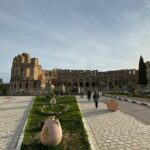
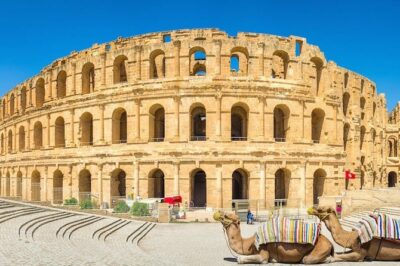
Then you head to El Jem for the Coliseum, and this is the “wow” stop. The amphitheater was built in the 3rd century AD, and it could hold up to about 35,000 spectators. Seeing it in person changes the scale in your head. It’s not just another ruin. It’s the kind of Roman structure that makes you picture the crowds instantly.
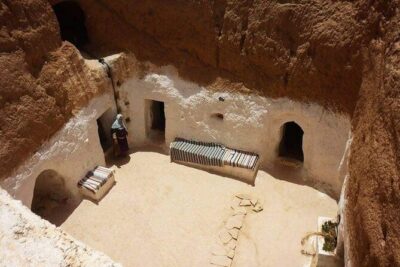
Finally, you shift to Matmata, known for troglodyte houses carved into limestone. These underground dwellings were designed to handle extreme temperatures, using the earth as natural insulation. You’ll feel how the architecture works with climate, not against it. Some homes have become visitor accommodations, so this stop often lands as part history, part human living space.
Prefer someone talking you through it? More guided Tunisia trips
Day 2: Chenini Ksour and Tataouine’s Fortified Granaries
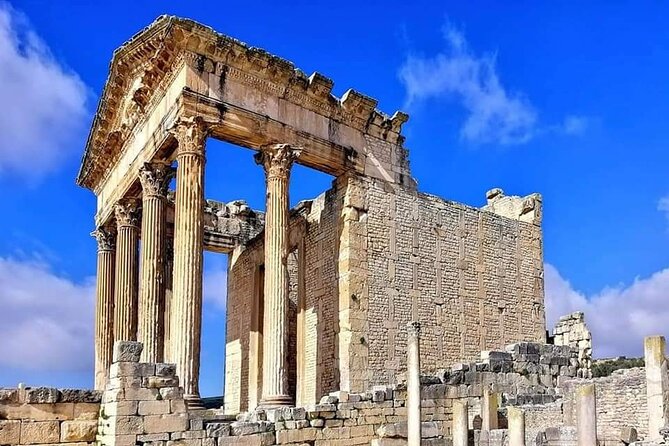
Day 2 is built around a very specific Tunisia story: Berber ksour. These fortified villages and granaries were designed to protect crops and households from raids and harsh desert conditions.
Chenini is a great example. The ksour cluster around rocky hillsides, with narrow lanes and stone-and-mudbrick homes. Even if the time is around two hours, it’s enough to notice how people built for defense and practicality, not for looks.
Next are Ksar Ouled Soltane and Ksar Hadada. Both are tied to the Tataouine Governorate, where the desert terrain and Berber culture shaped architecture over centuries. Ksar Ouled Soltane is described as one of the best-known and impressive ksars in the region. Ksar Hadada adds more of that same fortress-village vibe, set against rocky desert surroundings.
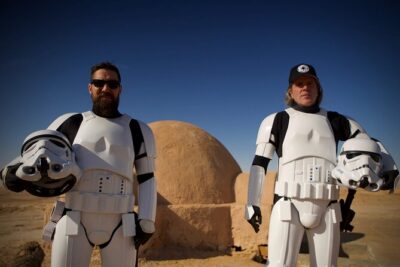
And yes, there’s a Star Wars connection in this broader region. The tour frames it as inspiration for fictional desert planets, which helps you see why visitors keep pointing at hills and formations like they’re on set.
Day 3: Douz, Chott el Djerid Salt Flats, and Desert-Edge Perspective
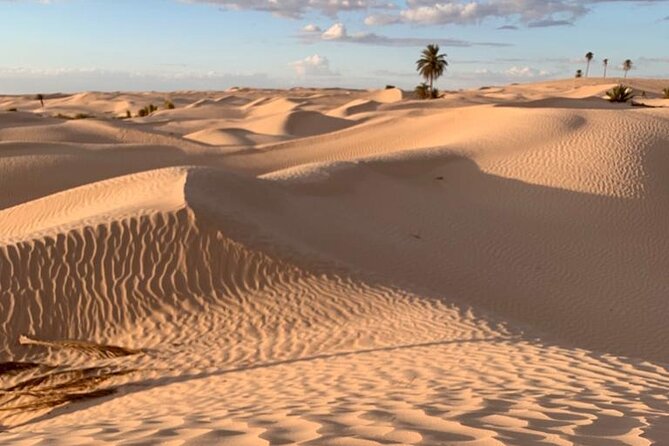
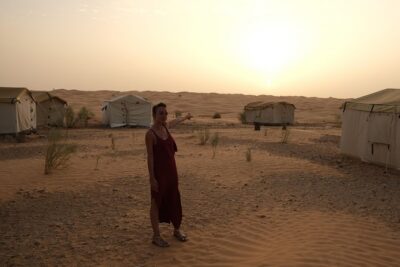
Day 3 begins in Douz, often called the Gateway to the Sahara. This matters because Douz is not just a name. It’s a jumping-off point for desert expeditions and camel treks. If you’ve ever imagined what the Sahara feels like on the first approach, this is the “arriving” day.
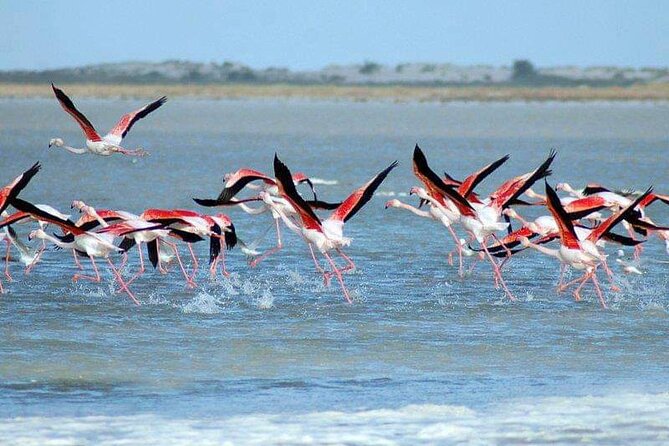
Then comes Chott el Djerid, a shallow lake area with high salt content and salt flats. In the dry season, you get a wide crusty expanse. In wetter periods, it can fill up and act as a temporary habitat for birds, including flamingos and migratory species. Even if you visit in a season when it looks more like crust than water, it’s still a powerful reminder of how climate shapes what you see.
This day is a good one for photos, but also for learning. Tunisia’s inland regions feel different from the coast. If you want to understand why people settled and built where they did, the desert edge is where it starts to make sense.
Day 4: Ain Chebika Waterfall, Old Tamerza Ruins, and Ong Jemel Dunes
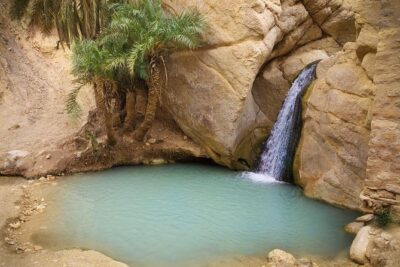
Day 4 is where you get contrast. You start with Chebika and the main attraction, Ain Chebika. It’s described as a spring that flows down the mountainside, forming cascades and pools with palm trees and dramatic rocky cliffs. It’s one of the few places in the interior where water makes the scenery feel cooler and more alive, even if the region itself is still desert-adjacent.
Then you move to Tamerza, specifically Old Tamerza, an abandoned village ruins area. The village was abandoned in the 1960s due to flooding from heavy rainfall. Now you can explore crumbling homes and narrow streets that show what life looked like before the place was effectively left behind.
Finally, Ong Jemel and the Eriguet dunes bring you to another Star Wars-linked moment. Expect desert terrain shaped by wind and time, with those famous filming connections that make your brain say, I see why this was chosen. If you like cinematic geography, this is a satisfying day.
Practical thought: desert-region days can mean sun management and dust control. Bring a scarf or something similar and plan for warm temperatures even if it doesn’t feel brutally hot every hour.
Day 5: Sbeitla Roman Ruins and Kairouan’s Spiritual Center
Day 5 is split between two very different kinds of “heritage gravity.”
First is Sbeitla, a major Roman city that served as capital of the Roman province of Africa Proconsularis. The ruins are well preserved and include forums, temples, basilicas, theaters, baths, and houses. The standout features are three imposing Roman temples dedicated to Jupiter, Juno, and Minerva. When a site highlights multiple temples, it’s usually a sign it was a major religious and civic center, not a minor outpost.
Next is Kairouan, founded in 670 AD and known as a center of Islamic learning and civilization. The city served as the capital of Ifriqiya, a historical region that covered parts of present-day Tunisia, Algeria, and Libya. Even if your time is around two hours, you’ll feel how important Kairouan is in the region’s religious story.
If you’re going to Kairouan, dress with respect and keep your voice down in the wrong places. It’s not about fear, it’s about fitting in.
Day 6: Dougga UNESCO Ruins and the Medina of Tunis
On Day 6 you get Dougga, another UNESCO Roman site. Dougga is described as a city frozen in time, with preserved streets, temples, theaters, public buildings, and mosaics. The big advantage of Dougga in a week like this is that it gives you the Roman vibe without forcing you to compare it endlessly to Rome. You can appreciate how the architecture functioned locally.
Then you finish the day in the Medina of Tunis, the historic heart and capital of Tunisia. Dating to around the 9th century, it’s a walled maze city with souks, traditional craftsmanship, and classic medina energy. Even with about one hour, it’s enough to feel the place and pick up a sense of how people shop and socialize there.
This day is a great “mental reset.” You go from desert-era and inland geography back to the urban pulse, and your last days feel less like you’re just chasing ruins.
Day 7: Sidi Bou Said Views and Carthage’s Tophet and Baths
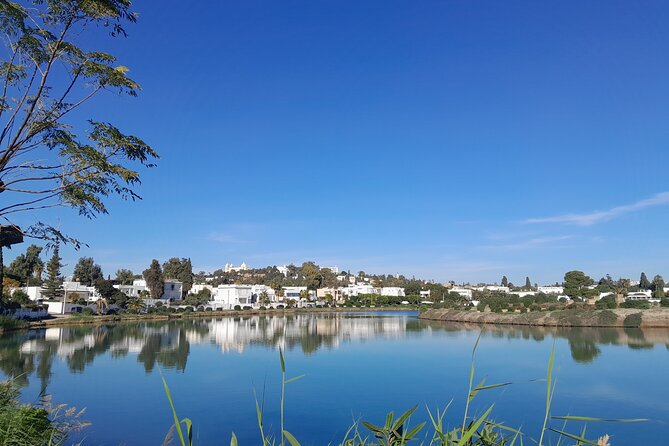
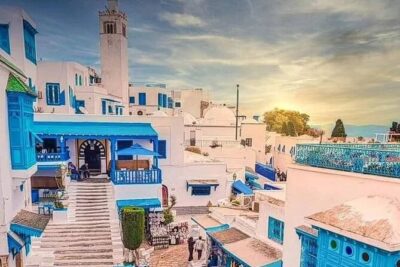
You end in Sidi Bou Said, perched above the Mediterranean with whitewashed buildings and blue accents. It’s known for Moorish and Andalusian architectural influence, including the iconic blue doors and wrought iron details. Two hours is enough time to enjoy the look, wander the streets, and take a breather.
Then you move to Carthage for ancient history that hits in multiple ways. The tour route points you to the Tophet, described as an ancient burial ground tied to Carthaginian religious practices, and then to the Antonine Baths, an enormous complex that once served as a major social space. The baths are one of those Roman leftovers that makes you realize how social everyday life could be in antiquity.
This is a strong finale because it ties together everything you saw earlier. You’ve been walking through eras of power, belief, and daily life. Carthage feels like a big capstone for that whole arc.
The Human Factor: Guides That Make the Difference
The most praised element across guides in the feedback I reviewed is how much they add beyond logistics. Guides like Salem and Yassine are repeatedly credited for enthusiasm, historical context, and keeping everything running smoothly. Other names that show up include Daoud, Ziad, Khemais, Kais, Hisham, and drivers like Michel, Manuel, and Khaled.
What you should take from that, even if your guide is different, is a simple principle. In places like medinas and Roman ruins, the guide’s job is to help you see. That means explaining what you’re looking at, pointing out what matters, and keeping the group moving at a pace that works.
If you speak Spanish or Portuguese, it’s a bonus when the guide can cover details clearly, and multiple reviews mention that strength. Even without the same language, good guides handle the visual story well.
What to Pack for Tunisia’s Mixed Terrain
You’ll be on foot in medinas and on uneven ground at archaeological sites. Wear shoes that can handle cobbles and dust. For sun and desert days, pack light layers, a hat, and a scarf you can use for wind and sun protection.
For religious sites and medinas, dress with modesty in mind. Not strict fashion rules, just practical respect. And for day trips into hotter inland regions, plan to drink water often and take breaks when your group slows down.
Also bring a small day bag. You’ll be in and out of vehicles, and you don’t want to haul a heavy backpack.
Who This Tour Suits Best
This is a great fit if you want an organized week that covers the major eras of Tunisia without spending your whole trip on planning. It works well for:
- First-time Tunisia visitors who want a full-spectrum taste: coast, Roman sites, Islamic heritage, and desert regions.
- People who like history but also want someone to handle the how and when.
- Groups that prefer a private setup, since it says only your group participates.
It’s probably less ideal if you want total freedom to linger for hours in just one place, or if you hate paying extra for monument entrance fees.
Should You Book This Guided Tunisia Week?
I’d book it if your priority is variety with a guide doing the explaining, plus comfort thanks to pickup and planned meals. The structure is built for value because it strings together many high-effort destinations in one week, including UNESCO sites like El Jem, Dougga, and the Medina of Tunis, plus desert-region stops like Chebika and the Ksour around Tataouine.
I would not book it if entrance fees will ruin your budget, because they are not included, and several major sites can add up. Also skip it if you prefer to travel without schedules at all.
If you do book, read the tour price as the foundation, then set aside some extra money for tickets at the monuments and any meals not covered by the included breakfasts and dinners. Do that, and you’ll likely end the week with a real sense of Tunisia’s range, from Roman amphitheaters to desert water magic at Ain Chebika.
FAQ
Where does the tour start?
It starts at Carthage Airport in Tunis, Tunisia.
Is pickup included?
Pickup is offered.
How long is the tour?
The duration is about 7 days.
What meals are included?
Breakfast is included for 6 days, and dinner is included for 6 days.
Are monument entrance fees included?
No. Entrance fees at monuments are not included.
Is the tour private?
Yes. It is described as private, with only your group participating.
What ticket method do I use?
It says a mobile ticket is provided.
What are the available hours for the experience?
The listed opening hours are Monday to Sunday, 8:00 AM to 6:00 PM (for the stated date range).
What is the cancellation policy?
Free cancellation is allowed up to 24 hours in advance for a full refund.
How early are people typically booking?
On average, this tour is booked about 46 days in advance.
A Wider Sweep of Tunisia
- Private Tour to Kairouan, El Jem & Monastir from Tunis_hammamet
- Private tour: Medina,Carthage ,Sidi Bou Said, Bardo Museum+lunch
- Carthage, Bardo Museum, Sidi Bou Said and Medina Private Day Tour
- Private Excursion to Testour, Dougga and Bulla Regia from Tunis.
- Guided Bike Tour of Carthage Archeological Site in Tunisia
Everything Else We Have Reviewed in Tunisia
- Private Tour to Kairouan, El Jem & Monastir from Tunis_hammamet
- Private tour: Medina,Carthage ,Sidi Bou Said, Bardo Museum+lunch
- Carthage, Bardo Museum, Sidi Bou Said and Medina Private Day Tour
- Private Excursion to Testour, Dougga and Bulla Regia from Tunis.
- Guided Bike Tour of Carthage Archeological Site in Tunisia
The Long Circuits
Newest off the review desk in Tunisia

Multi-Day Grand Tours of Tunisia, side by side.
 ★ 5.08 Days Tunisia Essential Discovery Private TourFrom $2,46116 reviews
 ★ 5.04 Days Tunisia Discovery Private TourFrom $1,41015 reviews
 ★ 5.0The Best of Tunisia, 3 Days Guided Tour with LunchFrom $4947 reviews
 ★ 5.0Tunisia 7-Day tourFrom $3,2006 reviews
 ★ 4.5The Wonders of Tunisia: 8 days / 7 nightsFrom $1,6486 reviews
 ★ 5.04-Day Private Tour: Sahara and Djerba Island from Tunis and HammametFrom $1,6764 reviews
 ★ 5.05 Days Tunisia Discovery Private TourFrom $1,8584 reviews
 ★ 5.0From Tunis: Star Wars 5 day tourFrom $2,3494 reviews
Also listed under