
REVIEW · MULTI-DAY GRAND TOURS OF TUNISIA
The Best of Tunisia, 3 Days Guided Tour with Lunch
Five UNESCO stops in three days, neatly arranged. This is a guided tour from Tunis that strings together major sites and real daily-life stops like the souks and seaside districts. I like that it is structured, so you can see a lot without turning each day into a map-reading contest.
What I like most is the mix of UNESCO and street-level Tunisia. You get the big monuments, then you also get places where people actually shop, pray, and eat, like the Medinas of Tunis and Kairouan and the café terraces of La Goulette. I also like that the guide team is a strong selling point, with named examples like Fahmi and Chouaib for their English and good pacing, plus drivers like Said and Ahmed who helped keep the days running on time.
One consideration is that it is a packed, multi-stop schedule. Some visits are timed tightly, so if you want to linger forever in one place, you may feel the clock nudging you along.
In This Review
- Key highlights you will feel in the moment
- The big idea: what this tour gets right
- Day 1: Medina of Tunis, Carthage, and Sidi Bou Saïd
- Medina of Tunis: the maze that still works
- La Goulette: the easy seaside breather
- Carthage archaeological site: the ancient layer under modern streets
- Sidi Bou Saïd: blue-white streets and cliff views
- Day 2: Kairouan’s holy center and El Djem’s Roman colosseum
- The Great Mosque of Kairouan: a masterpiece you can read with your eyes
- Bassins Aghlabites: the engineering story behind the glamour
- Medina of Kairouan: preserved and easy to enjoy
- El Djem amphitheatre: Roman scale in Africa
- Archaeological Museum of El-Djem: the context that makes ruins click
- Day 3: Hammamet, Sousse Medina, and Monastir’s fort and marina
- Hammamet: resort energy with a real medina feel
- Medina of Sousse: UNESCO coastal town planning
- Ribat of Monastir: the fortress of warrior monks
- Monastir Marina: the working waterfront side
- Price and value: is $494.77 a fair deal?
- What makes the tour feel smooth: pacing, pickup, and a solid team
- Who should book this tour (and who might not)
- Should you book this Best of Tunisia guided tour with lunch?
- FAQ
- What time does the tour start?
- How long is the tour?
- Is pickup included?
- Are admission tickets included?
- Which UNESCO World Heritage sites are included?
- Is lunch included?
- Is this tour private?
- What is the cancellation policy?
- Is it suitable for most people, and can I bring a service animal?
Key highlights you will feel in the moment
- UNESCO World Heritage concentration across Tunis, Carthage, Kairouan, El Djem, and Sousse in only about 3 days
- Well-timed guided visits to the Great Mosque of Kairouan and the El Djem amphitheater, two heavy-hitters
- Practical lunch included with regional food focus, so you do not have to hunt every day
- Seaside color and contrast at La Goulette, Sidi Bou Saïd, Hammamet, and Monastir
- Strong guide-driver combinations noted in prior groups, with English that makes the history click
Got a full week? More long Tunisia circuits reviewed end to end
- 7 Day Guided Tunisia Tour Including Pickup★ 5.0 · 27 reviews
- 8 Days Tunisia Essential Discovery Private Tour★ 5.0 · 16 reviews
- 4 Days Tunisia Discovery Private Tour★ 5.0 · 15 reviews
- The Best of Tunisia, 3 Days Guided Tour with Lunch★ 5.0 · 7 reviews
The big idea: what this tour gets right
Tunisia can feel huge when you start planning on your own. This tour solves that by grouping the sites into a clean route starting from Tunis and working your way through the north and inland. You are not just collecting checkmarks. You are also seeing how the same country can feel completely different within a few hours.
I like that the itinerary keeps returning to authentic “how Tunisia lives” moments. The Medina of Tunis gives you the covered souks and artisan alleys. Kairouan’s medina lets you slow down with pastries and crafts. And by day 3, you are back near the water, where the day turns lighter.
Day 1: Medina of Tunis, Carthage, and Sidi Bou Saïd
Day 1 is built for orientation. You start in the Medina of Tunis, then move out to Carthage for the ancient layer, and finish in the postcard-famous Sidi Bou Saïd.
Medina of Tunis: the maze that still works
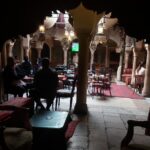
You get about 45 minutes here, which is enough to feel the scale without getting lost in an actual full-time job. The Medina of Tunis is described as a sprawling network of ancient streets and alleys, with covered souks selling everything from shoes to shisha, plus cafés tucked into the flow of life. You will notice the mix of functions too, not just shops. Palaces, hammams, mosques, and madrassas show up among residential doorways, often decorated with tiles and carved detail.
Practical tip: wear shoes that can handle uneven stone, and keep water handy. Medinas reward the curious, but they punish flip-flops.
Prefer someone talking you through it? More guided Tunisia trips
La Goulette: the easy seaside breather
La Goulette is a more relaxed stop, around 1 hour. You get the feeling of a seaside district where café terraces and restaurants run along the water. If the medina sites have you mentally sprinting, this is a useful reset.
This part is especially good if your group likes simple, low-pressure time: take a slow walk, people-watch, and let the day balance out.
Carthage archaeological site: the ancient layer under modern streets
Carthage is one of those places where you realize “archaeological site” does not mean one single ruin field. It is scattered within the current city of Carthage, and it is classified as a UNESCO World Heritage site since 1979. You get about 1 hour 20 minutes, which is right for seeing major remains and understanding the storyline your guide is building.
I like this stop because it connects Tunisia to a bigger Mediterranean history. You leave with a sense of how old power centers can echo into the present.
Sidi Bou Saïd: blue-white streets and cliff views
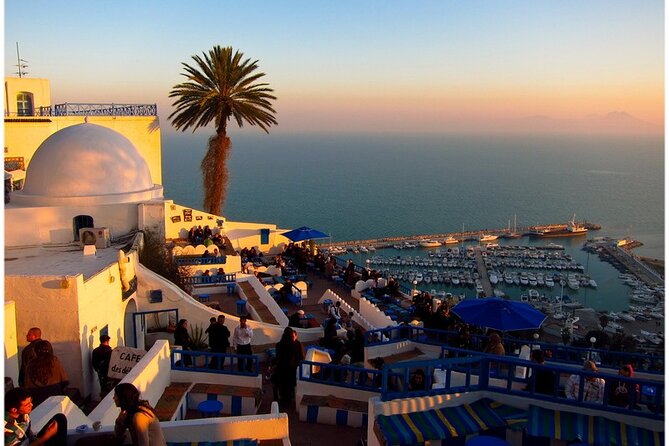
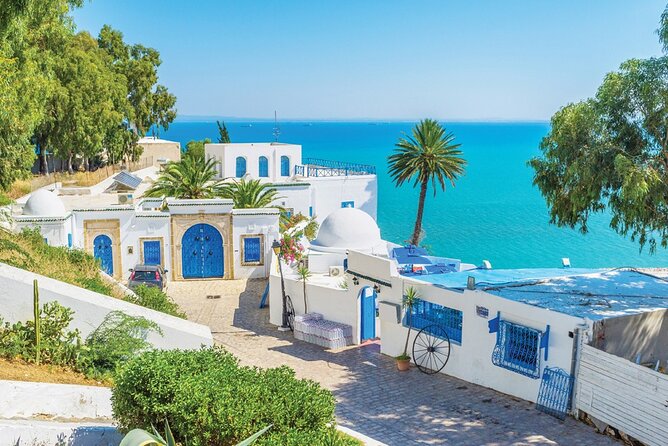
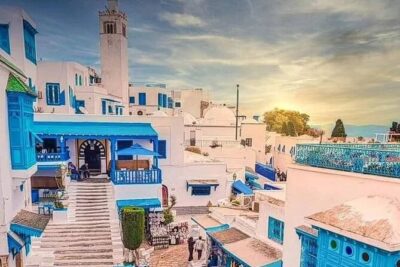
Sidi Bou Saïd is all about color and vantage points. Expect blue and white architecture, cobbled lanes, and repeated glimpses of the sea from the cliff-top village. The look is described as a blend of Ottoman and Andalusian, tied to the arrival of Spanish Muslims in the 16th century.
You get about 45 minutes. That is enough to take in the look, grab a drink if you want, and take a few photos without feeling like you are at a theme park queue.
Day 2: Kairouan’s holy center and El Djem’s Roman colosseum
Day 2 is where the day shifts gears. You start in Kairouan, one of Islam’s fourth holiest cities, then head to El Djem for a Roman monument that still makes people stare.
The Great Mosque of Kairouan: a masterpiece you can read with your eyes
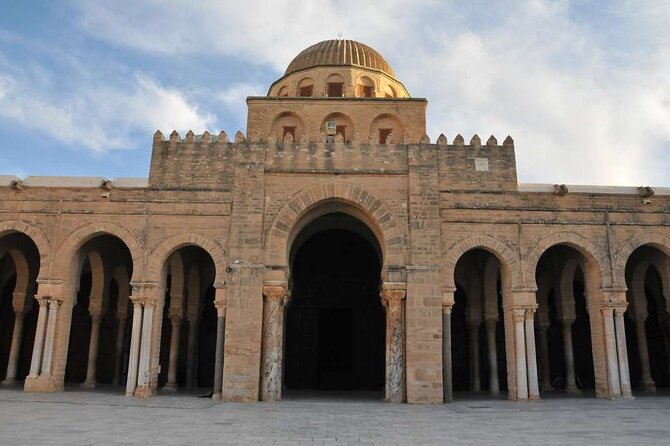
The Great Mosque of Kairouan is the symbol of Kairouan and one of the oldest and most beautiful mosques in the world, with a reputation across the Maghreb. You spend about 45 minutes. The highlights you will likely focus on are the imposing minaret, the courtyard surrounded by arcades, the sundial, and richly carved cedar doors that open toward prayer rooms with marble columns.
It was built in 670, and the architecture is described as evoking an adobe fortress. Even if you are not a history buff, you can feel the sense of scale and solidity.
Practical note: keep your expectations realistic. A mosque is not a museum. Dress respectfully, move quietly, and treat your visit like a place of worship first and a sight second.
Bassins Aghlabites: the engineering story behind the glamour
Right after the mosque, you go to Bassins Aghlabites for about 30 minutes. These basins are a historical monument in Kairouan, dating from the early part of the second half of the 9th century. They sit outside the ramparts of the medina and are considered among the most important hydraulic works in the Muslim world.
This stop is valuable because it gives you a different angle on “civilization.” It is not only architecture and religion. It is water management and the infrastructure that made daily life possible.
Medina of Kairouan: preserved and easy to enjoy
You get about 1 hour in the Medina of Kairouan. The key point here is authenticity and preservation. You can walk through souks, then focus on local food and crafts. Pastries known as Les Mekroudhs are specifically mentioned, and there is also artisanal carpet manufacturing.
If your group likes to buy small, practical souvenirs (spices, textiles, sweets you can bring home), this is the medina moment that tends to pay off.
El Djem amphitheatre: Roman scale in Africa
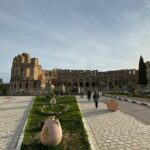
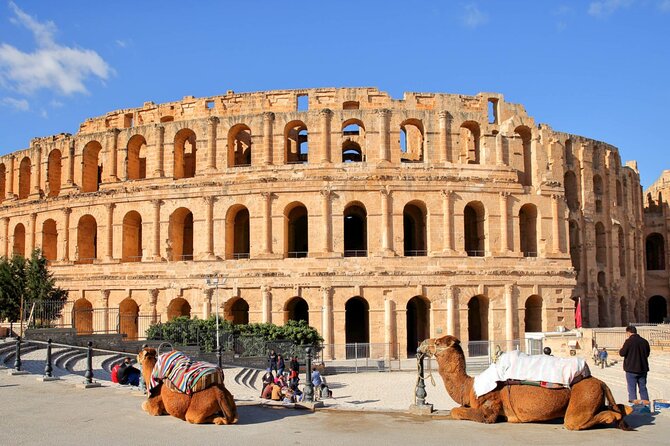
Then you hit El Djem for the amphitheater, about 1 hour 20 minutes. This is described as a Roman Colosseum founded in the 3rd century AD and a UNESCO World Heritage site since 1972. It can accommodate 30,000 spectators and is described as third in the Roman world by size after Rome and Capua.
I love how this kind of monument changes your sense of distance. You realize a city built around spectacle could exist here, far from the traditional “Roman postcard” locations.
Archaeological Museum of El-Djem: the context that makes ruins click
After the amphitheater, you get about 40 minutes at the Archaeological Museum of El Djem. It is located near the first amphitheaters of ancient Thysdrus, with the museum site built on a Roman villa structure. The museum was founded on October 26, 1970 and renovated in 2002.
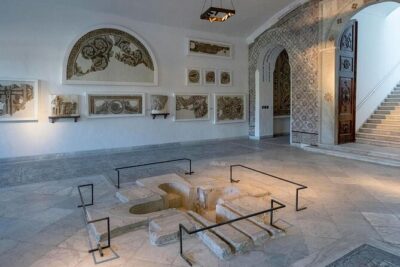
What helps is the way the museum restores space: a central courtyard and peristyle courtyard plan that connects rooms. You can also expect excavated objects such as sculptures, mosaic paintings, and ceramics.
This is the stop that turns the amphitheater from a “wow” into a “how did they live and build this?”
Day 3: Hammamet, Sousse Medina, and Monastir’s fort and marina
Day 3 is the coastal closer. You start with Hammamet, then go to Sousse for its UNESCO medina, and wrap with Monastir’s Ribat and marina.
Hammamet: resort energy with a real medina feel
Hammamet gets about 1 hour. It is described as well-known for beaches and summer partying, but it is also a small town with an authentic character. You will notice descriptions of turquoise sea, jasmine scents, and white houses and ramparts, plus the medina lined with fine sand.
Even if you are not staying beachside, Hammamet gives you a softer mood than the inland days.
Medina of Sousse: UNESCO coastal town planning
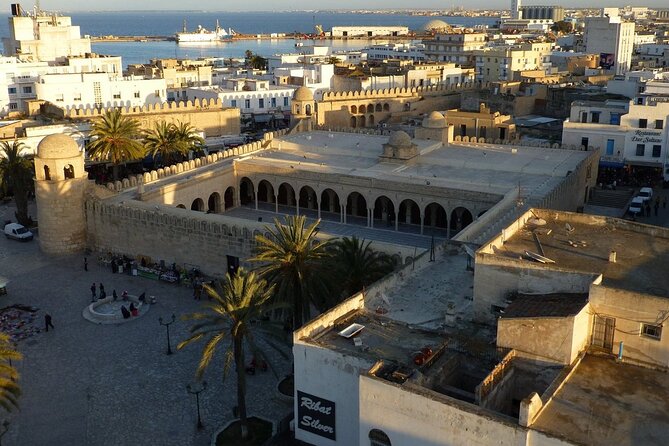
Next is the Medina of Sousse for about 1 hour. It is classified as a UNESCO World Heritage site and is described as a homogeneous architectural ensemble that reflects Arab-Muslim town planning applied to a coastal city exposed to piracy and dangers from the sea.
That detail matters. It is not just about beautiful old streets. It is about how the city layout responds to real risk, trade, and defense needs.
Ribat of Monastir: the fortress of warrior monks
Monastir’s Ribat of Monastir is about 45 minutes. This defensive structure is described as the oldest and most important along the Maghreb coast erected by Arab conquerors at the dawn of Islam, founded in 796. It underwent medieval renovations too.
You are told it started as a quadrilateral with four buildings around two interior courtyards. There are cells for warrior monks who handled military duties and devoted themselves to prayer and contemplation. The ribat houses two prayer rooms, with the larger one now used to display rare collectibles of worship and medieval crafts. And yes, the watchtower involves about a hundred spiral steps.
Even if you skip the top for energy reasons, the courtyard feel gives you a sense of discipline and routine.
Monastir Marina: the working waterfront side
Finally, Monastir Marina is about 30 minutes. It is described as a port of call, passage, wintering, and regattas. This stop is short but useful. It reminds you you are not only touring past greatness, you are also seeing how the coast functions now.
Price and value: is $494.77 a fair deal?
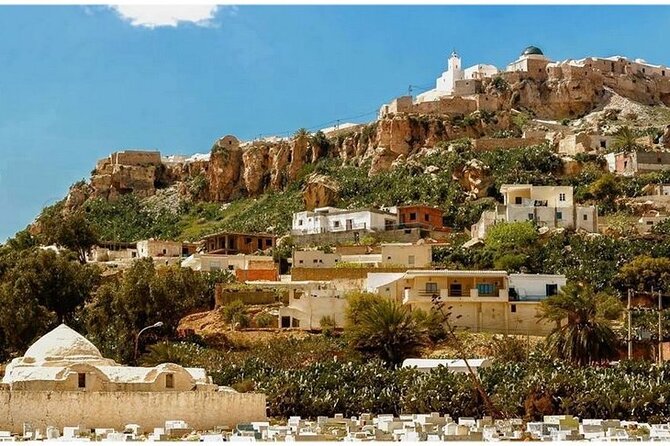
At $494.77 per person for roughly 3 days, the value comes from two things: coverage density and included admissions.
The day-by-day timing matters. You are visiting five UNESCO World Heritage sites plus major landmarks like the Great Mosque of Kairouan, Carthage, El Djem’s amphitheater, and Sousse’s medina. That would cost time and planning on your own.
Admissions are also a mix of included and free stops. Several key sites explicitly list admission ticket included, including the Medina of Tunis, Carthage archaeological site, Great Mosque of Kairouan, Bassins Aghlabites, Medina of Kairouan, Amphitheatre D’el Jem, the Archaeological Museum of El-Djem, and the Medina of Sousse, plus the Ribat of Monastir and Monastir Marina. Some stops are free, like La Goulette and Sidi Bou Saïd, and Hammamet, which helps keep the total cost reasonable.
You also get lunch, and the fact that lunches are described as excellent and highlighting different regions makes this feel like a real itinerary, not just a bus tour with random stops.
The only “price friction” is what you could lose if you are extremely sensitive to tight time windows. If you love lingering, you may feel the schedule. But if you want structure and you like seeing a lot in a short trip, the cost starts to make sense fast.
What makes the tour feel smooth: pacing, pickup, and a solid team
The tour runs with a start time of 8:30 am from the meeting point. Pickup is offered, and the tour uses a mobile ticket. It is also private, meaning only your group participates, so you are not stuck sharing commentary space with strangers.
In terms of human quality, the strongest praise tied to the experience is the guide and driver combo. Named examples include Fahmi with excellent English, and Chouaib for knowing good spots and how to avoid crowd pressure. Drivers named Said and Ahmed are called out for on-time arrivals and smooth, safe transfers.
That matters because the difference between a great day and a mediocre one is often not the monuments. It is the people coordinating timing, entrances, and explanations.
Who should book this tour (and who might not)
This tour is a good fit if you want:
- A structured route through UNESCO World Heritage sites without doing a full independent itinerary
- Strong focus on both monuments and everyday scenes, like medinas and seaside districts
- A guide who can make architecture and ruins feel readable, not just photographed
You might want to choose another style of travel if you:
- Hate time limits and want hours inside each site
- Plan a slow travel pace with lots of free wandering each day
- Want only beaches, with no inland history sites
Should you book this Best of Tunisia guided tour with lunch?
If you are doing Tunisia for the first time and you want the “best hits” with a guide, I would lean yes. The UNESCO density is real, and the route connects major holy sites, Roman spectacle, and coastal Tunisia without skipping the human-scale medina moments.
My final nudge is simple: go in with comfortable expectations for time. You are getting smart coverage, not a one-site-per-day luxury pace. If that sounds like your style, this is a strong way to make three days feel full, not frantic.
FAQ
What time does the tour start?
The tour start time is 8:30 am.
How long is the tour?
It is listed as 3 days, approximately.
Is pickup included?
Pickup is offered.
Are admission tickets included?
Many admission tickets are included in the stops listed as included, while a few stops are free. The itinerary specifies which stops include admission tickets.
Which UNESCO World Heritage sites are included?
The tour covers five UNESCO World Heritage sites: the Medina of Tunis, the archaeological site of Carthage, the city of Kairouan (Great Mosque and medina), the amphitheater of El Djem, and the Medina of Sousse.
Is lunch included?
Yes, this tour is described as The Best of Tunisia, 3 Days Guided Tour with Lunch.
Is this tour private?
Yes, it is a private tour/activity, and only your group will participate.
What is the cancellation policy?
Free cancellation is available. You can cancel up to 24 hours in advance for a full refund, and cancellations less than 24 hours before the start time are not refunded.
Is it suitable for most people, and can I bring a service animal?
Most travelers can participate, and service animals are allowed.
A Wider Sweep of Tunisia
- Private Tour to Kairouan, El Jem & Monastir from Tunis_hammamet
- Private tour: Medina,Carthage ,Sidi Bou Said, Bardo Museum+lunch
- Carthage, Bardo Museum, Sidi Bou Said and Medina Private Day Tour
- Private Excursion to Testour, Dougga and Bulla Regia from Tunis.
- Guided Bike Tour of Carthage Archeological Site in Tunisia
Everything Else We Have Reviewed in Tunisia
- Private Tour to Kairouan, El Jem & Monastir from Tunis_hammamet
- Private tour: Medina,Carthage ,Sidi Bou Said, Bardo Museum+lunch
- Carthage, Bardo Museum, Sidi Bou Said and Medina Private Day Tour
- Private Excursion to Testour, Dougga and Bulla Regia from Tunis.
- Guided Bike Tour of Carthage Archeological Site in Tunisia
The Long Circuits
Newest off the review desk in Tunisia

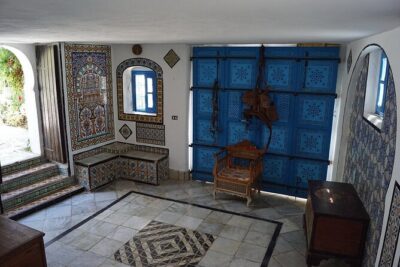
Multi-Day Grand Tours of Tunisia, side by side.
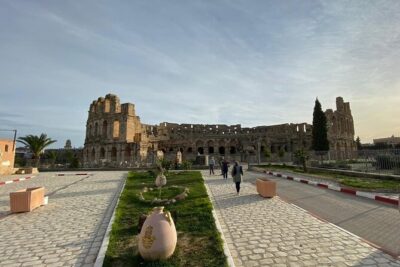 ★ 5.07 Day Guided Tunisia Tour Including PickupFrom $1,85827 reviews
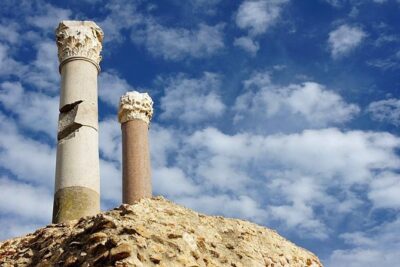 ★ 5.08 Days Tunisia Essential Discovery Private TourFrom $2,46116 reviews
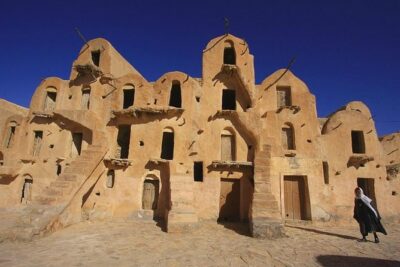 ★ 5.04 Days Tunisia Discovery Private TourFrom $1,41015 reviews
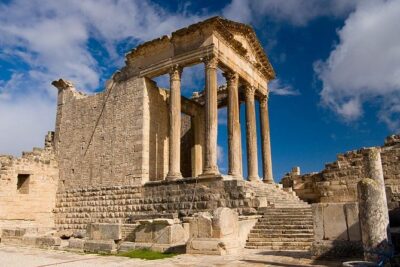 ★ 5.0Tunisia 7-Day tourFrom $3,2006 reviews
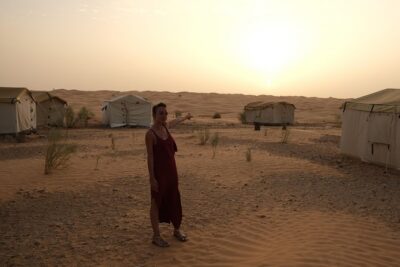 ★ 4.5The Wonders of Tunisia: 8 days / 7 nightsFrom $1,6486 reviews
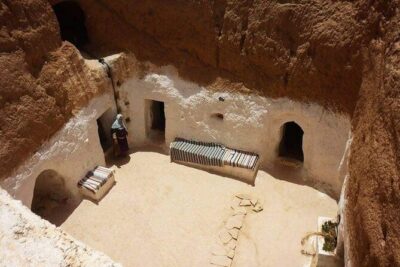 ★ 5.04-Day Private Tour: Sahara and Djerba Island from Tunis and HammametFrom $1,6764 reviews
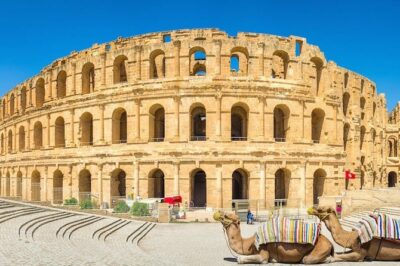 ★ 5.05 Days Tunisia Discovery Private TourFrom $1,8584 reviews
 ★ 5.0From Tunis: Star Wars 5 day tourFrom $2,3494 reviews