
REVIEW · TUNIS MEDINA & BARDO MUSEUM WALKS
Bardo Museum , Oudhna and the roman aqueduct
Roman water and mosaic gold, in one day.
This 6 to 7 hour Bardo Museum to Carthage to Oudhna outing feels like one connected story, not four random stops. I especially love seeing Roman mosaics up close in a grand Ottoman-era palace, then walking through the systems that made Roman cities run. The other big win is the aqueduct angle, the 132 km water engineering from Zaghouan down to Carthage.
The main thing to watch is that parts of the day are outdoors at archaeological sites. If weather turns foul, you may need to adjust, since the experience requires good conditions.
In This Review
- Key Points You’ll Actually Care About
- One Day, One Thread: How Water and Art Link Up
- Bardo Museum Mosaics in an Ottoman-Era Royal Palace
- Carthage’s Malaga Cisterns, Where the Water Arrived
- The Aqueduct of Hadrien from Zaghouan to Carthage
- Oudhna Archaeological Park: Amphitheatre, Capitol, and Villa Laberii Mosaics
- Timing, Getting Around, and What to Pack for a 6 to 7 Hour Day
- Price and Value for a Private Group Up to 2
- Should You Book This Bardo, Oudhna, and Aqueduct Day Trip?
- FAQ
- How long is the tour?
- Is pickup included?
- What does the price include?
- Is lunch included?
- Do I need tickets for every stop?
- What if the weather is bad?
Key Points You’ll Actually Care About
- World-class mosaic viewing at the Bardo Museum in a royal Ottoman-era setting
- A clear “water story” from the 132 km Zaghouan aqueduct down to Carthage’s cisterns
- Malaga Cisterns scale and details including 18 water containers and capacity up to 32,000 litres per day
- Oudhna’s major Roman stop with an amphitheatre built for about 16,000 spectators
- Free-site bonus moments at the aqueduct area and Oudhna (no extra admission mentioned)
- Private small-group feel (up to 2) with pickup and an air-conditioned vehicle
Souk legs not tired yet? More walks through the Tunis medina and the Bardo
- Private tour: Medina,Carthage ,Sidi Bou Said, Bardo Museum+lunch★ 5.0 · 230 reviews
- Carthage, Bardo Museum, Sidi Bou Said and Medina Private Day Tour★ 4.5 · 153 reviews
- Guided tour in the UNESCO world heritage Medina of Tunis★ 5.0 · 68 reviews
- Tunis: Carthage, Bardo Museum, Sidi Bou Said & Medina Group Tour★ 4.5 · 33 reviews
One Day, One Thread: How Water and Art Link Up
The clever part of this trip is the way it connects engineering to beauty. You start in a museum where Roman mosaics are treated like artwork, not just decoration. Then you shift to where that Roman world got its water, ending at Carthage cisterns that were designed to hold daily supply. Finally, you finish at Oudhna, where you see how those Roman cities built entertainment spaces and kept moving through centuries.
Even if your brain usually loves one theme only, you’ll get value from the whole loop. Mosaics can feel overwhelming when you’re staring at hundreds of tiles, but the museum setting helps you slow down. The aqueduct stops do the opposite, they help you look at infrastructure and scale: long distances, water pressure, and the practical problem of supplying a city. Then Oudhna brings it all together with a Roman amphitheatre, mosaics, and later layers like Byzantine-era vaults.
This is also a good format if you hate wasting half a day coordinating transport. You get pickup, you ride in an air-conditioned vehicle, and you spend focused time at each site. It’s not a marathon, but it is a full day of seeing.
Bardo Museum Mosaics in an Ottoman-Era Royal Palace
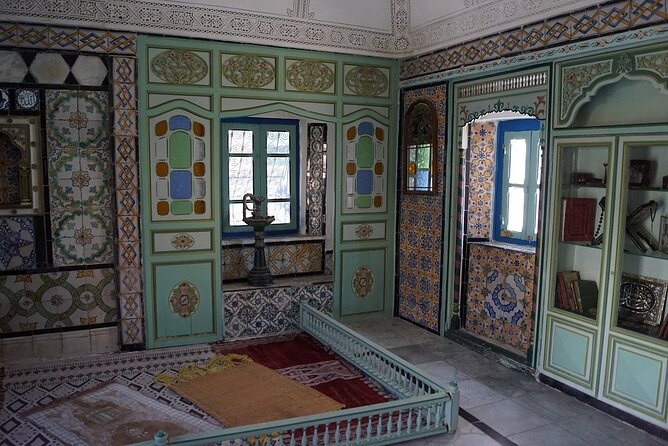
If you want Roman mosaics at the highest level, the National Bardo Museum is the starting gun. This museum is known for having the biggest collection of Roman mosaics in the world, displayed in a majestic royal palace dating to the Ottoman era. That matters because the building itself changes how you view the mosaics. You’re not in a warehouse-like gallery, you’re in a palace space that makes the art feel important.
What to love here is how the mosaics let you read everyday life through craftsmanship. Even if you do not know the scenes, you can still appreciate the precision: the way figures are composed, how color is used, and how whole stories are built from small pieces. I like that the stop is long enough to actually look, not just snap photos and rush. You get about 2 hours, which is usually enough time to do a focused circuit.
Practical tip: the Bardo is a museum, so comfortable shoes still win. You’ll likely be standing and walking more than you expect, especially if you stop at multiple mosaic rooms. Keep your plan simple. Pick a few rooms you want to see best, then let the rest surprise you.
One more small consideration: museums can draw crowds. A private outing helps here, since you’re less stuck waiting with a huge group, but you still need to be okay with the usual buzz inside a major museum.
Carthage’s Malaga Cisterns, Where the Water Arrived
Then you jump from art to infrastructure, and it’s a satisfying switch. At the archaeological site of Carthage, you visit the end point of the aqueduct at the Malaga Cisterns. This is where the Roman system stopped being theory and became daily life.
The details here are the payoff. You’re looking at 18 water containers, built to hold up to 32,000 litres of water per day. That scale is hard to grasp until you stand near the structures and think about how many people, baths, fountains, and households depended on a steady supply.
The stop is shorter, around 30 minutes, so you’ll want to make it count. My advice is to spend the first few minutes getting oriented, then slow down for the structures themselves. If you only glance, the cisterns can feel like stone. If you actually read the design, you start to see how Roman planners thought in terms of flow and storage.
There’s also something emotionally satisfying about finishing a water journey with a physical endpoint. You go from “How did they move water so far?” to “Here is where it landed, and here is what they built to make it reliable.”
Roman ruins in the hills: more Dougga and Bulla Regia outings
The Aqueduct of Hadrien from Zaghouan to Carthage
This is where the story expands. The aqueduct of Hadrien once carried water from the mount of Zaghouan to Carthage, and you see it from a practical viewing stop about 30 minutes outside the city area, on the road between Mhammedia and El Fahs, roughly 6 km from Oudhna.
The headline fact is impressive enough: it’s described as the world’s longest aqueduct, with a 132 km channel connecting Carthage to the mountainous springs of Zaghouan. But the real value is understanding what that implies. Long-distance water systems are not just engineering feats, they are planning miracles. A city is only as strong as its ability to keep water flowing.
Expect about 30 minutes here, and admission is free based on the tour info. That short window means you should treat it like an overview stop. You’re there to get the idea of the scale, then keep rolling to the sites where Roman life continued.
If you’re the type who loves details, don’t rush. Look for how the structure sits in the environment, then connect it back to the cisterns you just saw. Without that link, it can feel like a scenic ruin. With the link, it’s a working system you can almost picture.
Oudhna Archaeological Park: Amphitheatre, Capitol, and Villa Laberii Mosaics
Oudhna is where the day shifts from water and museum rooms into a walkable archaeological park. It sits close to Carthage, and it’s reached via a drive south, described as around 6 km from Oudhna along the road between those same Mhammedia and El Fahs areas.
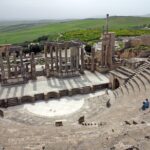
Your main Roman wow moment is the amphitheatre, designed for about 16,000 spectators. Think about that number. You’re not looking at a small stage. This is a big entertainment machine built for crowds. Standing near it helps you understand Roman public life, where theatre and spectacle weren’t extras, they were part of the city rhythm.
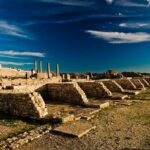
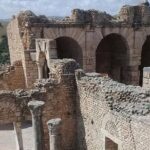
Then there’s the Capitol area, where you can see some of the finest mosaics on site and impressive underground vaults dating to the Byzantine era. That time-layer detail is one of the reasons Oudhna works so well at the end of the day. You’re not stuck in one Roman moment. You’re seeing continuity, then change, and then new uses built on older bones.
Don’t skip the mosaics connected with Villa Laberii as well. The tour info highlights the Villa Laberii mosaics, and those are exactly the kind of site moments that tie back to what you saw at the Bardo Museum earlier. If you’re doing this tour mainly for mosaics, you’ll feel the payoff here, because you get a different context for them than in a museum room.
Admission is listed as free for Oudhna. That’s a nice value bonus, especially since the Bardo Museum entry is included and Carthage site admission is included too.
Timing, Getting Around, and What to Pack for a 6 to 7 Hour Day
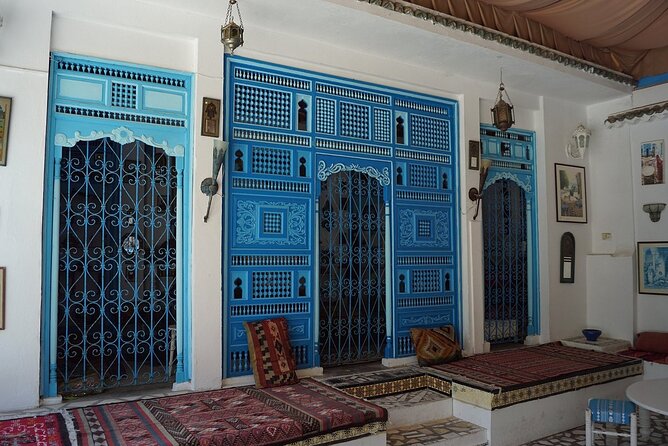
This is a private tour for your group only, with a max group size of up to 2. That matters because it makes the schedule feel more human. You’re not herded, and you can pace yourself more easily between stops. Pickup is offered in Tunis, and you travel in an air-conditioned vehicle, which helps a lot in Tunisia’s warmer months.
The typical flow is:
- about 2 hours at the Bardo Museum
- about 30 minutes at the Carthage site (Malaga Cisterns)
- about 30 minutes at the aqueduct area
- about 2 hours at Oudhna
That leaves the rest of the day for driving and transitions. It’s a lot for one day, so pack smart. Wear shoes you can walk in on uneven archaeological ground. Bring sun protection because you will spend time outdoors at Carthage and Oudhna. And since lunch is not included, I recommend you plan a snack so you do not start thinking about food the moment you arrive.
One extra practical note from the general on-the-ground vibe of these stops: there can be a lot of people moving around. I’d keep your valuables secure and close, even if the experience is mostly smooth.
Price and Value for a Private Group Up to 2
The price is $258.49 per group (up to 2) for a 6 to 7 hour day trip. If you’re traveling as a pair, it can work out like a reasonable private rate, especially because several admissions are covered.
From the tour details, Bardo Museum admission is included, the Carthage site ticket is included, and the aqueduct and Oudhna are listed as free admissions. So you are not paying separately for every key stop, which is where the value comes from. You are also buying convenience: pickup, an air-conditioned vehicle, and time-managed visits so you do not have to plan transport and ticket timing on your own.
Is it expensive? It can feel like it, especially if you’re solo and you’re comparing it to public transport options. But for a small group, this kind of day trip becomes a practical choice. You get major highlights without the stress of piecing together the route, and you get the specific thematic sequence: mosaics, then Roman water, then Roman entertainment.
Should You Book This Bardo, Oudhna, and Aqueduct Day Trip?
If you like Roman ruins and want them explained through a theme, this is a strong choice. You’ll likely enjoy it most if mosaics are high on your list and you also like practical questions like how ancient cities solved real problems such as water supply.
I’d skip or reconsider if you know you struggle with outdoor walking, or if weather could be questionable on your travel dates. Also, since lunch is not included, make sure you’re okay finding food on your own during the day or bringing a snack.
If you’re traveling with someone and you want a private, efficient route with key admissions handled, booking makes sense. It’s one day, but it tells a connected story from palace mosaics to water engineering to Oudhna’s big amphitheatre scale.
FAQ
How long is the tour?
It lasts about 6 to 7 hours total.
Is pickup included?
Yes, pickup is offered.
What does the price include?
The price includes all fees and taxes, an air-conditioned vehicle, and admission where listed (including the Bardo Museum and the Carthage site).
Is lunch included?
No, lunch is not included.
Do I need tickets for every stop?
The Bardo Museum admission is included, the Carthage site admission is included, and the aqueduct and Oudhna are listed as free admissions.
What if the weather is bad?
The experience requires good weather. If it is canceled due to poor weather, you will be offered a different date or a full refund.
Everything Else We Have Reviewed in Tunisia
- Private Tour to Kairouan, El Jem & Monastir from Tunis_hammamet
- Private tour: Medina,Carthage ,Sidi Bou Said, Bardo Museum+lunch
- Carthage, Bardo Museum, Sidi Bou Said and Medina Private Day Tour
- Private Excursion to Testour, Dougga and Bulla Regia from Tunis.
- Guided Bike Tour of Carthage Archeological Site in Tunisia
Roman Tunisia, Inland
Deeper into the Tunis Medina
- Private tour: Medina,Carthage ,Sidi Bou Said, Bardo Museum+lunch
- Carthage, Bardo Museum, Sidi Bou Said and Medina Private Day Tour
- Guided tour in the UNESCO world heritage Medina of Tunis
- Tunis: Carthage, Bardo Museum, Sidi Bou Said & Medina Group Tour
- Private Day Tour Tunis Medina Carthage Sidi Bou Said Bardo Museum
Newest off the review desk in Tunisia

Tunis Medina & Bardo Museum Walks, side by side.
 ★ 5.0VIP Tour: Tunis Medina/Bardo, Sidi Bou Said, Carthage |PICKUP ALLFrom $30512 reviews
 ★ 5.0Private tour: Medina,Carthage ,Sidi Bou Said, Bardo Museum+lunchFrom $46230 reviews
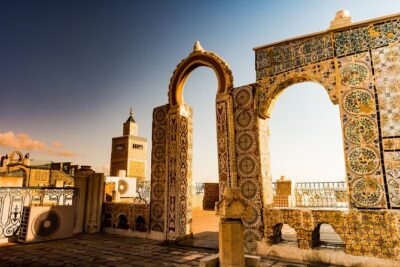 ★ 4.5Carthage, Bardo Museum, Sidi Bou Said and Medina Private Day TourFrom $30153 reviews
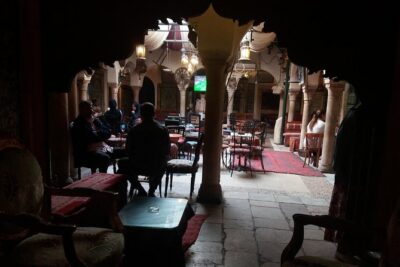 ★ 5.0Guided tour in the UNESCO world heritage Medina of TunisFrom $4668 reviews
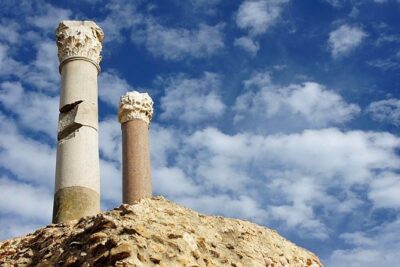 ★ 4.5Tunis: Carthage, Bardo Museum, Sidi Bou Said & Medina Group TourFrom $4533 reviews
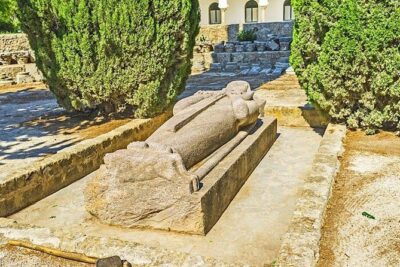 ★ 4.5From Hammamet or Tunis: Carthage, Bardo, Sidi Bou said and MedinaFrom $3530 reviews
 ★ 5.0Private Day Tour Tunis Medina Carthage Sidi Bou Said Bardo MuseumFrom $23430 reviews
★ 5.0Private tour: Medina,Carthage ,Sidi Bou Said, Bardo Museum+lunchFrom $4028 reviews
★ 5.0Private Day Tour Tunis Medina Carthage Sidi Bou Said Bardo MuseumFrom $23430 reviews
★ 5.0Private tour: Medina,Carthage ,Sidi Bou Said, Bardo Museum+lunchFrom $4028 reviews